

Published Jun 04, 2026 | 8:00 AM ⚊ Updated Jun 04, 2026 | 8:00 AM

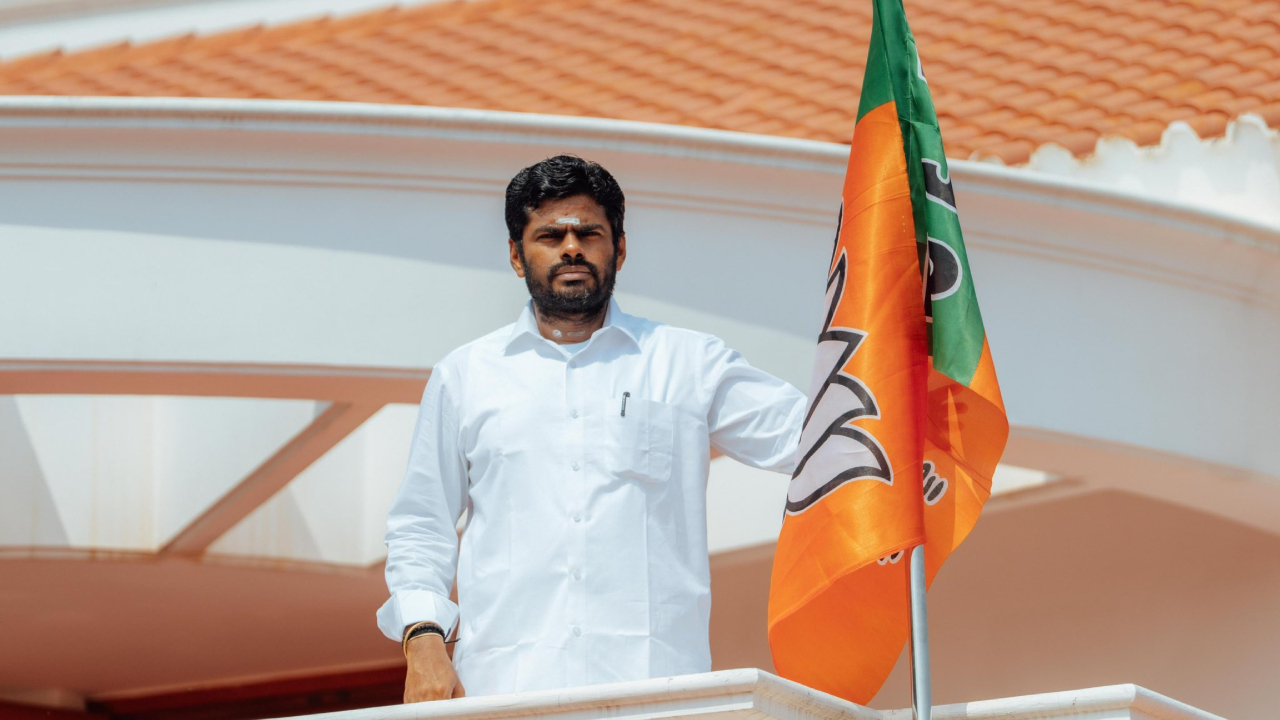
K Annamalai. Credit: x.com/annamalai_k

Synopsis: The buzz over K Annamalai’s possible exit from the BJP has reignited questions over whether he was the party’s failed political experiment in Tamil Nadu or a missed opportunity to build a Modi-style OBC leadership model in the Dravidian heartland. The article explores how Annamalai reshaped the BJP’s visibility in Tamil Nadu, the internal contradictions that limited his rise, and what his departure could mean for the state’s future political landscape.
In 2014, the BJP drastically altered its political template by projecting Narendra Modi, hailing from an Other Backward Classes community with no dynastic background, as its face. The change marked the party’s move beyond its long-held image of being dominated by forward-caste leadership.
The experiment helped the BJP expand its social base far beyond its traditional support groups across North and Western India, ultimately catapulting it to power at the Centre for three consecutive terms.
When former IPS officer K Annamalai entered politics in 2020, many in Tamil Nadu’s political circles saw the BJP replicating the Modi experiment in the Dravidian heartland.
Annamalai was not projected as another state leader, but as a Tamil Nadu version of the Modi model, an aggressive, non-dynastic outsider, expected to break the BJP through its limitations and challenge the decades-old duopoly of the DMK and AIADMK.
Six years later, in 2026, Annamalai decided to part ways with the BJP. But was he able to achieve in Tamil Nadu what Modi achieved nationally? Did the BJP get the political impetus expected of it? Did the BJP grow because of Annamalai — or was it the other way round?
Was Annamalai the BJP’s failed experiment, or its missed opportunity?
Also Read: What BL Santhosh’s blue-eyed boy Annamalai told BJP leadership
Until 2019, Annamalai served as an IPS officer before resigning from the service. In August 2020, he formally joined the BJP in the presence of then national president, JP Nadda.
Almost immediately after joining the party, he was appointed as a state vice-president. In 2021, he was fielded as the BJP candidate from the Aravakurichi Assembly constituency in Karur.
By July 2021, he was elevated as the BJP’s state president. In 2024, he was made the party’s candidate for the Coimbatore Lok Sabha constituency.
But the BJP national leadership did not merely assign him posts and responsibilities. Annamalai was given significant political autonomy, financial backing during elections, and the freedom to implement his decisions, said senior journalist Malan Narayanan.
Unlike traditional BJP leaders in Tamil Nadu who often relied on overt Hindutva rhetoric and direct attacks on the Dravidian ideology, Annamalai projected himself — or was projected — as a leader who spoke the language of the youth, communicated directly, avoided overtly divisive rhetoric, and practised a more aggressive, personality-driven style of politics.
If this created visibility for the BJP in Tamil Nadu, it also created an even larger personal following for Annamalai. In fact, a section of his supporters in the BJP were willing to defend him even against their own party leadership.
Still, despite enjoying unprecedented backing from the BJP, why did Annamalai choose to leave?
Malan said the core issue was dissatisfaction over losing the authority to function the way he wanted. He added that the friction between Annamalai and BJP began over the AIADMK alliance.
“Annamalai had problems with bringing the AIADMK back into the alliance, and the AIADMK too had issues with continuing alongside Annamalai. It eventually created the need for him to step down as the party’s state president. His resignation from the post, his growing disagreements with almost all senior leaders within the party, and the inability to function with the authority he wanted, led to increasing dissatisfaction. That may have ultimately pushed him toward this decision,” Malan said.
Also Read: Annamalai disagrees with own government on CBSE’s three-language policy
Writer and journalist Rajasangeethan offered another comparison. Both Modi and Annamalai belonged to the same political formula.
“Annamalai is essentially a Tamil adaptation of Modi-style politics. Modi himself is an OBC political face. Modi rarely engages with the media directly, but still manages to dominate the news cycle and subtly diminish the media’s importance without openly confronting it. Annamalai, meanwhile, takes a more direct approach. Instead of merely answering questions, he often turns the interaction around and questions or confronts journalists,” Rajasangeethan explained how Annamalai replicated Modi’s style to carve out a space for himself in Tamil Nadu politics while simultaneously giving visibility to the BJP.
“Neither Modi nor Annamalai practice the traditional ‘Sanghi’ style of politics openly. For example, they do not directly engage in mosque-demolition rhetoric, open communal speeches, casteist rhetoric, abusing Muslims, anti-foreigner rhetoric, or explicit Brahminical supremacist politics. Modi usually operates differently. He works silently through institutional and power structures without always being vocal about it,” he explained.
Rajasangeethan opined that Annamalai followed a similar model.
“Like Modi, Annamalai too avoided directly engaging in openly divisive rhetoric. He would not speak like a conventional BJP leader, accusing opponents of being Pakistani sympathisers. Even Modi occasionally makes subtle references to identifying extremists through their clothing, but Annamalai rarely even crossed that line,” he said.
Rajasangeethan argued that Annamalai adopted Modi’s formula of strengthening Hindutva politics without appearing overtly communal in public.
“He consciously avoided becoming the face of aggressive Hindutva politics. Even in the Tirupparankundram issue, Annamalai did not place himself at the centre,” he pointed out.
The Tirupparankundram issue centred on the demand to light the Karthigai Deepam on a stone lamp pillar (Deepathoon) atop Tirupparankundram Hill in Madurai. The dispute led to legal proceedings and political debate over religious practices, historical customs, and access rights at the hill, which houses both the Subramaniya Swamy Temple and the Sikandar Badusha Dargah.
At the same time, Rajasangeethan said, Annamalai failed to articulate a strong people-centric politics.
“Most of his speeches were built around consolidating the already existing anti-DMK sentiment in Tamil Nadu. His political planning and activities largely revolved around that objective,” he pointed out.
The journalist felt Annamalai framed his criticism through Tamil Nadu-specific politics, and that approach helped him in bringing visibility to the BJP.
The larger question now is the impact of Annamalai’s exit on the BJP.
“In the recent election, every political party in Tamil Nadu suffered setbacks. But for the BJP, the defeat has pushed the party back by nearly 20 years,” Malan opined.
“The BJP was already politically bleeding in Tamil Nadu, and Annamalai’s exit will only deepen the problem. The party’s future now depends on whether it chooses to seriously prioritise Tamil Nadu and rebuild carefully,” he added.
At the same time, reports said internal discussions might still be taking place between Annamalai and the BJP.
Sources close to Annamalai said he felt the political conditions in Tamil Nadu had changed significantly after Chief Minister C Joseph Vijay’s rise.
“Vijay may have won the election, but there are more than nine districts where he could not secure victories because of deeply entrenched caste structures. Annamalai believes that by projecting himself as an OBC leader and consolidating those caste-based vote blocs, he could build a viable long-term political path,” sources said.
They compared this strategy to OBC-driven political movements led by leaders such as Akhilesh Yadav, Lalu Prasad Yadav, and even the DMK in Tamil Nadu.
“Vijay’s arrival has already destabilised the traditional political structures of the DMK and AIADMK. Annamalai believes there is now political space available, and he wants to occupy it,” the sources added.
They claimed that Annamalai had conveyed a message to the BJP leadership to allow him to operate independently, and he would remain aligned with the party’s ideology.
Sources felt that if Annamalai succeeds politically, he might later choose either to reunite with the BJP or work alongside it.
“A Failed Attempt, But Not a Failure”
For Malan, Annamalai represents a failed attempt by the BJP, but not necessarily a total failure.
“From the BJP’s perspective, the primary objective was to prevent the DMK from returning to power. That is why they experimented with leaders like Annamalai. In a way, their objective was achieved, but not in the way they expected. What they wanted was ultimately accomplished through Vijay,” he said.
At the same time, Rajasangeethan argued that despite experimenting with OBC politics, the BJP could never fully move beyond its traditional Brahminical character.
“That contradiction became visible after Annamalai became state president. His attempts to establish authority led to friction with older Brahmin leaders in the party. The attacks on Annamalai from figures like SV Sekhar reflected that tension,” he said.
Such friction, too, contributed to the failure of the Annamalai experiment.
“The BJP still does not fully understand how to adapt Hindutva politics to Tamil Nadu’s soil, people, and cultural realities. On one hand, anti-Brahmin sentiment remains a barrier to the BJP’s growth. On the other hand, Tamil Nadu’s long-standing resistance to divisive politics continues to keep the BJP at a distance,” Rajasangeethan argued.
(Edited by Majnu Babu).



