

Published Sep 28, 2026 | 2:52 PM ⚊ Updated Sep 28, 2026 | 2:52 PM

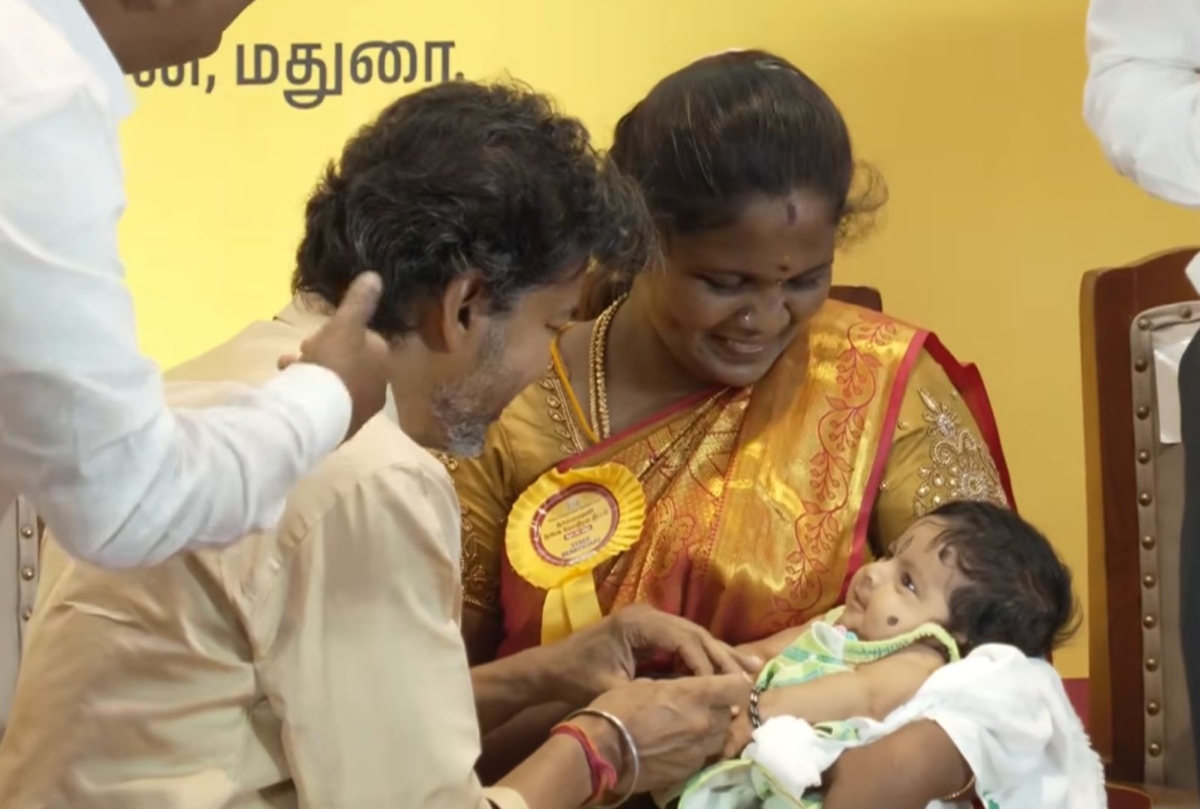
‘Thaimaaman Thanga Modhiram’ scheme launched in Madurai

Synopsis: Under the scheme, a one-gram gold ring will be provided to every child born at government hospitals and Primary Health Centres in Tamil Nadu. Children born to families permanently residing in Tamil Nadu from June 22, 2026, are eligible for the scheme.
Tamil Nadu Chief Minister C. Joseph Vijay on Monday, 28 September, launched the state government’s ‘Thaimaaman Thanga Modhiram’ (Maternal Uncle’s Gold Ring) scheme at the Government Rajaji Hospital in Madurai.
Under the scheme, a one-gram gold ring will be provided to every child born at government hospitals and Primary Health Centres in Tamil Nadu. Children born to families permanently residing in Tamil Nadu from June 22, 2026, are eligible for the scheme.
The scheme is part of the state government’s ‘Vetri Tamilagam’ vision programme and is intended to recognise the Tamil tradition of the “thaaymaaman seer” — gifts traditionally given by the maternal uncle to a newborn.
The Tamil Nadu government has allocated ₹755.83 crore annually for implementing the scheme. Reports said the first phase involved procuring 1.28 lakh gold rings, while the scheme is being rolled out across government healthcare facilities in the state.
The scheme was originally scheduled to be launched earlier but was postponed, with the launch subsequently fixed for September 28 in Madurai.
The scheme had drawn criticism from sections of society. They described it as a regressive welfare measure. When the government order was released in July, it has triggered another debate: is it appropriate to entrust a corporation established to procure medicines and medical equipment with the purchase of gold?
Another question raised was about the order stating that the first phase of funding will come from the Contingency Fund. Given that Tamil Nadu already has one of the lowest Maternal Mortality Ratios (MMR) in India, critics questioned the urgency in implementing the scheme using emergency funds.
The government had issued operational guidelines through the Tamil Nadu Medical Services Corporation Ltd.
According to the guidelines, the scheme aims to:
However, critics questioned how the government would achieve those objectives when government hospitals were facing serious infrastructure deficiencies.
Also Read: From gold rings to coins: Is TVK’s first budget glittering too much?
(Edited by Sumavarsha, with inputs from Subash Chandra Bose)



