

Published Sep 11, 2026 | 6:59 PM ⚊ Updated Sep 11, 2026 | 6:59 PM

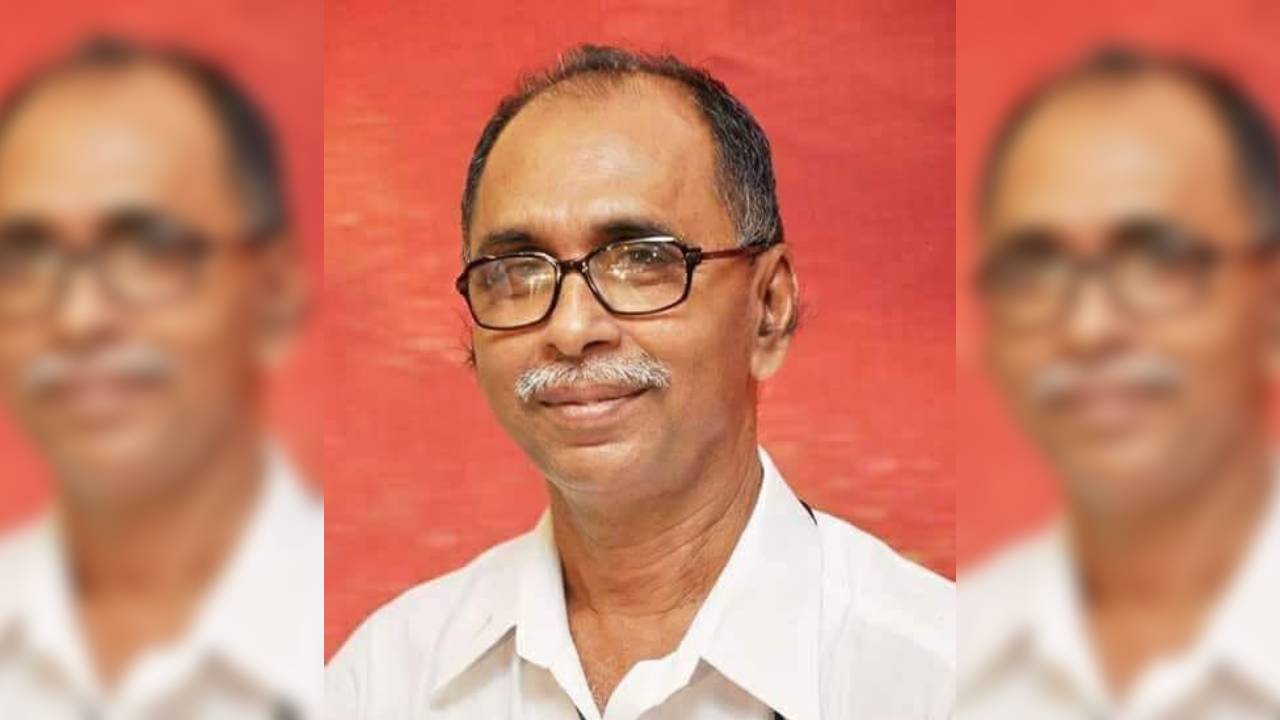
CPI(M) leader S Noor Muhammad. He was imprisoned under the MISA during the Emergency.

Synopsis: Noor Muhammad’s story is also the tale of MISA, the draconian law that turned political dissent into grounds for imprisonment during the Emergency. A knock on the door was enough to take a young political worker into custody, without a conventional trial, and send him into a prison filled with others detained under the same law.
Tamil Nadu Chief Minister C Joseph Vijay was barely two years old when a stranger visited S Noor Muhammad at his sister’s residence in Thuckalay, Kanniyakumari district, on a winter’s night.
A CPI(M) member, Muhammad, had then just returned to his sister’s place on 2 February 1976. The Internal Emergency was still on, and Muhammad was explaining to her the suspension of democracy in the country when someone knocked at the door around 8.30 pm.
Muhammad’s nephew, Jawahar, answered the door. Seconds later, he returned and told his uncle that someone wanted to meet him.
The communist party member had heard about such night-time knocks. Still, he did not panic. He went to meet the man.
The stranger was in plain clothes. No pleasantries were exchanged. The man told Muhammad that someone wanted to meet him outside.
A car was parked outside, with a few men inside. A man sitting in the front asked Muhammad to board the vehicle. The car took him to the Thuckalay police station.
Muhammad was expecting this development. Many comrades had already been arrested following night-time knocks on the doors. At the police station, the communist realised that he, too, had been arrested.
Back home, his sister was still waiting for his return — and to have dinner together.
Also Read: When Vijay’s charged rhetoric left questions unanswered
Muhammad was not the only person arrested that night. People with no political affiliations, too, were rounded up across Tamil Nadu. Their fault was being found on the roads.

An old photograph of Noor Muhammad.
The arrests continued the following days as well, and the police cracked down on political opposition. DMK’s youth leader Muthuvel Karunanidhi Stalin was one among them.
MK Stalin was arrested on 31 January 1976, under the Maintenance of Internal Security Act (MISA), 1971, and lodged in the Madras Central Prison. He later recalled the physical abuse he had to endure during his incarceration.
He recalled it — the torture and agony — once again on Thursday, 10 September 2026, a day after Chief Minister Vijay took an apparent dig at him with a “jaw gesture,” referring to the injury Stalin sustained in the prison.
Arrests were common and unquestioned across the country. In Tamil Nadu, communist leaders were thrown into prisons.
Muhammad was lodged in Tirunelveli’s Palayamkottai Central Prison, where he soon met and interacted with towering communist leaders, Ananthan Nambiar and S. Balavinayagam. They, too, had been arrested for opposing the then Prime Minister Indira Gandhi and the Emergency she had promulgated on 25 June 1975 — a year and three days after Joseph Vijay was born.
What began as a series of arrests rapidly became a wider campaign to silence political opposition in the state.
Also Read: Fifty years of Emergency: A bygone experience, really?
Around midnight, Kulasekaram Sub-Inspector Mariappan walked into the Thuckalay station along with a police unit. Muhammad recalled meeting him during an earlier students’ hostel dispute in Thuckalay,
Mariappan scanned the accused. Muhammad, then aged 24, was lean and sported long hair, the hippie style popular among the youth of the mid-1970s.
The Sub-Inspector ordered his subordinates to put Muhammad in a cell. A while later, Mariappan and a few policemen “visited” Muhammad’s cell. The visit was not friendly.
A policeman grabbed Muhammad by his hair and lifted him as another one started beating him. Soon others joined in — as if in bearbaiting. However, there was no bear tied to a pole, but only Muhammad. No hounds either: only policemen beating a hapless, cornered young man.
When the policemen left, Muhammad dropped limp on the cold floor. The black-and-blue marks covering his body spoke for him. But there were no listeners.
Years later, Muhammad came across his tormentor, Mariappan, in Tenkasi. The officer had become an Inspector. He greeted S Noor Muhammad, the MLA, with a smart police salute.
It appeared as if Mariappan had been waiting to salute Muhammad. Referring to the custodial torture, the officer had often claimed credit for Muhammad’s rise in politics.
Later, Muhammad became the CPI(M)’s district secretary and Mariappan a Deputy Superintendent of Police in the Kanniyakumari district. The officer never hesitated to extend a warm greeting to the politician — once a lean, 24-year-old helpless youth with long hair — whenever they met.
Muhammad, too, had dismissed that Thuckalay chapter behind with a cryptic comment: “Ah, typical behaviour of a police officer.”
Also Read: Indira’s Emergency and the Sangh’s quiet surrender
Allahabad High Court, 12 June 1975: People across India tuned into the All India Radio, curious about Prime Minister Indira Gandhi’s future.
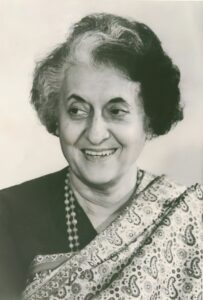
Indira Gandhi.
It was the culmination of a series of events that began with Gandhi’s re-election as Prime Minister. Her party recorded a landslide victory, winning a two-thirds majority.
Her tenure was not smooth. Two years after her re-election, Gandhi made AN Ray the Chief Justice of India, superseding two senior-most judges of the Supreme Court. In January 1974, students in Gujarat launched a violent protest, the Navnirman Andolan, against the “corrupt” Congress Chief Minister Chimanbhai Patel.
Gandhi asked Patel to step down in March 1974. In April the same year, student leaders of Bihar’s Chhatra Sangharsh Samiti invited Jayaprakash Narayan to head a struggle against the state government. A month later, George Fernandes called for a nationwide railway strike to press for increased wages.
In September 1974, the Opposition cornered Gandhi on the Pondicherry (now Puducherry) licence scam. Two months later, talks between the Prime Minister and Jayaprakash Narayan on dissolving the Bihar Assembly failed.
On 8 January 1975, Congress troubleshooter Siddhartha Shankar Ray wrote to Gandhi, suggesting the imposition of an internal Emergency and the arrest of those opposing the government. Then came the judgement of Allahabad High Court Judge Justice Jagmohanlal Sinha on 12 June 1975.
Justice Sinha debarred Gandhi as an MP for election malpractices. The judgement followed Raj Narayan’s 1971 petition, after he had lost to Gandhi in Rae Bareilly.
In the days that followed, Congress leaders and supporters vied with each other to back Gandhi. By 23 June 1975, preparations began for arresting opposition leaders.
On 25 June 1975, Jayaprakash Narayan led a rally at Delhi Ram Lila grounds, demanding Gandhi’s scalp. He recited Ramdhari Singh Dinkar’s evocative poem, “Singhasan khaali karo / ke janata aati hai” (Surrender your throne, for the people are coming), to thunderous applause, journalist Coomi Kapoor noted in her The Emergency: A Personal History.
Hours later, around 11.45 pm, President Fakhruddin Ali Ahmed signed a brief order:
“In exercise of the powers conferred by clause 1 of Article 352 of the Constitution, I, Fakhruddin Ali Ahmed, President of India, by this Proclamation declare that a grave emergency exists whereby the security of India is threatened by internal disturbances.
PRESIDENT
NEW DELHI – 25th June, 1975.”
Darkness enveloped the next dawn in the world’s largest democracy.
Also Read: Internal Emergency: Has that dark night truly ended?
Fundamental rights were suspended, strikes were banned, freedom of speech and writing was severely restricted, and the press was subjected to censorship.
Opposition leaders were arrested without trial under MISA. Jayaprakash Narayan was placed under house arrest, the Rashtriya Swayamsevak Sangh was banned, and thousands of political workers across the country were detained.
Marxists were also arrested across India, while reports of police excesses emerged from several states. In Kerala, Muhammad recalled, the arrest and custodial death of an Engineering student, P Rajan, became one of the most notorious cases of the period.

P Rajan.
Tamil Nadu had initially been different. The DMK, under Chief Minister M Karunanidhi, was then in power. The government was opposed to the Emergency.
Muhammad said the state government did not arrest opposition leaders, did not ban public meetings and continued to protect some basic freedoms.
As a result, opposition leaders from elsewhere in India could come to Tamil Nadu and address meetings without the restrictions. Tamil Nadu, particularly the Kanniyakumari district, became a comparatively open space where political parties could continue their activities.
That space disappeared on 31 January 1976.
The Union government dismissed the DMK government and dissolved the Tamil Nadu Assembly. The state enforced MISA, and arrests began. DMK leaders and CPI(M) leaders were taken into custody across Tamil Nadu.
Many experienced Marxist leaders, already familiar with repression from earlier periods when their party had faced bans, went underground. On 2 February 1977, Muhammad and other members of the Kalkulam taluk committee met at the residence of party member and advocate Eethavilai Johnson in Thuckalay.
The taluk secretary, N Achuthan, was carrying the committee’s minutes book. Fearing that police might search the party office and seize it, Achuthan handed the book to Muhammad for safekeeping. They discussed how party work could continue underground and agreed to meet at safe locations when district leaders instructed them.
The meeting did not take place. Instead, that night around 8.30 pm, a stranger in plain clothes knocked at his sister’s door and took him away.
Also Read: Free media, democracy, solidarity, and judiciary in the age of intolerance
A night later, Muhammad was taken to the Kuzhithirai court along with several others. According to his memoir, they were not produced before a judge, but were remanded for 15 days.

A 1976 Rajya Sabha parliamentary record documenting concerns over the treatment of MISA detainees.
A police van that took them from the court arrived at the Palayamkottai Central Prison around midnight. On 13 February, Muhammad was shifted to the Trichy Central Prison. No specific case was slapped on him. He was held under preventive detention.
Trichy Central Prison housed many political prisoners from the DMK and CPI(M). Muhammad met several senior party leaders, including Bharathi Mohan, for the first time while in jail.
The torture marks he had received on the intervening night of 2 and 3 February were still visible on his frail body. His comrades advised him to submit a complaint to the Chief Secretary through the Prison Superintendent. The young man, with no charges against him, heeded their advice.
The Superintendent saw his injuries and expressed sympathy. Muhammad, however, was not convinced by the sympathy. He wondered whether the officer’s concern was genuine or merely an act. The Superintendent also asked him why someone so young had joined politics.
Prison presented Muhammad with another unexpected difficulty: food. He had grown up eating rice and was accustomed to the cuisine in Kanniyakumar: fish curry, fried fish, vegetables, mutton and chicken. At Palayamkottai and Trichy, however, he was served ragi kali for breakfast, a food which Muhammad said he had never seen before. He struggled to eat and keep himself nourished.

Noor Muhammad’s sister’s house in Thuckalay, where he was arrested on the night of 2 February 1976, during the Emergency.
Lunch brought another unfamiliarity: rice and sambar. Muhammad said sambar had never been prepared in his home, and its smell made him nauseous. He refused the meal, and his comrades, taking pity on him, gave him boiled chickpeas that came with their food.
For about a week, that was what he ate. Gradually, he came to terms with rice with sambar.
Outside the prison, his family had no idea where he was.
Press censorship meant information was not forthcoming. His mother, who was already unwell, cried constantly.
His sister, whom Muhammad described as having raised him like a mother, along with his brothers, sisters-in-law and nephews, were plunged into distress. Eventually, the news of Muhammad’s arrest reached the party’s state leadership.
Pappa Umanath, a prominent CPI(M) leader who co-founded the All India Democratic Women’s Association (AIDWA) in 1973, was still free. She went to Muhammad’s family home in Thuckalay and met his mother and sister. She explained what had happened and consoled the frightened family.
Umanath shared her experiences of arrest and imprisonment that calmed down Muhammad’s family.
Also Read: TN notifies land acquisition near Parandur for industrial park
Muhammad had become accustomed to the rice-sambar meals when he was summoned to the Prison Superintendent’s office on 18 February. A police officer was waiting there with a government order in hand. Muhammad read it and found that he had now formally been detained as a preventive detainee under MISA.
That night, they transferred him from Trichy to Palayamkottai under extraordinary security. Three police vans travelled together, with armed policemen in the pilot and escort vehicles.
The journey was completely new for the 24-year-old prisoner. Traffic was stopped to let the convoy through, making it look almost like a VIP movement. At one point, the convoy stopped outside a restaurant for dinner. Armed policemen stepped out of the vans, frightening the customers.
People began leaving the hotel. Muhammad was taken inside and made to eat while armed policemen stood guard. From a distance, people stared at him as if seeing a terrorist. Muhammad recalled the scene’s absurdity, even as he understood the fear it represented.
At Palayamkottai, after multiple pat-downs, Muhammad was taken to the MISA detainees’ section. There he found many comrades he had known from Kanniyakumari: CPI(M) district secretary P Thivakaran, taluk secretary N Achuthan, V Radhakrishnan of Ponmanai and Ravindranath of Palukal.
Senior Marxist leaders also attended, including former MP and veteran trade union leader Ananthan Nambiar, Nellai district secretary S Balavinayagam, TR Subramaniam, TK Swamidas, Sakthi of Kovilpatti, Ramar, Sakthivel, Muppidathi and Sornam.
Among the DMK detainees were Vai. Gopalsamy, Nellai Azhagiyanambi, Suriyanarayanan, and Kadambur Janarthanam, along with leaders from Kanniyakumari, Dr Alban, Michael Raj, Draviyam, and TR Sundaram.
Muhammad also recalled that several non-political prisoners, including some rowdies, moneylenders and the principal of Melaneelithanallur Thevar College, Ponniah, had been detained, apparently to create the impression that MISA was being used against a wider range of people rather than political opponents alone.
Muhammad felt relief at seeing the comrades from Kanniyakumari, but it also brought pain. Senior party leaders, including the district secretary and taluk secretary, had been arrested.
Nambiar noticed the assault marks on Muhammad’s body and advised him to complain to the Governor. The young man prepared another complaint in English and sent it through the Prison Superintendent. Again, no response came.
Also Read: Who is the alleged power broker CM Vijay named in the Assembly?
The MISA prisoners soon discovered that prison officials had little experience dealing with preventive detainees. Nambiar was thorough with the prison rules, thanks to his many years as a parliamentarian and railway trade union leader.

A poem Noor Muhammad, wrote during his imprisonment under MISA.
He negotiated with the authorities and secured several facilities for the detainees. The prison administration agreed to provide cooking ingredients and to allow other prisoners to cook.
Beds and electricity were provided. Breakfast could be idli, dosa or upma; lunch consisted of rice with vegetables; and twice a week they could have non-vegetarian food. In the afternoon, they served boiled chickpeas and tea.
A food committee was formed to decide what to cook, with Azhagiyanambi chosen as its “mayor.” When problems arose, Nambiar and Azhagiyanambi approached the superintendent and negotiated solutions.
They even received a small financial allowance. Under government orders, detainees’ families received a monthly allowance. Since Muhammad was unmarried, his allowance was sent to his mother by money order for a year.
Each prisoner was also given ₹10 a month for personal needs. For Muhammad, who did not smoke, that money went towards notebooks, pens, biscuits and honey.
He started writing a diary of daily happenings. It became a lifelong habit. Even years later, he retained some of those notebooks, complete with the jailer’s signature.
The prison library became a refuge. Muhammed read extensively, moving between literature, political writing and works from different Indian languages.

Books preserved by Noor Muhammad from his time in prison during the Emergency.
The titles he read included Khandekar’s Yayati, P Kesavadev’s Bhranthalayam, MT Vasudevan Nair’s Naalukettu, Anna Seghers’ The Revolt of the Fishermen of Santa Barbara, Manoj Basu’s I Come as a Thief, Clara Zetkin’s In My Memories of Lenin, PM Kaul’s Untold Story, Sivasankara Pillai’s Chemmeen, Pasi Alieva’s The Wind Cannot Blow Away an Earthen Pot and Bibhutibhushan Bandopadhyay’s Aranyak.
Visitors often brought books; Comrade Aakar Ismail, for example, gifted a copy of Clara Zetkin’s work on Lenin. Muhammad also wrote poems during his imprisonment.
Yet no amount of routine could remove the overbearing uncertainty: when would they be released? They had no trial date to wait for, no clear sentence to count down.
Their detention could continue simply because the government said it should. That uncertainty, Muhammad wrote, kept the prisoners under a constant mental strain.
Also Read: CPI, CPI(M) boycott TVK alliance meeting
The prison walls did not completely isolate the prisoners from the political world outside.
DMK chief MK Stalin.
News eventually reached them that MK Stalin had been attacked in prison. Former Chennai mayor Chittibabu, who had tried to intervene, died in the assault.
The news of the attack made the MISA detainees in Palayamkottai anxious. For months, visitors were not allowed. Eventually, the authorities asked prisoners to submit a list of family members who could visit.
Muhammad included his brothers, nephews and niece, and also listed comrade Aakar Ismail as a relative. The request was accepted. Family members began visiting, bringing fruit and biscuits. Ismail also brought Theekkathir, books, and news about party activities, and acted as a link between the prisoner and the world outside.
Even letters were subject to surveillance. Correspondence had to pass through layers of scrutiny by Union intelligence, state intelligence and prison authorities. Letters were inspected, sealed and sometimes delayed.
One episode involving DMK leader Kadambur Janarthanam revealed the extent of surveillance. A letter from Janarthanam’s wife mentioned that medicine had been sent to him through a prison warder, even though outside medicines were prohibited.
Intelligence officials took the letter, questioned his wife and obtained a statement. They then interrogated Janarthanam using both the letter and the statement. The warder was also questioned and eventually dismissed.
The episode distressed the prisoners deeply. Nambiar intervened and later arranged for Janarthanam to provide the dismissed warder with financial support, including a monthly payment, while efforts were made to help him regain employment.
Also Read: Uproar over CM Vijay’s ED, corruption remarks
Nambiar’s beard once sparked a dramatic confrontation.
Prisoners were required to gather on the hall’s veranda during the Prison Superintendent’s weekly visit.
On one such occasion, Nambiar was speaking while touching his short beard. The Superintendent, Joseph, ordered him in English to lower his hand. Nambiar took offence, and an argument followed. The other prisoners gathered around him. The jailer intervened and removed the superintendent from the situation.
The prisoners then announced that they would go on hunger strike until action was taken. During the confrontation, they found a letter from former President VV Giri to Nambiar in the superintendent’s office.
Giri wrote that he was surprised by Nambiar’s arrest and said he would speak to Indira Gandhi about securing his release. He also recalled that Nambiar had served as his election agent when the CPI(M) supported Giri.
The discovery appeared to unsettle the superintendent. Officials, including the jailer and doctor, negotiated with the prisoners, but they refused to back down.
Lunch was left untouched. Eventually, the superintendent came in person and apologised to Nambiar, holding his hands. After that incident, Muhammad said, the prison authorities treated the detainees more carefully.
For the prisoners, resistance was not always dramatic. Sometimes it was for being treated according to the rules. Sometimes it was a complaint, a negotiation over food, a letter or a collective decision to refuse a meal.
Within the prison walls, political life continued.
There was even a volleyball court. In the evenings, the prisoners played. Vai. Gopalsamy was a good player, Muhammed recalled.
Muhammad became particularly close to Radhakrishnan and Ravindranath. Balavinayagam discussed politics with him, including disagreements over the Chinese Cultural Revolution and the Gang of Four. Even in confinement, unbridled political arguments continued.
Also Read: Udhayanidhi hits back at Vijay’s speech, accuses Speaker of bias
June brought another episode that would later become part of Tamil Nadu’s political history.

MDMK leader Vaiko. (Screengrab)
On Karunanidhi’s birthday, Vai. Gopalsamy wrote an article praising him. The article, titled “Thisai Nokki Thendanidugiren,” was published in Murasoli under the name “Vaiko.”
Muhammad said it could be the first time that Gopalsamy used the name Vaiko. Intelligence authorities investigated and found that the article had been secretly written from prison.
Gopalsamy was subsequently transferred to another prison after about a month. Other DMK leaders, including Arcot Veerasamy and the Chennai district secretary, were also moved between prisons.
The detainees were also confronted with the possibility that their imprisonment could continue for years. News reached them that the President had amended the rules to permit detention without trial for two years. The uncertainty deepened.
Yet prison life was not entirely consumed by politics. They debated mythology, literature, and history. Muhammad recalled one discussion about Bharata and Kumbakarna in which he argued for Bharata.
There were memorials and moments of grief, too. On 9 September 1976, news of Mao Zedong’s death reached the prison. The prisoners held a condolence meeting, and Muhammad wrote a poem, beginning with the words, “Why did you leave us, Mao, my leader?” Two days later, on 11 September, he spoke at an event commemorating Bharati.
But a letter from his nephew, Sajjad Sahir, took Muhammad back to personal reality.
The letter said Muhammad’s mother was ill and longing to meet him. His brother had approached the Governor seeking parole. Muhammad sent a telegram in response.
His comrades, including Azhagiyanambi, tried to comfort him. Then came another death: Ponnappa Nadar was killed in a plane crash on 12 October. The prisoners mourned the death. Nadar had stood with Kamaraj in opposing the Emergency.
Also Read: Vijay cites ED document, alleges Stalin, Udhayanidhi benefited from ‘party funds’
By 1977, the political atmosphere outside the prison began to change. Gandhi announced elections and the release of MISA detainees.
For Muhammad, the wait finally ended on 23 January 1977.
He walked out of prison and returned to Thuckalay the same evening. Friends, relatives and comrades had gathered, waiting to hear his experience.
Joseph Vijay was then still toddling.
The imprisonment did not weaken the politician in Muhammad. He returned to active politics and gradually took on greater responsibilities within the CPI(M). He later became the party’s Kanniyakumari district secretary and went on to serve as the Chairman of the Padmanabhapuram municipality.
In the 1989 Tamil Nadu Assembly election, he was elected as a CPI(M) MLA from Padmanabhapuram, defeating his nearest Congress rival by 1,314 votes; he contested the same constituency again in 1991 but finished second. His political career, however, continued beyond the Assembly.
Nearly five decades after he walked out of the prison, Muhammad found himself speaking about MISA again—not as a historian, but as one who lived — and survived — the reality of the draconian law.
Also Read: Vijay announces plans for new Secretariat
The Emergency caused immense suffering across India, including Tamil Nadu, where hundreds were detained under MISA and subjected to torture. At the same time, their families were sometimes left unaware of their whereabouts for months.
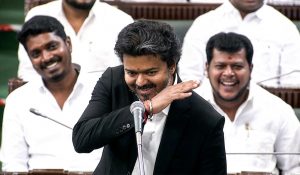
Tamil Nadu Chief Minister C Joseph Vijay.
Today, as the debate over MISA moves from the Assembly to social media, some argue it risks undermining the sacrifices of those who suffered during that period.
In particular, Chief Minister Vijay, speaking in the Legislative Assembly on 7 September, appeared to mock Stalin’s physical appearance while discussing the law.
This was followed by comments from Energy and Law Minister CTR Nirmal Kumar, who said that Stalin had been arrested in connection with a case involving women and suggested that there were no indications that he had been arrested under MISA. These remarks have sparked controversy.
However, Muhammad commented that “the entire debate is being deliberately driven by the Tamilaga Vettri Kazhagam (TVK) merely to divert attention from the major law-and-order and other issues facing the state.”
“During the Emergency, India itself had become a terrorised state, with people living in fear. Tamil Nadu alone was relatively safer because of the government led by former Chief Minister Kalaignar Karunanidhi. Several national leaders even came to Tamil Nadu and were able to remain here without being arrested,” he said.
“To such an extent, Kalaignar opposed the Emergency based on his principles and prevented its impact on Tamil Nadu. It was precisely for this reason that his government was dismissed as an act of political revenge, and his son Stalin was also arrested,” Muhammad added.
The present discussions surrounding MISA, he said, while disregarding history, also diverted public attention from more important issues.
When asked whether the current debate was an attempt to belittle the sacrifices people had made during the 1970s, Muhammad replied with a shrug.
“What does the Tamilaga Vettri Kazhagam have to do with sacrifice? They have no connection to sacrifice whatsoever. Today, the party is an ally of the Congress, the very party that implemented the Emergency in its most severe form,” he said.
“There are several things that people expected would change after the Tamilaga Vettri Kazhagam came to power, but they have not changed. People are dissatisfied with this. The purpose of this debate is to divert that dissatisfaction so that it does not favour the DMK,” he added.
(Edited by Majnu Babu).



