

Published Nov 12, 2026 | 9:45 AM ⚊ Updated Nov 12, 2026 | 9:45 AM

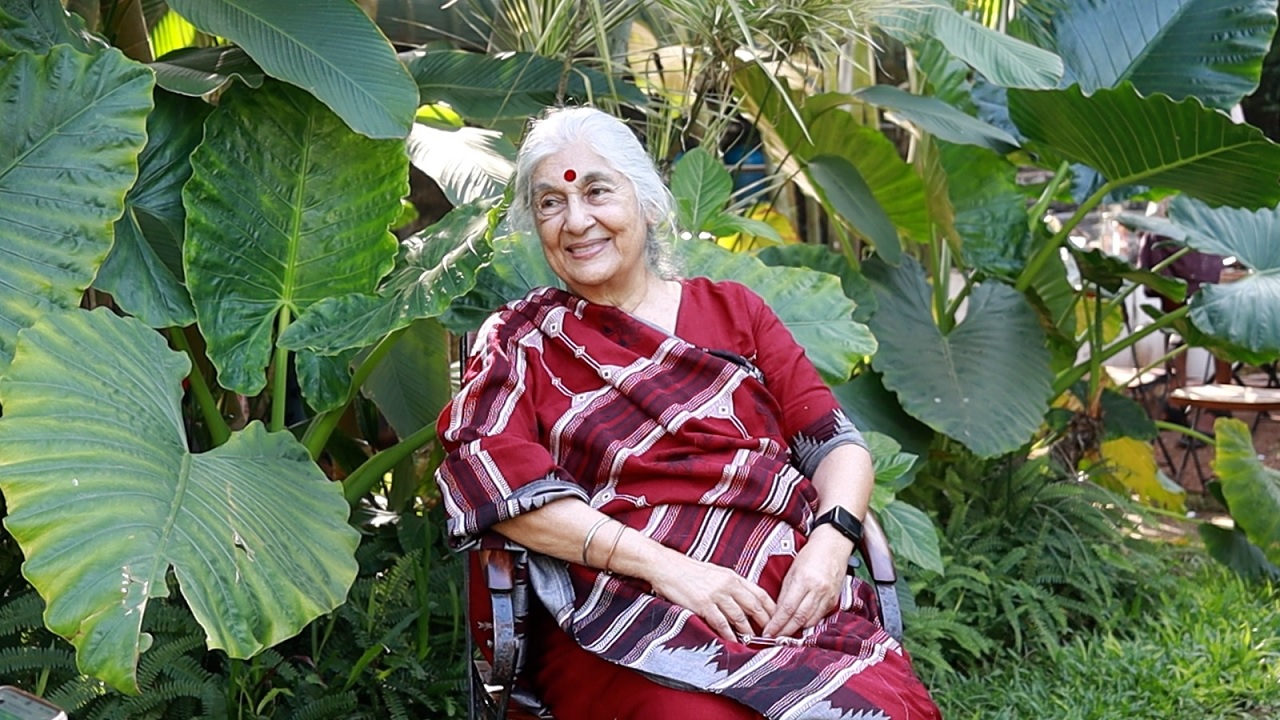
Subhashini Ali/ South First

Veteran CPI(M) leader and Politburo member Subhashini Ali has spent decades in Left politics and the women’s movement.
A former Lok Sabha MP from Kanpur and vice-president of the All-India Democratic Women’s Association (AIDWA), Ali has been a prominent voice on questions of caste, communalism and gender justice.
In this conversation with South First, during the inaugural ceremony of artist Jyotsna Dwivedi’s art exhibition, Red Milk, in Fort Kochi, Ali discusses the Sangh Parivar’s hostility towards art and cultural expression, the use of police force against political dissent, violence against women protesters and the challenges facing the Left.
Q: Fort Kochi recently witnessed a controversy surrounding artist Riyas Komu’s artwork Blood Brothers, featuring Mahatma Gandhi and Muhammad Ali Jinnah. A right-wing group questioned why a work featuring Jinnah was being exhibited in Kochi. Why do you think there is so much hatred towards art and artists?
A: I don’t think they really love anything. Anybody who loves something will also appreciate other things. If you don’t love anything generally, then you don’t love anybody or anything.
Their intention is always to find a Muslim target. If the artwork had featured Gandhi and Lord Mountbatten, perhaps they would not have objected. After all, Mountbatten was responsible for dividing India, largely because he was in a hurry to return.
Keralam is the biggest challenge for the Sangh Parivar because they feel their mission will remain incomplete unless they can establish political control here. They also have a history of targeting Marxists and trade union leaders in Keralam, including leaders of the Beedi Workers’ Union in the 1940s.
People should understand the history behind Jinnah’s family as well. His grandfather converted to Islam after facing caste-based discrimination because he was involved in the fish trade.
Gandhi and Jinnah may have stood on different sides of the political divide, but they did not share this kind of hatred towards each other. Gandhi even proposed making Jinnah the first Prime Minister of India in an attempt to prevent Partition.
Perhaps the intention behind Blood Brothers was to show how two people from the same cultural background became fathers of two nations. Art can bring people together. The Sangh Parivar wants to turn such expressions into objects of hatred.
Look at Fort Kochi. There is a church, a mosque and a temple in close proximity. People live together without constantly worrying about religion, food or clothing. Keralam must protect that culture.
They hate art, literature and everything beautiful. Anything that brings people together becomes a target.
Q: Opposition leaders, including Rahul Gandhi and Priyanka Gandhi, have faced multiple FIRs, while John Brittas and P Rajeev have faced police brutality during the anti-SIR protests in Delhi. How do you see these attempts to silence the Opposition? What impact could they have on the INDIA bloc and the broader political landscape? Also, why do women so often become targets when they raise their voices?
A: Women had to face the brunt of police brutality. Women journalists, activists and even women who were simply walking on the road faced physical abuse. The language used against them was horrible.
There were policemen without nameplates and people in civilian clothes attacking protesters. Even when questions were raised about their identities, the police did not intervene. It was a planned physical attack against dissenters and those questioning the government. But what was remarkable was that the youth, activists and ordinary people remained determined and unafraid.
John Brittas was also badly beaten. The police reportedly stopped only after realising that he was an MP.
I don’t know about the INDIA bloc. The more important question is what impact this has had on ordinary people. It has naturally made more people critical of the BJP because they have witnessed these incidents on television. Many of the young protesters come from Hindu families and different caste backgrounds. Their families are also seeing what is happening.
Political leaders facing cases may not surprise people. But ordinary people, particularly young women, being mistreated, pushed around and sexually abused is something people find extremely condemnable.
This kind of brutality is backfiring on the BJP.
It is a strategy to make women afraid. But they are not becoming afraid. Look at the SFI (Students’ Federation of India) activists, many of whom came from Keralam. They went to the police and simply said, “Come, do what you have to do.”
They were put into vans and mistreated, but they did not bow down. That determination is important.
Q: A Class 10 girl was recently attacked with a chainsaw inside her school in Andhra Pradesh. The accused later had his leg amputated after being shot by the police during an encounter. While we must stand with the survivor, the accused also has human rights. How should we balance justice for survivors with the rights of the accused?
A: I don’t support encounters, and my party does not support them either.
If somebody is accused of a crime, arrest them properly. Why are you saying they are running away? Is there something wrong with the way you are arresting people, or are you deliberately shooting them because you think it will make you popular?
Sometimes people who are not even guilty are killed. Even if someone is guilty, who are we to decide that without a proper trial? There is also a disturbing pattern in the profiles of those being killed or injured in encounters. A significant number belong to minority and OBC communities.
Former Uttar Pradesh DGP Sulkhan Singh has also described encounters as a failure of policing.
And have these encounters stopped crime? No. There has been no decrease in crime. So why continue with this practice?
First of all, we must make sure that the person arrested is actually guilty. There must be a proper trial, but it must also be a quick trial. Why do we allow cases to continue for so many years? The entire justice system needs to be corrected.
In cases of rape and violence against women, we have always demanded fast-track courts. But simply having fast-track courts is not enough. They must function effectively.
Survivors should not have to go through repeated questioning that makes them relive the trauma. The process of justice itself must become more sensitive towards them.
Q: Political parties continue to be dominated by men. How much space do women actually get in decision-making and policymaking in the Left? And what does the future hold for the Left in Keralam?
A: Patriarchy is very strong in our country. I don’t think any political party is completely free of it. But I can say that within the CPI(M), there is space to fight.
You must have the courage to fight. You must fight to expand that space, to be heard and to ensure that other women in the party are also heard. That is very important. I believe we have that space within the party.
As for the Left’s future in Keralam, I think we are very strong here. The CPI(M) remains deeply connected to people’s lives and their thinking. Even people who may not have voted for the party still consider themselves CPI(M) supporters.
I am sure we will see a change again. We have already started seeing signs of it in student elections and local body elections. Perhaps people had grievances and wanted the party to correct certain habits.
But they have not abandoned the Left.
We are also seeing an upsurge in Bengal. The TMC has started losing ground, and the Left has become active again. After a long time, the CPI(M) is gaining traction among people there.
Ambedkar and his ideology are extremely important in our country. Our understanding of caste must be deep and serious because caste oppression remains a major reality for the poorest people in India.
Class oppression exists, but caste oppression exists too.
If we want to change India, we must confront caste oppression. This is particularly important for women activists because Scheduled Caste and Dalit women are at the bottom of the social hierarchy. They face the most severe forms of oppression.
Also Read:
Founder of Barefoot College and ‘man who took Gandhi literally’, Bunker Roy passes away
(Edited by R Rajesh Kumar.)



