

Published Nov 10, 2026 | 12:53 PM ⚊ Updated Nov 10, 2026 | 12:53 PM

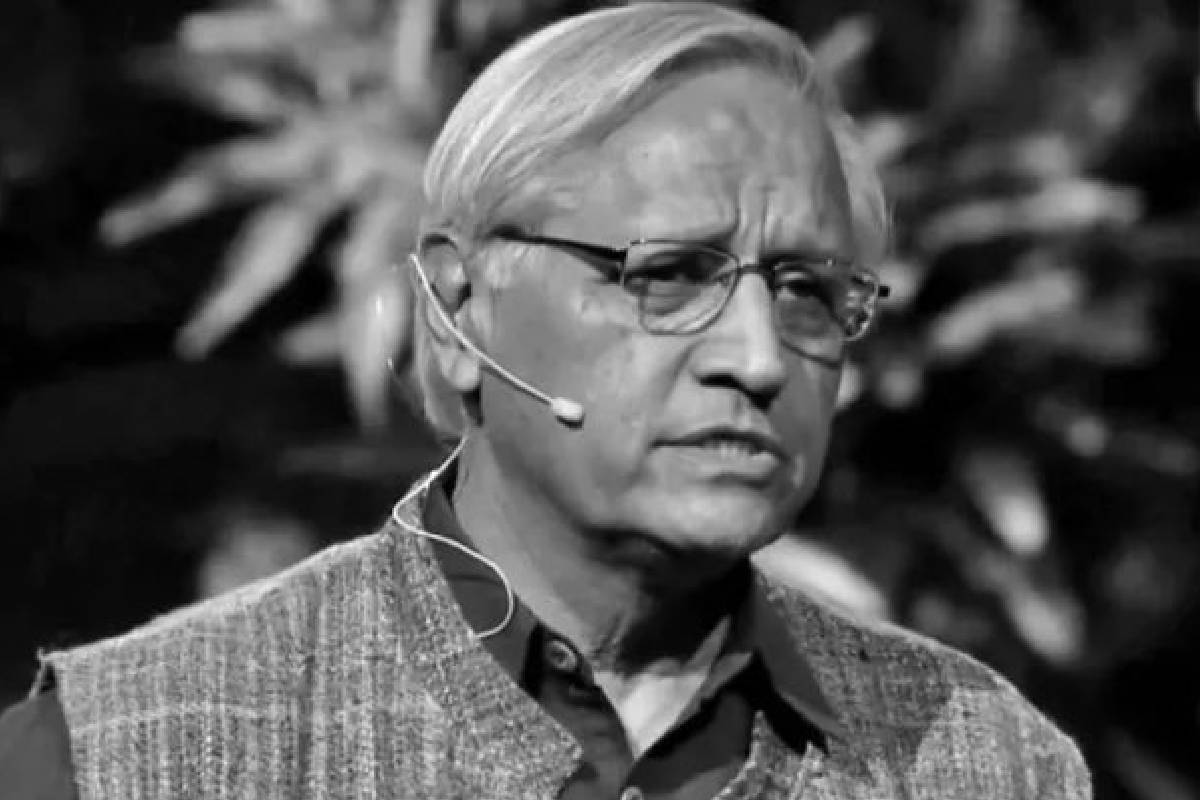
Bunker Roy.

Social activist and educator Sanjit ‘Bunker’ Roy, founder of the Barefoot College, passed away on Tuesday morning at his home in Tilonia, Rajasthan. He was 81.
In a statement, Roy’s family said he passed away peacefully, with all his loved ones around him.
“Bunker Roy passed away peacefully at 6.15 am this morning with Aruna (Roy) and others around him. He went as he wanted to, in his own home in Tilonia, surrounded by some of the countless people who loved and cared for him deeply and passionately and admired him for his extraordinary lifelong contribution to people, society, India, and the planet,” the statement read.
In 1972, years after a visit to a famine-hit Bihar village upended his worldview — as he told the Indian Express during a 2015 interview — Roy founded the Social Work and Research Centre, a voluntary rural development organisation. Through his organisation, he trained villagers in rural India in basic engineering and medical skills, empowering them to become self-sufficient and use resources sustainably.
The organisation later became the Barefoot College, which empowers “rural marginalised communities worldwide by providing them with access to sustainable solutions in the areas of water, solar, education, health, livelihoods and environment.”
Journalist Pamela Philipose was among those who remembered Roy for empowering women from marginalised communities and transforming their lives.
She wrote, “Bunker Roy, who has just passed away, was a true leader who chose to locate himself in rural Rajasthan and train barefoot women into tech engineers. Their understanding of solar power was so exceptional that countries in Africa called them over.”
Roy received international recognition for his work in rural development. In 2010, Time magazine named him one of the 100 most influential people in the world, in the ‘Thinkers’ category.
Bunker Roy was married to prominent activist Aruna Roy, a former civil servant who led the grassroots movement that resulted in the Right to Information (RTI) Act of 2005.
Roy’s funeral will take place at 4 pm on Tuesday at Tilonia.
Activists, politicians and ordinary people mourned Roy’s passing and remembered him for his contributions to educating and empowering the vulnerable sections of Indian society.
In a post on X, Communist Party of India (CPI) leader D Raja expressed “deep sorrow” over Roy’s passing.
“For over five decades, he dedicated his life to empowering rural communities, challenging inequalities and building self-reliance among the most marginalised. His contribution to grassroots empowerment will remain an enduring legacy,” Raja wrote.
“We extend our heartfelt condolences to Aruna Roy, his family, colleagues and the entire Barefoot College community. His life and work will continue to inspire generations committed to equality, dignity and a more just society,” he added.
Journalist Seema Chishti described him as a legend whose journey inspired many.
Heartfelt condolences to @ArunaRoy and the entire Tilona family on the passing of Bunker Roy.
What a legend he was and his journey inspired so many.— Seema Chishti (@seemay) November 10, 2026
Journalist Rupashree Nanda hailed him as an ‘inspiration for many’.
Deeply saddened to learn that Sanjit ‘Bunker’ Roy is no more. Widely known for his pathbreaking initiatives in rural devt through his org, d ‘Barefoot College’, Roy’s work will continue to be an inspiration for many. Deepest condolences to Aruna Roy, family and friends 🙏
— Rupashree Nanda (@rupashreenanda) November 10, 2026
Professor Amitabh Mattoo recalled Roy’s choice to give up a comfortable life and work in rural India, training villagers and the poor.
“Bunker Roy has died in Tilonia, the village he chose over every comfort his birth had promised him. I have been to Tilonia and seen the Barefoot College at work. It rested on an idea most of us with degrees still struggle to accept: that the poor are not a problem waiting for experts, but people with knowledge of their own. He proved it by turning grandmothers who could not read into solar engineers,” he wrote.
“India has lost one of the few men who took Gandhi literally. We will praise him today. The harder tribute would be to believe what he believed,” he added.
(Edited by Fayisa CA)



