

Published Jul 27, 2026 | 7:00 AM ⚊ Updated Jul 27, 2026 | 7:59 PM

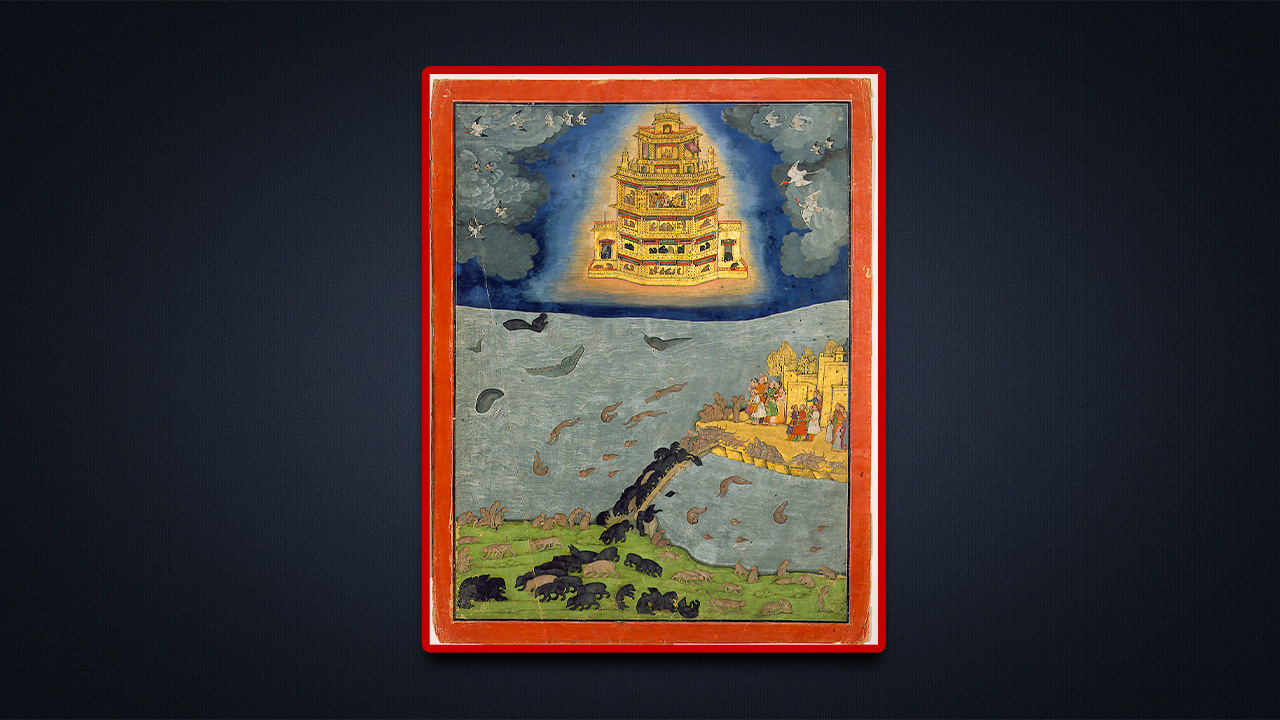
The Pushpak Viman was but one of leaps of imagination in our ancient texts. (Wikimedia Commons)

Synopsis: Remember the Nandighosha? What about the Akasa Vani? Our myths had mindboggling machines and considered our brain to be a processor that connected with the universal intelligence. Modern neuroscience is exploring the possibility now…
(vidyā dadāti vinayaṃ, vinayād yāti pātratām |
pātratvāt dhanam āpnoti, dhanāt dharmaṃ tataḥ sukham)
“Knowledge gives humility; from humility comes worthiness; from worthiness comes wealth; from wealth comes righteousness; and from righteousness comes happiness.”
The above verse is from Hitopadesha, a timeless book on wisdom, human values and wellbeing.
Humankind has always been fascinated by mysterious knowledge, devices, technology, automation and control over everything. The inquisitiveness to excel and usurp has been their main motive in life since evolution. The constant desire to extend human capabilities is the propeller for making strides in the field of science and technology.
Indian epics and puranas have always contained stories of missiles, machines and robots that can devise strategies along with the technical description of self-moving devices (Brahmastra, Nagastra, etc), automated palaces (Ravana’s palaces as described in Ramayana, Maya Sabha of Mahabharata) with automated doors and furnishings that respond to commands.
There is a mention of many such intelligent constructions, which had task-oriented behaviour. Great architects like Viswakarma were credited with the creation of hi-tech chariots and flying machines (Pushpaka Vimanas). If not AI in our modern era, all these accounts stand as a testimony to an inherent human fascination and cultural interest in ‘smart’ devices and reflect the boundless limits of human desire. All the mythical innovations strikingly draw parallels to today’s mechanisation and Artificial Intelligence.
The concept of AI does not seem to be new for the ancient world. There are umpteen references to AI technology in ancient texts like Ramayana, Mahabharata and Puranas wherein humans were capable of creating machines that were powerful and also intelligent. Let’s recall some glimpses of that ancient knowledge.
In the Mahabharata, there is the mention of a Mayasabha said to have been constructed in 14 days by the divine architect Maya with a real-illusory framework employing optical deceptions that wiped out the boundaries between illusion and reality. The innovative design mimicked ground over hidden pools, leading the visitors to mistake water for land. The hall’s shimmering lights produced effects akin to flames or clouds, which we call VFX effects in current times.
Nandighosha, the extraordinary chariot of Arjun gifted by God Agni, meanwhile, was said to be capable of handling multidimensional movements, embedded with the intelligence of anticipating the needs of the warrior. The Mahabharata also describes the mysterious and powerful objects called vimanas powered by mercury and controlled by the mind. Also, there is the mention of sophisticated missiles like the Brahmastra and Narayanastra capable of releasing millions of missiles at once, at the same time causing massive destruction to the user if applied immorally (as used by Aswaddhama against Uttara’s womb). These draw a parallel to the sophisticated current-era weaponry powered by artificial intelligence.
We also find glimpses of automation and robotics in Samarāṅgaṇa Sūtradhāra, the classical Indian architectural encyclopaedia written by King Bhoja (between 1000-1055AD). Along with town planning and architecture, it covers the mechanical yantras in one of its chapters (Chapter 31).
Bhoja mentions the automatic swayam vahi self-driven machines (today’s Tesla cars). Also featured are Antaritas, concealed mechanisms where internal parts are not seen (similar to the software in the machines). The text mentions automated devices meant for entertaining the royals and for protecting the palace. The chapter describes robotic servants and guards, both male and female, who perform automated tasks like refilling oil lamps, dancing and playing musical instruments, and also mechanical soldiers to counter intruders.
The list would be incomplete without mentioning our childhood favourite ‘Akasa Vani’ (Voice from the sky). Now, we have voice-assistants like Gemini, Alexa and Siri, loaded with timely and suggestive information pulled from the cloud to enable better decision-making. We might sometimes have stumbled upon the term ‘Akashic records’ where yogic Siddhas could access past, present and future knowledge through meditation. Rishi Veda Vyasa is believed to have dictated the Mahabharata to Lord Ganesha by retrieving data from an Akashic knowledge bank that seems to be beyond human thinking now. It draws a parallel to our cloud computing and AI-based predictive analytics of today.
Ancient knowledge and wisdom consider the brain not just a biological organ but a processor that connects with universal intelligence (God), which modern neuroscience has begun to explore now.
Talking of current times, recent news about the Buga sphere triggers mind-boggling questions we have always been curious to know. It was seen hovering in a zig-zag pattern before falling to the ground. The sphere was spotted in Colombian skies of Buga in early March 2025. The object seemed to be a network of complex fibre-optic wires that could transmit and receive signals and was embedded with 18 microspheres and three layers of metal.
In today’s age of automation and AI, the best of the technology is still unable to decode many mysteries of our ancient temples, the latest one being the secret vault of Anantha Padmanabhaswamy temple in Thiruvananthapuram.
As AI continues to evolve, there are some questions to ponder about ethics, its responsible usage and future consequences of machine intelligence. AI is growing in leaps and bounds. Yet the question of whether it will be given legal approval as an autonomous entity/being in future remains unanswered. More importantly, would it be made responsible for its actions?
Future AI may require an ethical framework that makes it ethically accountable for its decisions. As the human obsession to control everything continues, let’s ask AI to forecast through its predictive analytics whether humans will continue to rule the tech world or whether AI will take over human lives.
Also Read:
‘Magnifica Humanitas’: What the Pope’s AI Encyclical means for India
What AI can’t teach: The power of serendipity in learning
The significance of President Trump’s AI security order for India and the rest of the world
(Edited by R Rajesh Kumar.)



