


Published Oct 19, 2026 | 7:00 AM ⚊ Updated Oct 19, 2026 | 7:00 AM

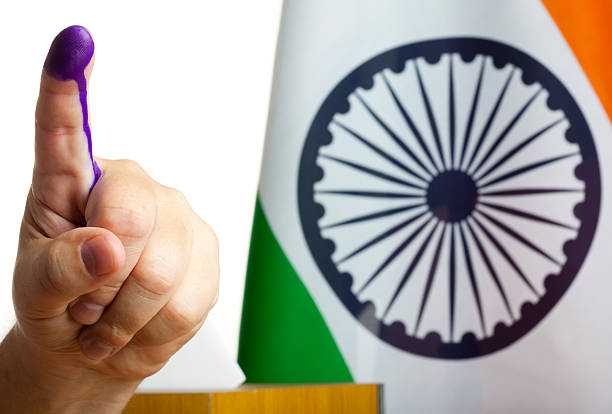
Preserving democracy requires institutions staffed by individuals fiercely loyal to the constitution rather than to the government. (iStock)

Synopsis: As internal dissent exposes deep fractures within India’s Election Commission, it is time to examine how integrity institutions designed to safeguard constitutional democracy can go astray, warning that compromised watchdogs risk turning democratic safeguards into instruments of authoritarian control.
Modern democratic governance relies heavily on the illusion of procedure. Across the globe, authoritarian drifts rarely happen overnight through dramatic military coups; rather, they are engineered quietly through the administrative machinery designed to uphold democracy itself.
A recent exposé by The Indian Express has laid bare deep-seated fractures within the Election Commission of India (ECI), revealing a systemic erosion of its internal autonomy.
This phenomenon is not isolated. It echoes global blueprints of managed electoral engineering, seen recently in Russia’s centralised voting apparatus—where state authorities and Central Election Commissions act as administrative instruments to secure predictable supermajorities through pre-election filtering, opaque electronic voting “black boxes,” multi-day voting windows without surveillance, public-sector coercion, and the systematic suppression of independent election observers like Golos.
Similar warnings are seen in historical anomalies like the premature result leak during Ilham Aliyev’s election in Azerbaijan in 2013.
When the guardians of the ballot box become instruments of executive consolidation, the fundamental architecture of constitutional democracy begins to crumble from within. This raises the ultimate structural dilemma: If integrity institutions are designed as the watchdogs of constitutional democracy, how do we deal with them when they go astray?
Also Read: Indira Gandhi, Narendra Modi and the march of folly
To understand how administrative bodies can subvert democratic outcomes, look at how elections are orchestrated worldwide. In Russia’s recent State Duma elections, the Central Election Commission and local authorities ensure predictable outcomes for the Kremlin and the United Russia Party through systematic manipulation.
This control is exercised via pre-election filtering that disqualifies genuine or anti-establishment opposition through technicalities and political labelling, and by exploiting opaque Remote Electronic Voting systems (“black boxes”) that produce sudden overnight shifts favouring the ruling party. Furthermore, state machinery coerces public-sector employees into voting, extends voting windows across multiple days without round-the-clock surveillance to facilitate secure overnight storage, and relies on direct falsification and near-unanimous reporting in controlled regional “electoral sultanates”.
The underlying cynicism of such managed systems was perhaps best captured in historical accounts of totalitarian control. While the famous maxim that “the people who cast the votes decide nothing; the people who count the votes decide everything” is frequently and apocryphally attributed to Joseph Stalin, the closest actual historical trace of this sentiment comes from Boris Bazhanov, Stalin’s former personal secretary who defected from the Soviet Union in 1928.
In a memoir published later, Bazhanov claimed that Stalin once said: “I regard it as completely unimportant who in the party will vote and how; but what is extraordinarily important is this—who will count the votes and how.”
A starker contemporary illustration of predetermined outcomes occurred during the 2013 presidential election in Azerbaijan. On the eve of the vote—a full day before a single ballot was cast—the official smartphone application of Azerbaijan’s Central Election Commission accidentally published the final landslide results for Ilham Aliyev. Officials scrambled to blame a “test dataset,” yet the actual post-election
figures mirrored the leaked numbers with uncanny precision.
These episodes highlight a cynical political reality: when executive power captures vote-counting and administration, elections stop being expressions of public will.
Also Read: ‘India roars louder than ever’: Gyanesh Kumar SIR, please get out
When watchdogs go astray, the decay often begins internally, hidden behind closed doors. The Indian Express exposé reveals that India’s constitutional watchdog is facing a severe test of internal integrity.
Two of the three election commissioners, Sukhbir Singh Sandhu and Vivek Joshi, formally objected at least 14 times over 10 months to decisions enacted in the full Commission’s name without their knowledge. Controversial moves—such as altering Form 6 to introduce unauthorised questions regarding past electoral rolls, centralising the database, and mass voter deletions in regions like West Bengal—proceeded despite formal dissent.
This dynamic directly violates the foundational principles laid down by the Supreme Court of India. In SS Dhanoa vs Union of India and Ors. (1991), the Supreme Court sagely observed:
“There is no doubt that two heads are better than one, and particularly when an institution like the Election Commission is entrusted with vital functions, and is armed with exclusive uncontrolled power to execute them, ‘it’ is both necessary and desirable that one individual does not exercise the powers, however, all-wise he may be.”
When a multi-member constitutional body operates through unilateral executive override rather than collective deliberation, its foundational legal safeguards are hollowed out. Highlighting the gravity of this perception, Justice Dipankar Datta of the Supreme Court noted on 23 September 2026 that: “It is not enough for the EC to be independent; it must also appear to be independent.”
Also Read: ‘Unconstitutional and undemocratic’: Ex-apex court judge demands recall of SC’s SIR judgment
The executive branch’s instinct to control independent election bodies is far from a modern invention. In his book Every Vote Counts: The Story of India’s Elections, former Chief Election Commissioner Navin Chawla referred to the Constituent Assembly’s vision of an “independent” Election Commission.
The framers intentionally placed the election machinery beyond the executive Government’s control, a design Dr BR Ambedkar explicitly defended in the Constituent Assembly on 15 June 1949.
Chawla also documented a crucial historical warning from January 2004, when the Atal Bihari Vajpayee government attempted to bypass the topmost Election Commissioner, TS Krishnamurthy, and appoint an “outsider” as CEC. In response, the two Commissioners, Krishnamurthy and BB Tandon, threatened to quit the Commission. The move was dropped only when political parties and the intelligentsia strongly reacted against the executive overreach.
As Chawla’s account demonstrates, history serves as an urgent warning: The instinct to capture the Election Commission is not new. What is new is how sophisticated it is becoming.
Also Read: ECI’s SIR ‘whodunnit’: Anjali Bhardwaj on collapse of accountability under BJP
To safeguard modern governance from such administrative capture, legal scholars have conceptualised specialised watchdog bodies as a vital “fourth branch” of government. In his framework of the New Separation of Powers, legal scholar Bruce Ackerman argues that contemporary constitutional systems require independent integrity institutions—such as electoral commissions and audit bodies—to check the dominance of the executive and legislative branches. These bodies act as structural firewalls, protecting the rules of democracy from majoritarian overreach.
However, philosopher Roberto Mangabeira Unger cautions against institutional fetishism. In False Necessity (1987), Unger argues that social and institutional arrangements are plastic historical artefacts. Merely engineering a fourth branch on paper is insufficient; institutions cannot sustain their democratic mandate if they are staffed by individuals who lack a deep commitment to civic virtue. Without a vibrant internal culture of independence, structural safeguards easily bend to political pressure.
To capture this institutional tragedy, one might view the Election Commission—and fourth-branch Integrity Protection Institutions (IPDs) generally—as the elves of the Republic. In the festive mythology of democracy, Santa Claus represents the overarching sovereign will of the people, and elections are the grand celebration of Christmas—the sacred moment when gifts of political legitimacy are distributed.
The elves—the meticulous, behind-the-scenes administrators and commissioners—are tasked with keeping the workshop running smoothly, ensuring that every ballot is counted fairly, every rule is followed impartially, and the workshop remains untainted by outside corruption.
The grave warning, however, is that elves must not turn into imps. While elves labour faithfully to maintain democracy’s festive spirit, imps introduce chaos, mischief, and covert subversion. When integrity institutions abandon transparent stewardship and become agents of partisan engineering, democracy’s festive promise becomes a ridiculous farce. The public loses trust not because the citizens reject democracy, but because the workshop’s inner circle has traded its tools of fairness for instruments of control.
Dealing with watchdogs that have gone astray requires confronting fundamental questions about structural design, public accountability, and political culture. Ongoing controversies over appointment acts, the dilution of selection panels, and internal administrative centralisation threaten to strip the Election Commission of its hard-earned goodwill as an elite integrity institution.
As legal scholar Mark Tushnet reflects in The New Fourth Branch: Institutions for Protecting Constitutional Democracy (2021), theorising endlessly about formal institutional design can ultimately become a distraction if the underlying commitment to civic virtue fades. Preserving democracy requires more than structural engineering; it demands institutions staffed by individuals fiercely loyal to the constitution rather than to the government of the day.
(Views expressed are those of the authors. Edited by Majnu Babu).



