
Published Sep 27, 2026 | 3:59 PM ⚊ Updated Sep 27, 2026 | 3:59 PM

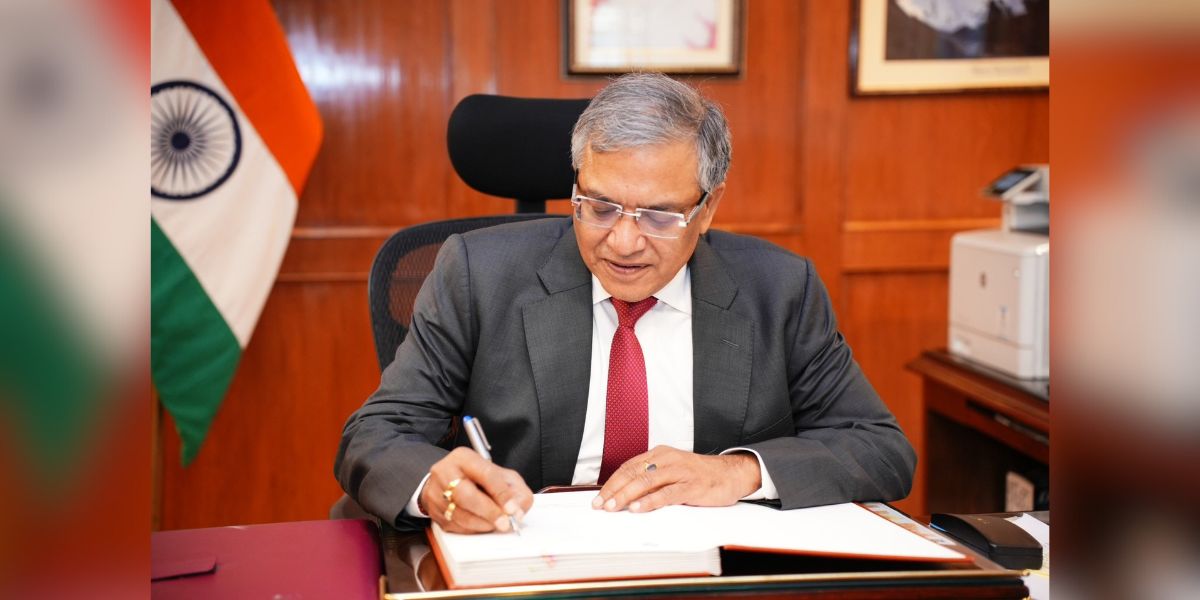
Gyanesh Kumar. (X)

Synopsis: The Election Commission faces growing scrutiny over voter deletions under the Special Intensive Revision and objections raised by two Election Commissioners. Devulapalli Amar questions the independence of the poll panel, the 2023 appointment law, and the government’s response, while highlighting Rahul Gandhi’s campaign and Gen Z’s emerging political mobilisation.
On September 25, English national dailies carried an eye-catching advertisement with Prime Minister Narendra Modi’s photo: “India Roars Louder Than Ever.” The advertisement was for Make in India, a programme very dear to Prime Minister Narendra Modi.
If this roar were heard loudly in raising production or improving people’s living standards, everyone would be happy.
Today India is roaring louder than ever. The demand is that Chief Election Commissioner (CEC) Gyanesh Kumar be arrested and investigated. The opposition parties are insisting that he be arrested over alleged “vote theft” through deleting the names of crores of voters from the electoral rolls.
Under the Special Intensive Revision (SIR) exercise, the Election Commission of India (ECI) has so far removed more than 13 crore names from the draft voter lists of all 30 states and union territories. That number equals the population of a small country. This action has cast a shadow of doubt over the credibility of the institution that carries the responsibility of deciding who in this country gets the right to vote. It is outrageous that no attempt has been made to officially disclose the reasons for deciding to remove these votes.
At every turn, members of the ruling Bharatiya Janata Party (BJP) use the word “ghuspaithi,” meaning infiltrators. Did so many people really infiltrate from neighbouring countries? If so, does that not call into question the capability of our intelligence and security systems? Independent institutions with such responsibility need transparency. Why not place the names of those infiltrators before the people of the country?
Also Read: Why CEC Gyanesh Kumar should resign, and why the appointment process needs to change too
Leader of Opposition in the Lok Sabha Rahul Gandhi, has campaigned extensively for nearly a year, flagging the irregularities and illegalities regarding the SIR. What that could not achieve, an investigative report by the Indian Express daily did. The BJP, which had brushed aside every objection raised by Rahul Gandhi and other opposition parties, insisting that the Opposition had lost the people’s support, has been left choking on this news.
Apart from sending a few BJP leaders before the media to make weak arguments about a “lack of evidence,” neither the Prime Minister nor the Chief Election Commissioner has come before the people to address the allegations. Can we therefore assume that not one, but several wrongs have been committed?
The Indian Express report was based on objections officially raised by two of the three Election Commissioners. The two commissioners complained that decisions on several matters had been taken without their knowledge, including actions such as adding new voters and removing existing ones. They argued that centralising the process of new voter enrolment without the involvement of State-level officials was illegal.
There were also reports that the two commissioners had approached the Cabinet Secretary over the matter. The Election Commission of India is an autonomous constitutional body and is expected to function independently. The very fact that the commissioners had to approach the Cabinet Secretary, however, raises questions about the extent to which the Commission has come under the influence of the central government.
Over the past ten months, the two commissioners reportedly recorded their objections on at least 14 occasions. On one day alone, they raised objections four times over orders issued without their knowledge.
Yet no one appears to have paid heed to the commissioners’ grievances. Chief Election Commissioner Gyanesh Kumar, meanwhile, appears to be focused entirely on carrying out orders from elsewhere.
This brings us to the questions raised over the 2023 law governing appointments to the Election Commission. The law replaced the Chief Justice of India with a Union Cabinet minister nominated by the Prime Minister on the selection panel, giving the government two members on the three-member committee. Gyanesh Kumar is the first CEC to be appointed under the new law. Was the change made to facilitate the appointment of Gyanesh Kumar as Chief Election Commissioner? And, in return, was there a display of loyalty?
Also Read: A suicide note and BJP MP offer: Gyanesh Kumar’s Keralam trail comes under scrutiny
The Election Commission is now under scrutiny, while young people and students are gearing up for another Jantar Mantar movement. The ruling party has already begun its snide remarks, questioning why the Cockroach Janta Party, representing Gen Z, is interfering in politics when it should be focusing on education.
When such an outrage is being committed against the right to vote, the most important right of this country’s people, who else should care if not Gen Z? The slogan “Cockroaches Wapas Aao” is bound to rattle those in power.
The Cockroach Janata Party has put forward three demands. First, the resignation of Chief Election Commissioner Gyanesh Kumar. Second, the repeal of the 2023 law governing appointments to the post. Third, the suspension of the State elections due over the coming year until the Election Commission is reformed.
All three demands merit serious consideration. After all that has happened, even if Gyanesh Kumar is not arrested and booked, as the Opposition has demanded, he should, at the very least, take moral responsibility and resign.
Three aspects of the recent developments on this issue need to be discussed.
First, there is the way Rahul Gandhi has grown into his role as Leader of the Opposition and the maturity he has shown in dealing with issues of this magnitude. There are those who criticise Rahul Gandhi, who is around 57, arguing that he still does not know enough political history. There are others who grumble that his political career is nearing its end.
Those who make such arguments –many of whom are themselves past 75, the number obtained by reversing 57– would do well to ask whether they are merely standing by as spectators while developments unfold that risk damaging the country’s credibility before the world.
Second, at a time when what we call the mainstream media is often accused of prostrating itself before power, The Indian Express‘s publication of an investigative report on the Election Commission comes as a small ray of hope.
Third and finally, Gen Z has girded itself to challenge the established ways of Indian politics. The youth of India are speaking louder than ever. It is time to listen.
(Edited by Fayisa CA)



