

Published Jul 18, 2026 | 2:20 PM ⚊ Updated Jul 18, 2026 | 2:42 PM

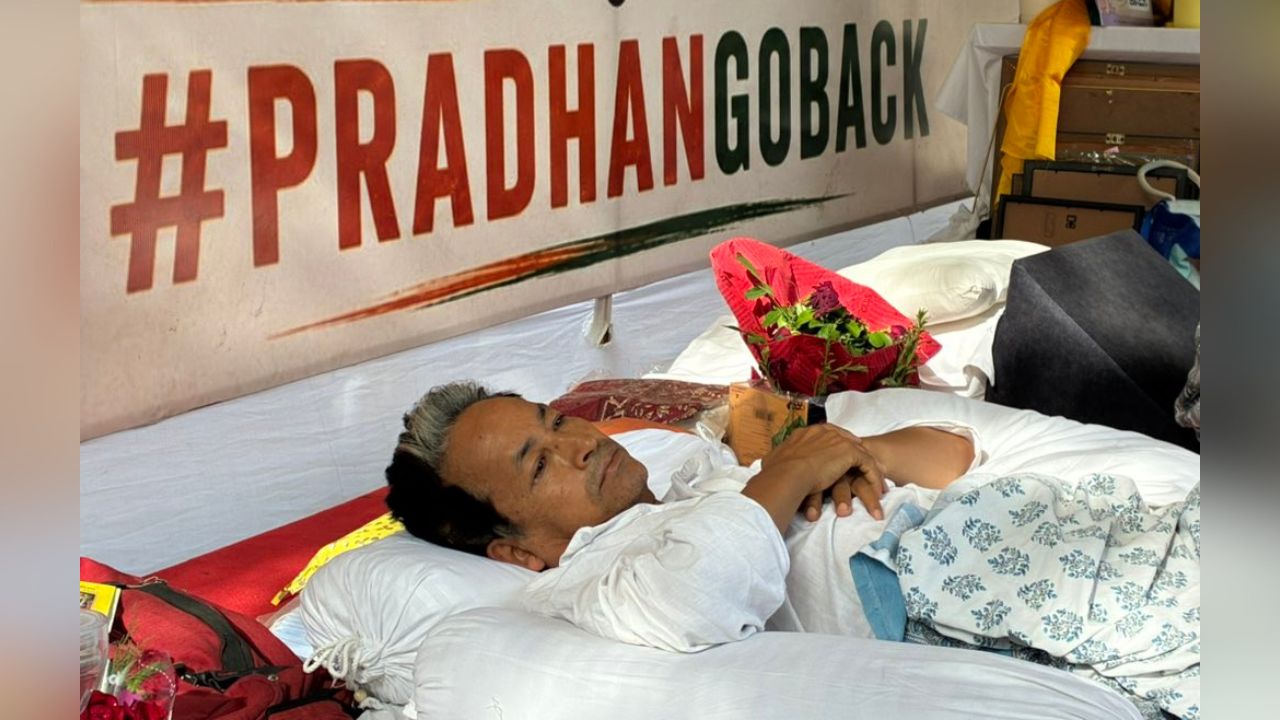
Sonam Wangchuk during his fast at Jantar Mantar.

Synopsis: Targeting Sonam Wangchuk and accusing him and his supporters of furthering a political narrative, as supporters of the NDA government have done, was avoidable. The focus must instead remain on the crisis the students of the country face after every failed examination.
In a democracy, disagreement and criticism are essential elements of public discourse. Citizens have the right to question public figures and institutions.
However, when the concern involves lakhs of students and their families, the debate should not be confined to the person raising the issue.
Sonam Wangchuk, an educationist and innovator from Ladakh, has recently become the centre of national attention through his protest highlighting concerns related to students, youth, and the functioning of India’s education system. His protest has brought renewed focus to issues surrounding examination credibility, student uncertainty, and institutional responsibility.
Whether he should be supported, opposed or greeted with silence as the establishment has done is a separate debate. The real issue is the exam crisis itself.
During his hunger strike, which has lasted over 20 days and led to his being taken to hospital by the Delhi Police, Sonam Wangchuk has raised concerns regarding students, the future of young people, and the functioning of India’s examination and education system. He has called for greater accountability from the Union Education Ministry and sought the resignation of Education Minister Dharmendra Pradhan. His demand comes amid growing concerns regarding the transparency, credibility, and reliability of competitive examinations that determine the academic and professional futures of millions of students in our country. The issues Wangchuk has raised have garnered international attention.
In India, competitive examinations represent years of preparation, financial sacrifices by families, and significant emotional investment. These examinations are not merely tests; they are gateways to medical education, higher studies, research opportunities, and government careers.
Any allegation of examination irregularity, malpractice, paper leaks, or administrative failure affects more than marks and rankings. It affects public confidence in institutions and creates uncertainty for students who depend on these systems.
Concerns regarding examination credibility are not limited to one examination. Repeated issues such as paper leaks, technical failures, cancellations, and evaluation disputes have raised questions about transparency, reliability, and the ability of institutions to protect students from disruption.
For students, examination failures are not merely administrative problems but life-disrupting challenges.
The focus must therefore remain on strengthening institutional safeguards that prevent such failures before students face their consequences.
The NEET-UG examinations have become a major example of these concerns.
The NEET-UG 2024 controversy involved allegations relating to paper leakage, unusual score patterns, and grace marks. Investigations by authorities, including the Central Bureau of Investigation (CBI), resulted in criminal proceedings against individuals accused of examination-related irregularities. The matter reached the Supreme Court, which acknowledged irregularities in certain areas but found that available evidence did not justify cancelling the entire examination.
Beyond legal proceedings and individual criminal responsibility, such incidents affect public confidence in an examination system that determines the careers of millions of students.
The concerns continued with the cancellation of the UGC-NET June 2024 after the Ministry of Education received information suggesting that the integrity of the examination may have been compromised. The cancellation affected thousands of candidates preparing for Assistant Professorship and Junior Research Fellowship opportunities, creating uncertainty regarding their academic careers.
The concern resurfaced again with the NEET-UG 2026 controversy, where the examination was cancelled following allegations of a paper leak and irregularities, leading to a re-examination process affecting more than 20 lakh medical aspirants. Investigations were initiated, but students immediately faced uncertainty, loss of trust, and emotional pressure after months or years of preparation.
The human impact of examination failures cannot be overlooked. Reports of student suicides during examination crises have highlighted the severe pressure faced by young aspirants who view these examinations as pathways to their dreams and careers. While each case requires careful investigation, these tragedies demonstrate the serious consequences of uncertainty and declining trust in systems that shape the lives of millions.
Also Read: India’s exam system has reached a breaking point after NEET fiasco
Within this broader environment, Sonam Wangchuk’s protest has gained public attention by bringing renewed focus to the role of institutions in maintaining examination integrity. Wangchuk has questioned the role of Education Minister Dharmendra Pradhan in addressing repeated challenges within examination systems.
The issue extends beyond identifying individuals involved in malpractice. Criminal responsibility must be determined through investigation and judicial processes. However, a broader institutional review requires examining whether preventive mechanisms were effective and whether meaningful reforms were implemented to prevent such failures from recurring.
Instead of remaining focused on examination reforms and student welfare, a section of the public debate has shifted towards the personality, intentions, and background of the protester. Social media discussions have questioned Wangchuk’s motives, with some critics using labels such as “anti-national” and circulating allegations regarding his conduct, intentions, and possible external influence. Such claims require evidence and verification.
The role of social media platforms and online influencers has further shaped public perception of the protest. While public discussion is an essential part of democracy, some conversations have moved away from examination integrity and student welfare towards political narratives, personal criticism, and unverified claims. Such shifts risk diverting attention from the central issue of ensuring a fair and reliable examination system.
The debate has also expanded into political and national security narratives, with some critics linking the protest to questions of patriotism, external influence, or national interest based on previous allegations and controversies. However, claims regarding an individual’s intentions or loyalty must be evaluated through evidence, investigation, and due process rather than speculation.
The political divide has further intensified. Supporters of the government have argued that critics are attempting to create a political narrative, while opposition groups and activists have used examination failures to question the government’s handling of these issues. Political disagreement is a natural part of democracy, but it should not overshadow the need to protect the integrity of examination systems and the interests of students.
No publicly available court judgment, official finding, or verified evidence has established the allegations being circulated against Sonam Wangchuk. Serious accusations require proof and due process; public opinion and social media narratives cannot replace facts.
In a democracy, questioning institutions and demanding transparency are essential parts of public participation. Citizens have the right to seek fairness and responsible governance from those entrusted with public duties. Constitutional principles, including equality before the law under Article 14 and the right to life and dignity under Article 21, underscore why the integrity of exams is non-negotiable.
The principle of natural justice requires institutions to act fairly, follow transparent procedures, and consider the consequences of administrative failures. Effective governance is not only about responding after a crisis occurs but also about building systems strong enough to prevent such failures.
People may disagree with Sonam Wangchuk’s methods, demands, or viewpoints, and such disagreement is part of democratic discussion. However, criticism should be based on evidence rather than personal attacks or unverified claims that shift attention away from the issue.
The central concern remains the credibility, fairness, and transparency of an examination system that shapes the future of millions of students. Political debates may continue around individuals and ideologies, but students preparing for these examinations should not become casualties of institutional failures or political conflicts.
The credibility of an examination system is measured not only by its response after failures occur, but by its ability to prevent them. Protecting students’ futures requires transparency, stronger safeguards, and meaningful reform. A fair system today builds a confident generation tomorrow.
Also Read | NEET leakage: Are authorities endorsing systemic failure?
(Hampi Dudekula is a student and PhD candidate. Views are personal. Edited by R Rajesh Kumar.)



