

Published Jun 05, 2026 | 7:00 AM ⚊ Updated Jun 05, 2026 | 9:30 AM

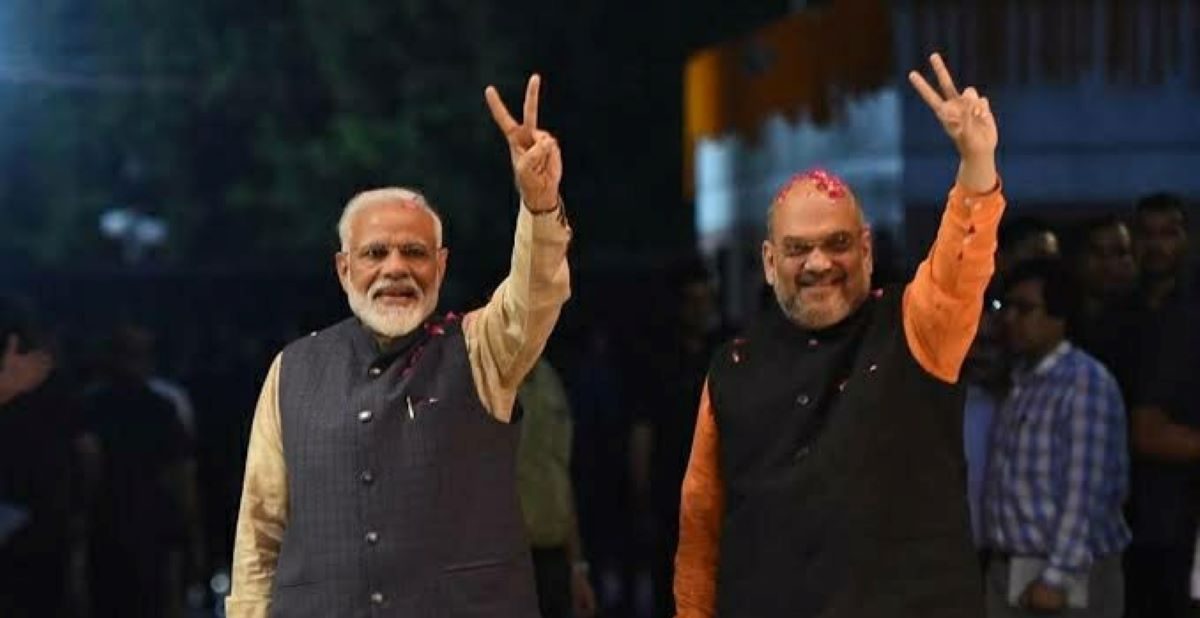
Men who want more: Narendra Modi and Amit Shah.

Synopsis: Whether BJPification fortifies Indian democracy by giving it uniformity and stability or imperils it by diminishing pluralism remains a contentious debate. But there is no denying that the march of this tendency has many troublesome aspects.
The political python—the BJP—is swallowing the smaller snakes crawling around in the dense ecosystem of Indian politics.
The formidable constrictor, rather than looking at outright destruction, employs a strategy of gradual absorption, strategic alliances, engineered splits, and ideological co-option. If that fails, the python tightens its grip until the rival splits into pieces.
Regional parties, once vibrant expressions of linguistic, caste, and cultural identities, find themselves increasingly constricted, their autonomy diminished as the BJP expands its footprint across the country. This transformation reflects not just electoral dominance but a deeper reconfiguration of India’s federal polity.
The python metaphor aptly captures the BJP’s approach: it coils around regional entities through alliances or sustained pressure, tightens its grip via organisational machinery and welfare delivery, and eventually swallows significant portions—leaving behind only weakened, fractured remnants.
Since 2014, under Narendra Modi and Amit Shah’s leadership, the party has evolved from a Hindi-heartland force into a pan-Indian behemoth. By mid-2026, the BJP or its NDA allies govern territories encompassing a vast majority of India’s population, often by partnering with, then subordinating or splintering, regional players.
The BJP’s strategy often begins with courtship. Regional parties facing anti-incumbency or resource gaps are lured with the ruling dispensation’s organisational strength and central schemes. But soon reality dawns.
The Telugu Desam Party (TDP) in Andhra Pradesh, under N Chandrababu Naidu, forged an NDA alliance, providing the BJP a southern foothold while risking dilution of its distinct regional development identity.
In Bihar, Nitish Kumar’s Janata Dal (United) has repeatedly returned to the BJP fold, each reunion bolstering the saffron party’s dominance at the cost of JD(U)’s independent leverage.
In Odisha, the Biju Janata Dal (BJD)’s long resistance under Naveen Patnaik eventually crumbled under the BJP’s parallel organisational expansion and targeted outreach, ending the regional party’s extended reign.
Also Read | Modi’s Tamil version: Was Annamalai BJP’s failed experiment or missed opportunity?
Where direct alliances fall short, the BJP has mastered inducing internal fissures.
Maharashtra provides classic cases: the Shiv Sena split, with Eknath Shinde’s faction aligning with the BJP and subsuming much of the original cadre. Similarly, Ajit Pawar’s NCP breakaway faction joined the NDA, leaving the parent outfits diminished and forced into fragile opposition blocs.
The latest and starkest illustration comes from West Bengal’s Trinamool Congress (TMC). After 15 years in power, Mamata Banerjee’s party suffered a crushing defeat in the 2026 West Bengal Assembly elections. The BJP, led effectively by former TMC heavyweight Suvendu Adhikari, secured over 200 seats, ending TMC rule and reducing the regional party to around 80 seats. What followed was rapid internal implosion.
Expelled TMC MLA Ritabrata Banerjee, backed by 58 rebel MLAs, now has majority support within the legislative party. The West Bengal Assembly Speaker has recognised Ritabrata as Leader of Opposition, triggering fears of a formal split akin to Shiv Sena’s. Several TMC leaders, including municipal councillors and prominent figures, have resigned or shown signs of drifting toward the ruling dispensation.
Mamata Banerjee has openly accused the BJP of orchestrating the crisis through pressure, central agencies, and inducements to “destroy” her party. This post-poll fracturing exemplifies how electoral setbacks, combined with pre-existing defections, allow the BJP to swallow chunks of regional outfits, leaving the core weakened and isolated.
In Uttar Pradesh, the Rashtriya Lok Dal (RLD) was similarly peeled away from opposition alliances, fragmenting anti-BJP consolidation. This divide-and-rule leverages modern tools: incentives for defectors, investigative agencies, and narrative dominance. Defections drain talent and morale, as seen across multiple parties.
The BJP’s digestion process includes ideological assimilation. Regional outfits focused on caste (Mandal politics) or linguistic identity see their narratives challenged by Hindutva’s broader cultural-nationalist appeal, reinforced by welfare schemes that cut across traditional vote banks.
In Bihar, the NDA’s development pitch has fractured older caste-based coalitions despite RJD’s core base staying. Organisationally, the BJP’s robust booth-level network, supported by RSS affiliates, outmanoeuvres many regional players. It has expanded into the Northeast through NEDA and made deep inroads in the South and East. The TMC’s Bengal collapse further demonstrates how even a seemingly well-entrenched regional fortress cannot withstand sustained pressure.
This python-like advance carries profound implications.
India’s federal Constitution relies on regional parties to voice state-specific aspirations—Dravidian exceptionalism in Tamil Nadu, agrarian issues in Punjab, or Bengali sub-nationalism in West Bengal. Their progressive weakening risks excessive centralisation, turning states into mere implementers of national policy.
Proponents highlight benefits like national integration, policy uniformity, and efficient governance delivery. Critics, however, decry the erosion of political diversity, local accountability, and checks against majoritarianism. Southern resilience and opposition attempts like the INDIA bloc offer some counterweight, yet internal contradictions and the BJP’s partner-peeling prowess have limited their impact.
In conclusion, the BJP’s evolution into a dominant force reshaping India’s party system is evident. Through patient coiling via alliances, calculated ruptures inducing splits—most recently fracturing the TMC in West Bengal—and relentless organisational pressure, it has swallowed or subdued many regional entities. This creates a more homogenised landscape where national narratives overshadow regional ones. Whether this fortifies Indian democracy through stability or imperils it by diminishing pluralism remains a contentious debate. For now, the python continues its methodical advance, remaking the political jungle.
Also Read: Will Gen Z’s Cockroach Janata Party forge a new Janata dispensation, or is it too early?



