

Published May 25, 2026 | 9:00 AM ⚊ Updated May 25, 2026 | 11:24 AM

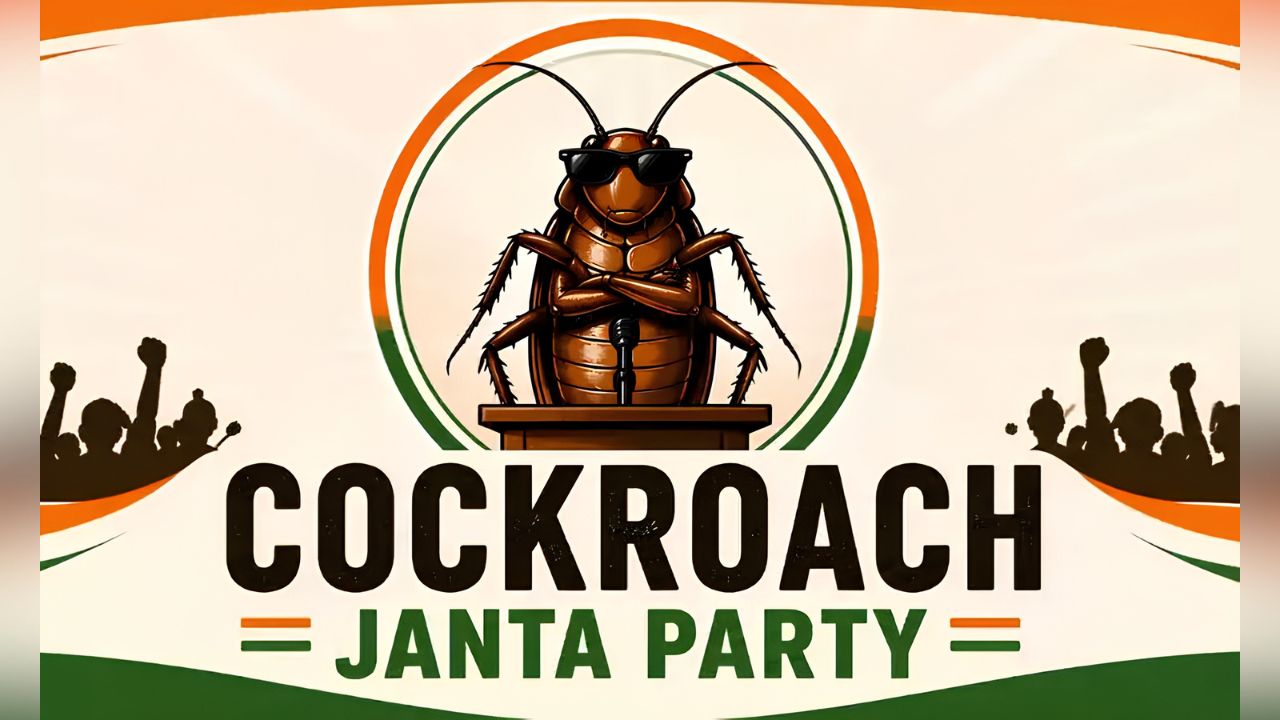
Cockroach Janata Party

Synopsis: The Cockroach Janata Party, which cheekily reclaimed a reported judicial jibe likening critical youth to “cockroaches,” has exploded across Instagram with over 19 million followers, outpacing major party handles. Its young founder positions it as a “political front of the youth, by the youth, for the youth,” channelling raw discontent into meme-driven mobilisation. It mirrors the 1977 “Janata kind of dispensation”, which ended Congress’s uninterrupted dominance.
In an era of entrenched dominance by the BJP-led NDA, can a viral youth-led digital rebellion evolve into a structural rebirth of the opposition — a “Janata kind of dispensation” that transcends tactical alliances? Or does the rapid rise of Gen Z’s Cockroach Janata Party (CJP) represent a fleeting spark in India’s fragmented political landscape?
This question cuts to the heart of contemporary opposition politics. The CJP, which cheekily reclaimed a reported judicial jibe likening critical youth to “cockroaches,” has exploded across Instagram with over 19 million followers, outpacing major party handles.
Born from Gen Z outrage over unemployment, NEET paper leaks, inflation, and perceived institutional apathy, it blends satire, AI-generated cockroach mascots, and a self-deprecating motto: “Secular – Socialist – Democratic – Lazy.” Its young founder positions it as a “political front of the youth, by the youth, for the youth,” channelling raw discontent into meme-driven mobilisation.
The 1977 precedent looms large. Then, a disparate Opposition — socialists, Congress(O) dissidents, and Jana Sangh — dissolved individual identities to form the Janata Party, united by revulsion against the Emergency. They ended Congress’s uninterrupted dominance. Though messy and short-lived by 1979 amid dual-membership disputes and rivalries, the experiment proved that decisive shifts require more than seat-sharing arithmetic; they demand deeper reconfiguration.
Also Read: Gen Z in India vs the system
Today’s challenge mirrors that era, yet the adversary is far more entrenched. The NDA governs or influences a vast share of states and Lok Sabha seats, extending into erstwhile Opposition strongholds in the East and South. The INDIA bloc, which promised in 2024 to deny the BJP a majority, now stands fractured.
Congress, TMC, DMK, and Left parties face setbacks, internal rivalries, cross-voting in Rajya Sabha, and state-level competitions. Pre-poll alliances yield incremental gains but falter against the BJP’s organisational machinery, ideological narrative, welfare systems, and centralised leadership. Defections, engineered splits, and personality-driven revolts compound the vulnerability.
In this fluid scenario, fragmented Opposition votes under the first-past-the-post system continue consolidating the ruling-party advantage. A Janata-style dispensation — a bold merger or confederation submerging narrower identities into a broader platform — merits serious consideration beyond transactional pacts.
The CJP’s digital swarm offers a potential catalyst: Youth energy unburdened by dynastic baggage, resonating with economic anxieties and demands for accountability in ways traditional parties have struggled to match.
Such a dispensation could address core weaknesses. A unified brand and symbol would eliminate voter confusion from competing INDIA logos. Resource pooling — organisational networks, cadre strength, funding, and data analytics — could counter the BJP’s formidable resources.
Collective leadership through a steering committee with rotating conveners would mitigate ego clashes, allowing regional leaders from TMC, DMK successors, SP, RJD, and others to retain state autonomy while aligning nationally on federalism, social justice, economic equity, and democratic safeguards.
Learning from the original Janata’s collapse, institutionalised dispute-resolution mechanisms and robust anti-defection rules would be essential. The entity could project a modern pluralistic vision: Updated affirmative action, genuine cooperative federalism with fiscal empowerment for states, and inclusive growth strategies tackling unemployment and agrarian distress.
The CJP’s irreverent, digitally native cadres could infuse professionalism and fresh outreach, transforming reactive protest into a coherent alternative to governance.
Yet, it may still be premature. The CJP remains largely satirical and online, lacking deep organisational roots. Ideological contradictions persist: Secular-regional parties wary of Congress’s dynastic image, Left outfits suspicious of centrist economics, and ambitious regional satraps reluctant to cede space.
Regional identities fuel local dominance and risk dilution. The BJP would weaponise any unity effort as “opportunistic” or “anti-national.” Media polarisation and regulatory hurdles add layers of complexity.
Unlike 1977’s Emergency-driven unity under JP Narayan’s moral authority, today’s context features majoritarian consolidation earned through repeated mandates, without a singular explosive catalyst.
Also Read: Cockroach Janta Party’s X account withheld in India amid soaring popularity
Incrementalism has limits, as 2024 showed coordinated Opposition can dent dominance, but sustaining momentum demands evolution. A loose federal front — common manifesto, shared symbol in key contests, joint parliamentary strategy, and pilot coordination in bypolls — could build trust organically before fuller integration.
India’s electorate values stability yet cherishes checks on power. A credible, unified Opposition offering genuine alternatives, not mere anti-incumbency, could decisively reshape 2029.
Opposition leaders must now summon the imagination, foresight, and sacrifice to move beyond permutations of defections and fragile alliances. Initiate quiet, sustained dialogues under neutral elder statesmen or civil society figures.
Prioritise a common minimum programme: Protecting constitutional institutions, empowering states, addressing youth unemployment, and fostering social harmony. Channel Gen Z’s cockroach resilience — stubborn, adaptive, irreverent — into structured politics that restores multi-party vibrancy.
India’s democracy would be profoundly enriched by this aspired transformation: a bold structural rebirth that replaces transactional noise with enduring resonance. The cockroaches are watching; the time for half-measures is over.
(Views are personal.)



