

Published May 17, 2026 | 7:00 AM ⚊ Updated May 17, 2026 | 7:00 AM

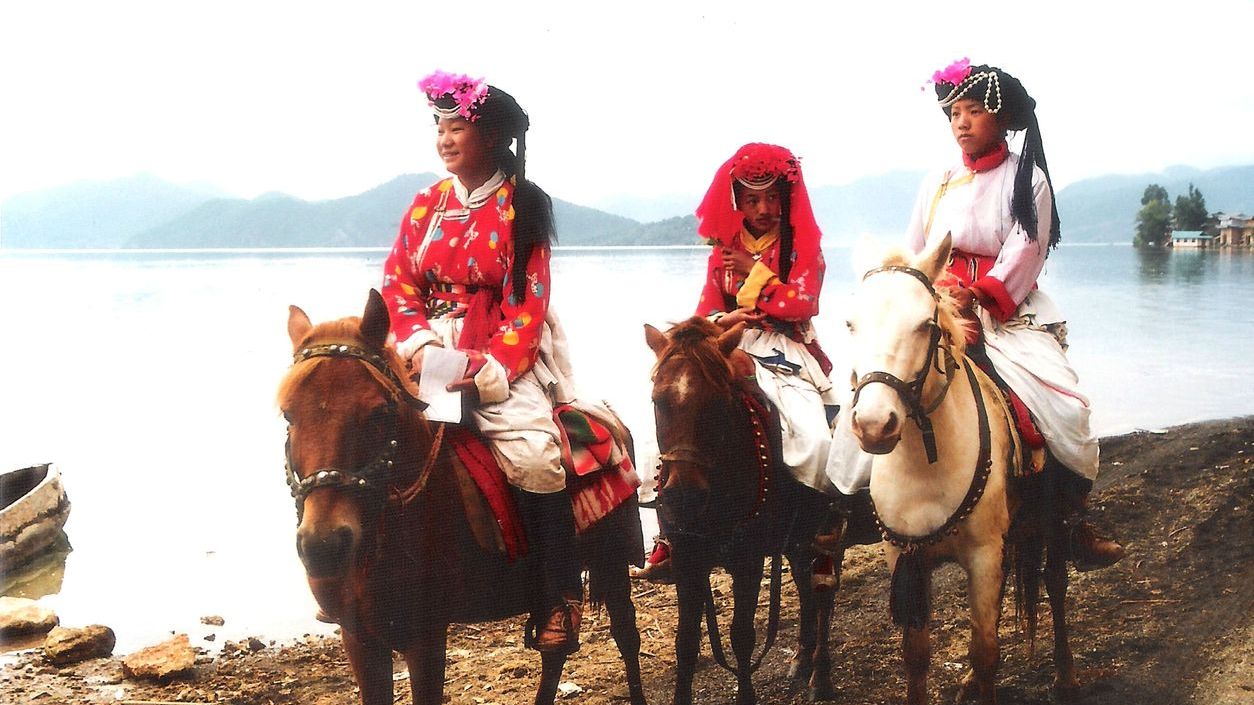
One of the most widely discussed examples of matriarchy is the Mosuo community in southwestern China. (iStock)

Synopsis: The existence of thriving matriarchal and matrilineal societies across different parts of the world offers a striking counterpoint to conventional patriarchal systems. In many cases, women in matrilineal societies exhibit greater confidence, autonomy, and social security than their counterparts in rigidly patriarchal settings.
At a time when debates over women’s political representation continue to dominate democratic discourse in India, the existence of thriving matriarchal and matrilineal societies across different parts of the world offers a striking counterpoint to conventional patriarchal systems.
While legislatures and political establishments hesitate over the pace and process of ensuring greater participation of women in constitutional institutions, certain communities have long embraced female-centric social structures as integral to their cultural identity.
The persistence of such societies demonstrates that women’s leadership and authority are neither modern experiments nor ideological abstractions. They are living traditions rooted in history, social organisation, and community consensus. Far from being confined to folklore or anthropological curiosity, matrilineal cultures continue to flourish despite the pressures of globalisation, urbanisation, and modern state systems.
Across the world, patriarchal norms have traditionally defined inheritance, political authority, and family leadership. Yet these enduring matrilineal societies challenge the assumption that male dominance is the only natural or sustainable model of social organisation. They present an alternative framework in which women occupy central positions in property ownership, family continuity, decision-making, and cultural preservation.
Also Read: India’s exam system has reached a breaking point after NEET fiasco
One of the most widely discussed examples is the Mosuo community in southwestern China, near the picturesque Lugu Lake. Often referred to as the “Kingdom of Women,” the Mosuo follow a deeply rooted matrilineal system in which lineage and property pass through the female line. Women head households and exercise significant control over economic and domestic affairs.
Their unique social customs, including the much-discussed “walking marriages,” allow women greater freedom in choosing partners while ensuring that children remain within the maternal household structure. The resulting family cohesion and reduced gender conflict have attracted global scholarly interest.
Similarly, Indonesia’s Minangkabau community in West Sumatra remains the world’s largest surviving matrilineal society. Despite being devout followers of Islam, the Minangkabau have successfully harmonised religious practices with their traditional adat system that grants women a central role in inheritance and family authority. Their ancestral homes and agricultural properties pass from mothers to daughters, reinforcing women’s social significance across generations.
India itself possesses a rich and often overlooked matrilineal heritage, particularly among several tribal and indigenous communities. In Meghalaya, the Khasi, Garo, and Jaintia tribes continue to uphold matrilineal traditions where family lineage, surnames, and ancestral property are inherited through daughters, especially the youngest daughter. Women occupy pivotal positions in family affairs and enjoy greater personal autonomy in matters of marriage and social life.
In the tribal heartlands of Bastar in Chhattisgarh, communities such as the Muria, Maria, and Gond tribes display strong female-centric social traditions. Women participate actively in agriculture, rituals, festivals, and local decision-making processes. Cultural institutions such as the ghotul — traditional youth dormitories — historically promoted social interaction, community learning, and relatively egalitarian gender relations among young men and women. Practices like reverse dowry and certain matrilineal influences in inheritance further distinguish these communities from mainstream patriarchal systems.
Beyond Asia, similar traditions survive in parts of Africa and Latin America. Among the Akan people of Ghana, queen mothers continue to wield considerable social and political influence. Costa Rica’s Bribri community preserves female-centred inheritance customs, while Kenya’s Umoja village symbolises resistance against patriarchal oppression through collective women-led living.
Even Europe offers examples of women-centred cultural continuity. On Estonia’s Kihnu island, women have historically managed households, preserved traditions, and sustained local cultural identity during long periods when men remained away at sea.
Anthropologists often distinguish between strict matriarchy and matriliny, arguing that very few societies place women in complete political dominance over men. Yet such distinctions should not obscure the broader reality that these communities grant women substantial authority in domestic, economic, and social spheres.
In many cases, women in matrilineal societies exhibit greater confidence, autonomy, and social security than their counterparts in rigidly patriarchal settings.
The endurance of these systems is not accidental. Female-centred inheritance patterns often provide greater family stability and continuity. Communities built around maternal structures frequently display lower levels of violence, stronger emotional bonds and more collective approaches to child-rearing and social responsibility. Studies have also linked women’s autonomy with improved health and educational outcomes for families.
Nevertheless, these societies are not immune to change. Tourism, migration, market-driven economies, and state policies continue to reshape traditional practices. Younger generations increasingly navigate the tensions between modern aspirations and inherited customs.
Yet adaptation rather than disappearance appears to define their future. Khasi families continue balancing urban education with matrilineal traditions, while Minangkabau women increasingly emerge as entrepreneurs and professionals without abandoning their cultural roots.
Also Read: When public life leaves no room for privacy
The continuing relevance of matrilineal societies becomes especially significant in contemporary democracies debating women’s empowerment. While constitutional amendments and reservation policies struggle to move from legislation to implementation, these communities quietly demonstrate that societies centred around women’s authority can remain cohesive, resilient, and progressive.
Their existence broadens humanity’s understanding of governance, social order, and gender balance. They remind the modern world that care, consensus, and collective responsibility are not signs of weakness but enduring foundations of stable communities. In an age marked by social fragmentation and political polarisation, the lessons offered by matrilineal traditions acquire renewed importance.
Matriarchy, in its surviving forms, has endured not by resisting change entirely but by evolving with time. Recognising and studying these societies does not diminish the realities of patriarchy elsewhere. Instead, it enriches the global conversation on gender justice and democratic inclusion.
As nations continue debating women’s representation in legislatures and public institutions, the living examples of matrilineal communities across India and the world stand as powerful reminders that empowering women is not merely an act of social correction. It is also a historically tested and culturally sustainable pathway toward stronger and more balanced societies.
(Views are personal.)



