

Published May 14, 2026 | 1:28 PM ⚊ Updated May 14, 2026 | 4:12 PM

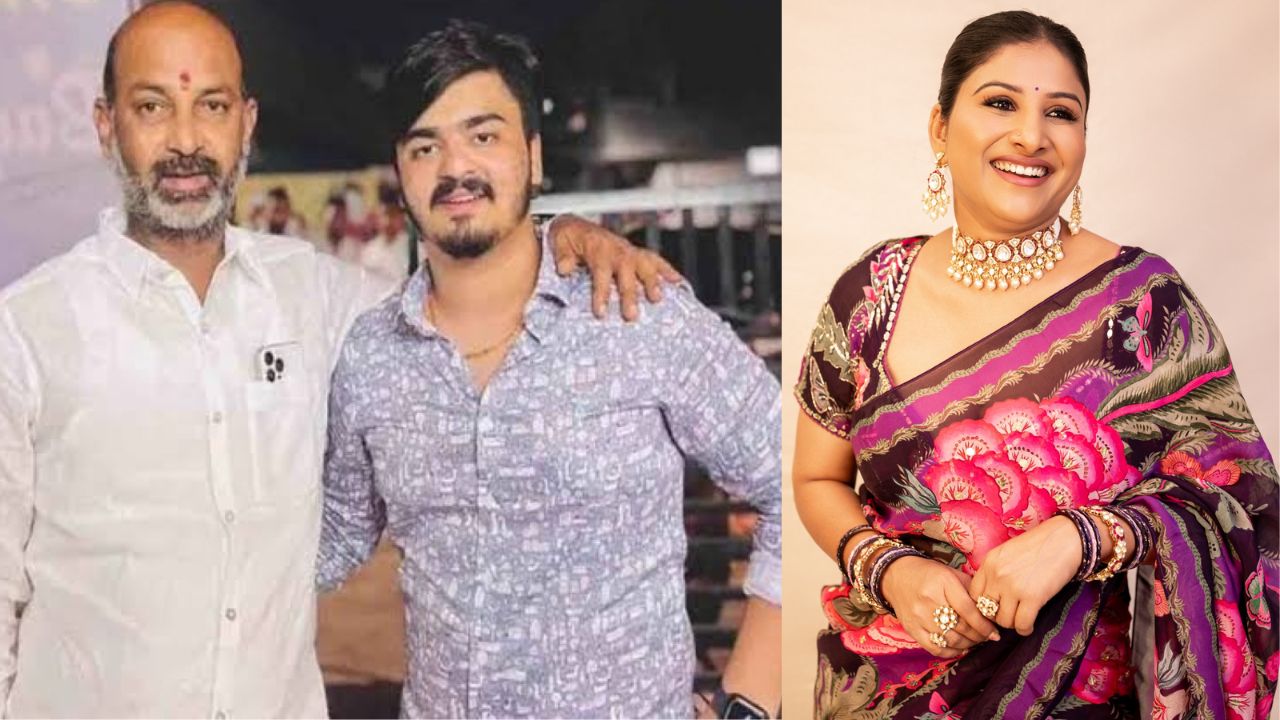
Bandi Sanjay Kumar, Bandi Sai Bageerath and Mangli.

Synopsis: Recent controversies surrounding popular folk singer Mangli and Bandi Bageerath Sai, son of Union Minister Bandi Sanjay Kumar, in Telangana perfectly illustrate the double-edged sword of fame and privilege. Every move you make will be watched, recorded, and relentlessly scrutinised. For celebrities and members of political families, there is no off-duty moment.
In the age of relentless cameras, viral videos, and instant public judgment, stepping into the spotlight comes with an invisible contract: Every move you make will be watched, recorded, and relentlessly scrutinised. For celebrities and members of political families, there is no off-duty moment.
The adage “every eye watches when you are in public life” has evolved from a philosophical observation into a daily reality. Society doesn’t just observe; it owns a piece of their lives, demanding perfection while ready to pounce at the slightest slip.
Recent controversies surrounding popular folk singer Mangli and Bandi Bageerath Sai, son of Union Minister Bandi Sanjay Kumar, in Telangana perfectly illustrate this double-edged sword of fame and privilege.
Public figures — whether entertainers who shape culture or political dynasties who influence governance — live under a permanent magnifying glass. Their success inspires millions, but any perceived misstep triggers swift and often unforgiving backlash.
In today’s hyper-connected world, a single allegation can ignite nationwide outrage before facts are fully established. While this scrutiny promotes accountability, it also risks turning into trial by media, where reputations are damaged long before courts deliver justice.
Also Read: POCSO case against MoS Bandi Sanjay’s son — Silence of Congress
Satyavathi, fondly known as Mangli, emerged as a powerhouse of Telangana’s folk music scene with her powerful voice and authentic rural connect. Her journey from village stages to pan-India recognition represented hope and aspiration for many.
However, her stardom has now been overshadowed by serious allegations of financial fraud. Punjagutta police in Hyderabad have registered a case against Mangli, her brother, and others, accusing them of cheating nearly 100 investors of around ₹10 crore through a microfinance scheme allegedly linked to film projects. Complainants claim they were lured with promises of high returns and later faced intimidation.
The backlash has been fierce and immediate. Videos of distressed victims have circulated widely on social media, leading to calls for boycotts and demands for swift arrests.
Mangli has denied any wrongdoing, maintaining that she was not directly involved and suggesting the case could be motivated by professional rivalry or envy of her rising fame.
Regardless of the final verdict, the episode demonstrates how quickly public adoration can transform into anger. Every past interview, performance, and personal celebration is now being re-examined under a critical lens.
On the other side, the case involving Bandi Sai Bageerath highlights the unique pressures faced by children of prominent political leaders. The young man faces a case under the Protection of Children from Sexual Offences (POCSO) Act at Pet Basheerabad Police Station in Hyderabad, based on a complaint from the family of a minor girl alleging sexual harassment and abuse.
The matter has sparked strong reactions, with opposition parties protesting and women’s groups demanding justice.
Bageerath has filed a counter-complaint, claiming he was a victim of a honey-trap operation aimed at extortion of ₹5 crore. His supporters allege a political vendetta designed to tarnish his father’s image and the ruling party. The case has sharply polarised public opinion, with relentless media coverage turning every development into breaking news.
This episode reflects how political families face amplified scrutiny. Any alleged misconduct by their children is often interpreted as a reflection of inherited entitlement or abuse of power. The public eye is harsher here because the stakes involve questions of governance, justice, and moral authority.
Also Read: Telangana’s tenant farmers and society’s duty!
Both cases, unfolding almost simultaneously in Telangana, reveal the broader challenges of life in the public eye. Celebrities risk losing endorsements, fan support, and careers built over years. Political families face threats to their legacy and electoral fortunes. The digital ecosystem accelerates everything—allegations spread faster than facts, and context often gets lost in outrage.
There are undeniable benefits to this constant watchfulness. It acts as a deterrent against wrongdoing and empowers ordinary citizens to hold the powerful accountable. High-profile cases encourage victims to speak up, knowing their voices can compel action.
Yet the dangers are equally real: mental health suffers, families endure trauma, and the principle of “innocent until proven guilty” is frequently reversed in the court of public opinion.
Public figures must therefore uphold higher standards of transparency and ethical conduct. At the same time, society and media have a responsibility to balance vigilance with fairness — demanding justice without descending into sensationalism or mob judgment.
The Mangli and Bageerath episodes serve as powerful reminders of the price of visibility in modern India. They underscore the need for stronger personal integrity among those in the spotlight and greater maturity in how the public consumes and reacts to news.
In an era where every eye is watching, navigating fame and influence requires not just talent and ambition, but also extraordinary resilience and wisdom.
(Views are personal.)



