

Published Nov 23, 2026 | 9:30 AM ⚊ Updated Nov 23, 2026 | 9:30 AM

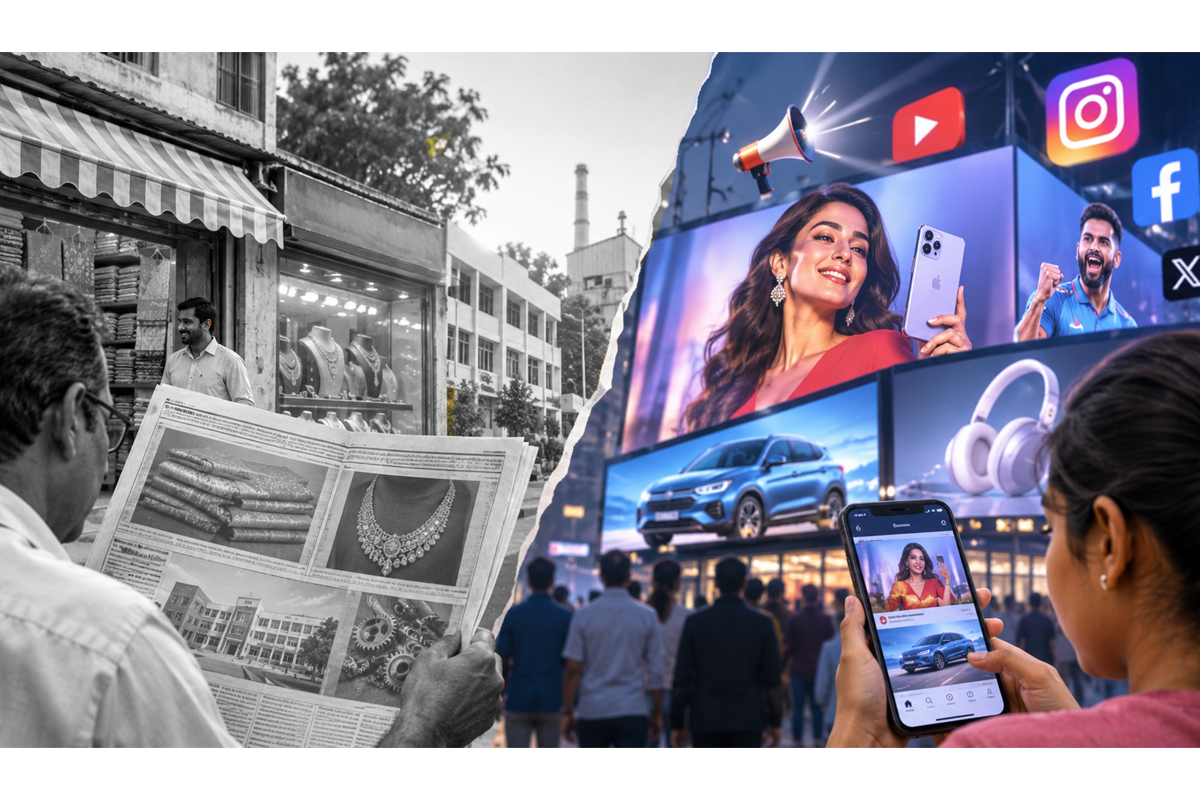
Image used for representational purpose. (Ai generated image)

Synopsis: Massive digital ad spending by MNCs is reshaping consumer behaviour, challenging rural shopkeepers, and sidelining small businesses. As MSMEs shift from print to targeted social media ads, newspapers face slower growth and local business ecosystems weaken. To preserve fair competition, regional newspapers and industry bodies must create affordable, hybrid advertising models that keep smaller enterprises visible to consumers.
Advertising was once a level playing field. A small textile merchant, a neighbourhood jewellery shop, a local educational institution or a regional manufacturer could reach thousands of potential customers through a newspaper advertisement. They might not command the budgets of multinational corporations, but they had something equally valuable: access to a medium that connected businesses with consumers across income groups and geographical boundaries. That equation is gradually changing.
Today, advertising is increasingly becoming a contest of financial muscle, technological reach and sustained publicity. Multinational corporations and large corporate houses can spend enormous sums on television campaigns, social media promotions, celebrity endorsements, influencer marketing and digital platforms. Their advertisements follow consumers from one screen to another. Smaller businesses, meanwhile, are finding it increasingly difficult to compete for public attention, even in markets where they once enjoyed considerable influence.
The consequences extend beyond competition between companies to changing consumer behaviour, influencing purchasing decisions and gradually weakening the advertising relationship between local businesses and newspapers.
The scale of this transformation can be understood from India’s advertising expenditure. Digital advertising accounted for approximately 45–46 per cent of India’s total advertising expenditure in FY2025, compared with just 24 per cent in FY2020. The share of traditional media, including print and television, declined from nearly 65 per cent to 46–47 per cent during the same period. This is not merely a technological transition; it represents a fundamental redistribution of advertising power.
The figures become even more revealing when individual sectors are examined. FMCG companies increased their digital advertising allocation from approximately 30 per cent in FY2020 to 55–60 per cent in FY2025. Automobile companies raised their digital allocation from 15–20 per cent to 35–40 per cent. E-commerce companies now direct as much as 60 per cent of their advertising budgets towards digital platforms. These are industries in which multinational and large domestic corporations enjoy considerable financial advantages over smaller competitors.
But perhaps the most significant development is the changing nature of consumer influence.
Also Read: Another grave injustice to Bilkis Bano in the name of ‘justice’
Advertising no longer waits for consumers to encounter it. Algorithms identify their interests, browsing habits and purchasing preferences and place promotional content directly before them. A farmer watching agricultural videos, a young person browsing entertainment reels or a homemaker looking for household products can encounter dozens of commercial messages without consciously searching for them. YouTube accounts for approximately 20–22 per cent of digital advertising expenditure, while social media platforms command another 40–45 per cent.
This phenomenon has important implications for rural markets. For generations, village consumers depended considerably on personal recommendations, local retailers and familiarity with products. The village shopkeeper was often an important source of information about the quality and usefulness of a product. That influence is now being challenged by celebrity endorsements, short videos, sponsored reviews and attractive promotional campaigns. Rural consumers, too, are increasingly exposed to the same publicity strategies that shape urban consumption.
The problem is not that rural consumers are becoming more informed. Wider access to information is undoubtedly beneficial. The concern is that visibility is increasingly being mistaken for quality. A product repeatedly promoted by a celebrity or influencer may command greater attention than a locally manufactured alternative, even when the latter offers better value. Small manufacturers and traders rarely possess the resources to sustain such campaigns. Their products risk becoming invisible, irrespective of their quality or affordability.
Newspaper advertising is experiencing the consequences of this changing equation. Small businesses that once regularly advertised festival discounts, new arrivals, property sales, educational admissions, jewellery collections and local services are increasingly reluctant to spend on print publicity. Many prefer social media advertisements because they appear cheaper, can be targeted geographically and provide immediate engagement statistics.
The financial figures reflect the pressure, although they also reveal that print has not become irrelevant. Indian print advertising revenue reached approximately ₹17,650 crore in 2025, registering growth of around two per cent. The number of advertisers across print publications also approached 1.5 lakh. However, growth remains modest compared with digital advertising.
Also Read: Sonia Gandhi, KTR and the battle over who deserves credit for Telangana
Another important development deserves attention. India’s advertising market was estimated at approximately ₹1.55 lakh crore in 2025 under an expanded definition that includes MSME digital expenditure. Digital advertising accounted for around 60 per cent of this market. Interestingly, MSME digital advertising expenditure itself was estimated at ₹35,814 crore. This demonstrates that smaller businesses are not abandoning advertising altogether; they are increasingly shifting towards digital channels.
Yet, this migration raises questions about the long-term sustainability of local business ecosystems. When small businesses withdraw from newspaper advertising, newspapers lose an important source of diversified revenue. More importantly, local enterprises lose an established channel through which they could reach households across generations. The relationship between a newspaper and a neighbourhood business was not simply commercial. It connected local economic activity with the everyday lives of readers.
There is also a larger competition-related concern. When multinational corporations dominate consumer attention through sustained publicity, smaller businesses face disadvantages even before their products reach the marketplace. Advertising expenditure increasingly determines brand recall, and brand recall often influences purchasing decisions. This can gradually reinforce market concentration.
Newspapers, however, cannot respond to this challenge merely by appealing to nostalgia. They must reconsider their advertising models. Affordable packages for small traders, educational institutions, local manufacturers and service providers, combined with print and digital promotions, could restore their participation. Regional newspapers possess an advantage in local credibility, language and geographical relevance that global platforms cannot automatically replicate.
Government agencies and industry associations should also recognise the importance of preserving opportunities for smaller enterprises to advertise competitively. Local business associations could facilitate collective advertising initiatives, while newspapers could develop affordable classified, neighbourhood and district-level promotional packages.
Ultimately, advertising should inform consumers and encourage healthy competition, not become an instrument through which financial muscle determines which businesses deserve public attention. The success of India’s expanding consumer economy must not be measured only by the visibility of multinational brands. It should also be measured by the ability of a small manufacturer, a village entrepreneur and a neighbourhood trader to find customers.
The marketplace must remain open to competition, not just publicity. Otherwise, the biggest brands will increasingly own not merely the advertising space but also the consumer’s imagination. And that would be an unhealthy outcome for small businesses, newspapers and the diversity of India’s economy.
(Edited by Fayisa CA)



