
Published Nov 21, 2026 | 1:28 PM ⚊ Updated Nov 21, 2026 | 1:31 PM

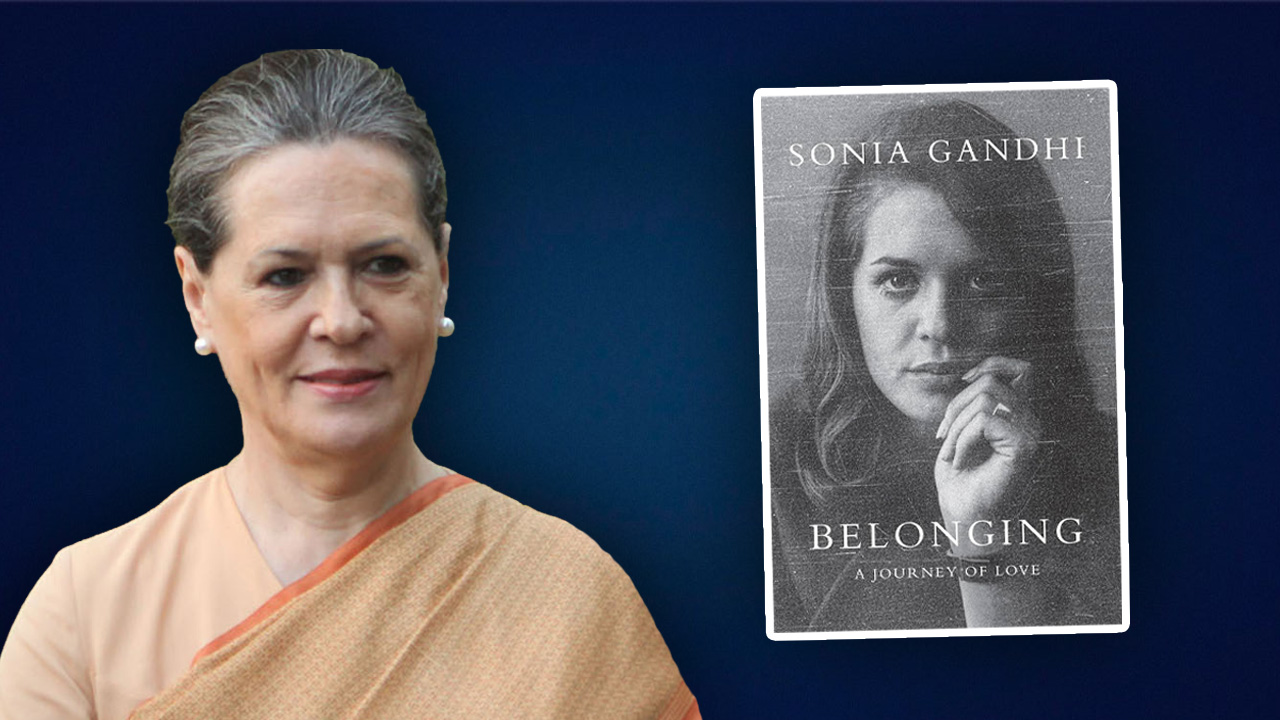
The controversy that has erupted over Sonia Gandhi's memoir raises many questions.

Who deserves credit for Telangana’s formation? Was it the decades-long popular struggle, the political leadership that turned the demand into a mass movement, or Congress president Sonia Gandhi’s decisive intervention that eventually paved the way for statehood?
Twelve years after Telangana became a separate State, the question continues to generate political debate. The controversy has resurfaced following BRS working president KT Rama Rao’s criticism of Sonia Gandhi for not mentioning Telangana in her recently released memoir, Belonging: A Journey of Love.
But does the absence of a reference to Telangana in a personal memoir establish that Sonia Gandhi lacked sincerity towards the State? Or is KTR attempting to reopen the political debate over the credit for statehood at a time when the BRS is struggling to redefine its political relevance?
KTR questioned the Congress narrative that Sonia Gandhi was responsible for the creation of Telangana, pointing out that her memoir did not even contain a reference to the State. According to him, Telangana was not a gift bestowed by any individual or political party but the outcome of a determined popular struggle under the leadership of KCR. His argument seeks to remind people that the movement had its own history, sacrifices and political momentum long before the Congress leadership took the final decision.
There is considerable truth in this assertion.
Telangana’s demand was neither born in 2001 nor invented by the Congress. The 1969 agitation, followed by decades of political mobilisation, kept the aspiration for a separate State alive.
Thousands of students, employees, intellectuals, political activists and ordinary citizens participated in the struggle. The sacrifices, including the tragic suicides of young people, became an inseparable part of Telangana’s political history. The formation of the Telangana Rashtra Samithi by KCR in 2001 gave the movement a focused political platform and brought the demand back to the centre of national politics.
The subsequent agitations, KCR’s fast-unto-death, the Sakala Janula Samme, the Million March and other mass mobilisation programmes created enormous pressure on the Union Government. It would therefore be historically unfair to minimise KCR’s leadership or overlook the contribution of those who sustained the movement through difficult periods. Equally, however, it would be inaccurate to suggest that the political decision taken by the Congress leadership was inconsequential.
The Congress had supported the demand for Telangana before the 2004 elections and entered into an understanding with the TRS on the issue. On December 9, 2009, the then Union Home Minister P Chidambaram announced that the process for the formation of Telangana would be initiated.
Although the subsequent political developments, particularly the agitation in coastal Andhra and Rayalaseema, complicated the process, the Congress Working Committee eventually adopted a resolution favouring statehood in 2013. Parliament passed the Andhra Pradesh Reorganisation Bill in February 2014, paving the way for the formation of Telangana on June 2, 2014.
As the chairperson of the UPA, Sonia Gandhi played a decisive political role in taking the process forward. Her intervention cannot be dismissed merely because the movement had created the political circumstances that compelled the Union Government to act. The more balanced interpretation is that the popular movement created the political inevitability, while the Congress leadership took the institutional and legislative decisions necessary to establish the new State. Both contributions belong to history.
The weakness in KTR’s argument lies in treating the absence of Telangana’s reference in an autobiography as evidence of a lack of personal commitment.
An autobiography is not an exhaustive political history or an official record of every major decision taken during a person’s public life. It is a selective account of personal experiences, relationships and political memories.
Nevertheless, given the historical significance of Telangana’s formation and the sacrifices associated with it, the omission can understandably disappoint people in the State. But disappointment cannot automatically be converted into a historical verdict on Sonia Gandhi’s intentions.
More importantly, KTR’s criticism raises questions about the position taken by his father, KCR.
On June 13, 2014, while addressing the newly constituted Telangana Legislative Assembly, KCR acknowledged and appreciated Sonia Gandhi’s initiative in facilitating the formation of the State. He expressed gratitude to her and also thanked the political parties that had supported the demand. This was not an incidental remark but an acknowledgement made on the floor of the Assembly shortly after Telangana became a reality.
Would KCR now endorse his son’s argument that Sonia Gandhi had no particular sincerity towards Telangana? Would he reconsider his earlier acknowledgement of her contribution? Or would he maintain the position he articulated in the Assembly? Political circumstances may change, but historical statements made by a leader cannot be conveniently forgotten. The apparent difference between KCR’s earlier appreciation and KTR’s present criticism deserves an explanation from the BRS leadership.
The Congress, too, must avoid turning this controversy into an opportunity for self-congratulation.
Its leaders should acknowledge the sacrifices of the movement and refrain from projecting statehood as an achievement delivered exclusively by one individual or party. Sonia Gandhi’s political intervention deserves recognition, but so does the collective struggle that made the decision unavoidable.
Ultimately, Telangana’s people have more pressing concerns than competing claims over political credit. Employment, irrigation, agriculture, industrial development, education, healthcare and social justice remain central to the aspirations that inspired the movement. The parties that governed the State and those currently in power must answer whether the promises associated with statehood have translated into tangible improvements in people’s lives.
Telangana was neither an individual’s gift nor a party’s private achievement. It was the outcome of popular aspiration, extraordinary sacrifices, political leadership and national-level intervention.
Questioning Sonia Gandhi’s omission of Telangana from her memoir is legitimate. Denying her role in the formation of the State, however, would be equally unjustified.
The larger question is whether political parties are willing to respect the entire history of the movement rather than selectively invoking it to suit their present interests. Telangana belongs to its people, and its history cannot be rewritten to serve the political convenience of any one party or family.
Also Read:
Once again, an extravaganza in Telangana! Once again, the lies!
Telangana on the eve of Formation Day: Politics of diversion taking roots
Unfulfilled dreams in rural Telangana: Reflections from the ground
(Edited by R Rajesh Kumar.)



