

Published Nov 16, 2026 | 9:30 AM ⚊ Updated Nov 16, 2026 | 9:30 AM

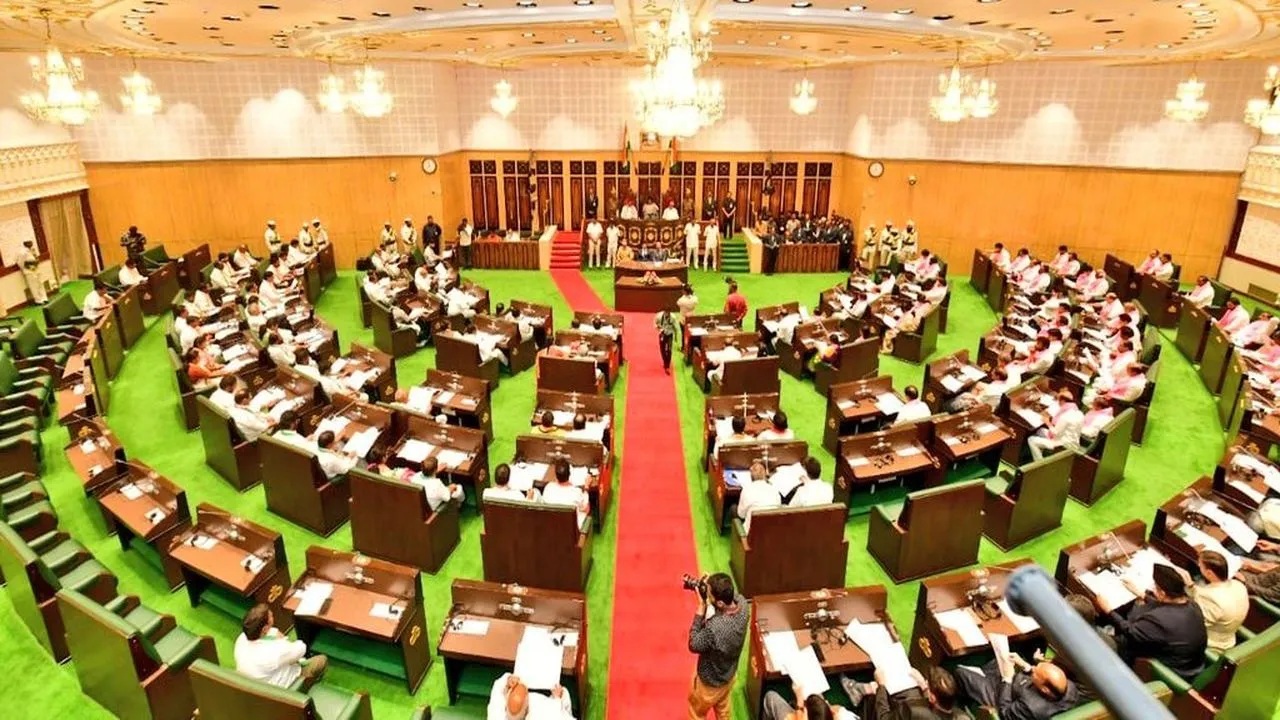
A view of the Telangana Assembly. (Special Arrangement)

In Telangana politics, a quiet but dangerous transfer of accountability is underway.
Members of Parliament who won hard-fought seats in 2024 are now being forced to answer for a record they did not fully author: the performance graph of their party’s MLAs. The numbers are public, the dissatisfaction is measurable, and the political cost is beginning to travel upward from Assembly segments into parliamentary constituencies.
Look at the data.
A major public assessment of legislative performance in early 2025 delivered a blunt verdict. Of 118 MLAs across parties, only 24 were rated “good”. Thirty-six were judged “bad”. Another 58 hovered in the uninspiring middle ground of “average” or “okay”.
Within the ruling Congress, the picture was starker. Just seven of its legislators earned a “good” rating. Twenty were rated “bad”, and 37 were merely “average”. Only two Congress ministers — D Sridhar Babu and Uttam Kumar Reddy — managed to break into the overall top ten.
An internal assessment ordered by the Chief Minister’s office around the same period placed roughly 26 MLAs in a “Red Zone”, citing infrequent visits to their constituencies, long absences in Hyderabad, stalled development works, and weak contact with party workers. These are not private complaints. They form a public performance graph that voters, cadres, and opposition parties can read with ease.
MPs cannot escape this graph.
A Lok Sabha constituency in Telangana comprises seven Assembly segments. When two or three of those segments are represented by underperforming MLAs, the organisational energy drains, the narrative of delivery weakens, and the MP is left defending a local record that is not entirely his own.
In 2024, Congress’s parliamentary successes were concentrated in rural and semi-urban belts where Assembly majorities had supplied the ground machinery. If those same MLAs continue to register mediocre or poor ratings, that machinery begins to stutter.
The MP may raise sharp questions in Parliament, maintain high attendance, and work the corridors of power in Delhi. Yet back home, the anger generated by an inaccessible or ineffective MLA still lands on the parliamentary candidate’s doorstep.
History offers a clear warning. The BRS did not collapse in 2023 solely because of high-command decisions or national trends. Anti-incumbency against individual MLAs played a decisive role.
Later local-body results reinforced the pattern: when an MLA shifted effective loyalty, vote shares in the segment swung by margins of up to 20 percentage points. The same transmission belt is now operating in the opposite direction.
Discontent that begins with a neglected road, an unaddressed grievance, or a missing MLA does not stay confined to the Assembly seat. It migrates into the parliamentary contest and forces the MP to absorb public wrath that originated elsewhere.
Internal strains only sharpen the problem. Several Congress MLAs have spoken of delayed fund releases and the sense that ministerial constituencies receive preferential treatment.
Factional differences have occasionally broken into the open. When local legislators feel under-resourced or sidelined, the link between the state government and the electorate weakens further. Cadres who worked the 2023 and 2024 campaigns begin to ask hard questions about whether performance will be rewarded. That quiet demoralisation is lethal for any MP who depends on the same organisation for re-election.
Opposition parties understand the opportunity. Strongly rated MLAs from the BRS or BJP can convert local dissatisfaction into a broader anti-incumbency narrative and project it onto the parliamentary race.
The 2025 MLC results, in which BJP-backed candidates scored notable wins among graduate and teachers’ constituencies, already signalled that organised voter groups were registering early discontent. Ruling-party MPs therefore find themselves fighting on two fronts at once: defending their own parliamentary work while simultaneously carrying the burden of the state-level performance graph.
The structural truth is simple.
For most citizens, the state government remains the primary face of a party’s performance. MPs, however active in Delhi, are still judged by the quality of roads, irrigation, employment schemes, and grievance redressal in their home segments — functions delivered through the state machinery and watched closely by MLAs.
When large numbers of ruling-party legislators sit in the lower half of the performance graph, the party’s claim to effective governance is undercut. The MP is left to face the resulting wrath.
There is still time to change the trajectory. Focused monitoring of Red Zone MLAs, faster release of constituency funds, clearer performance benchmarks linked to future nominations, and tighter coordination between MPs and MLAs in shared segments can blunt the damage. Without such steps, the performance graph of MLAs will continue to dictate the political weather that MPs must endure.
In Telangana, where Assembly and parliamentary politics remain inseparable, MPs are no longer insulated from the local record of their party’s legislators. They are compelled to face its wrath — and the next electoral cycle will decide how many of them survive it.
Also Read:
A mirror to Telangana’s industrial landscape: Few and insecure jobs, uneven growth
Bypolls are not referendums: What 12 years of electoral data in Telangana and Andhra Pradesh reveal
(Edited by R Rajesh Kumar.)



