
Published Sep 04, 2026 | 2:06 PM ⚊ Updated Sep 04, 2026 | 2:06 PM

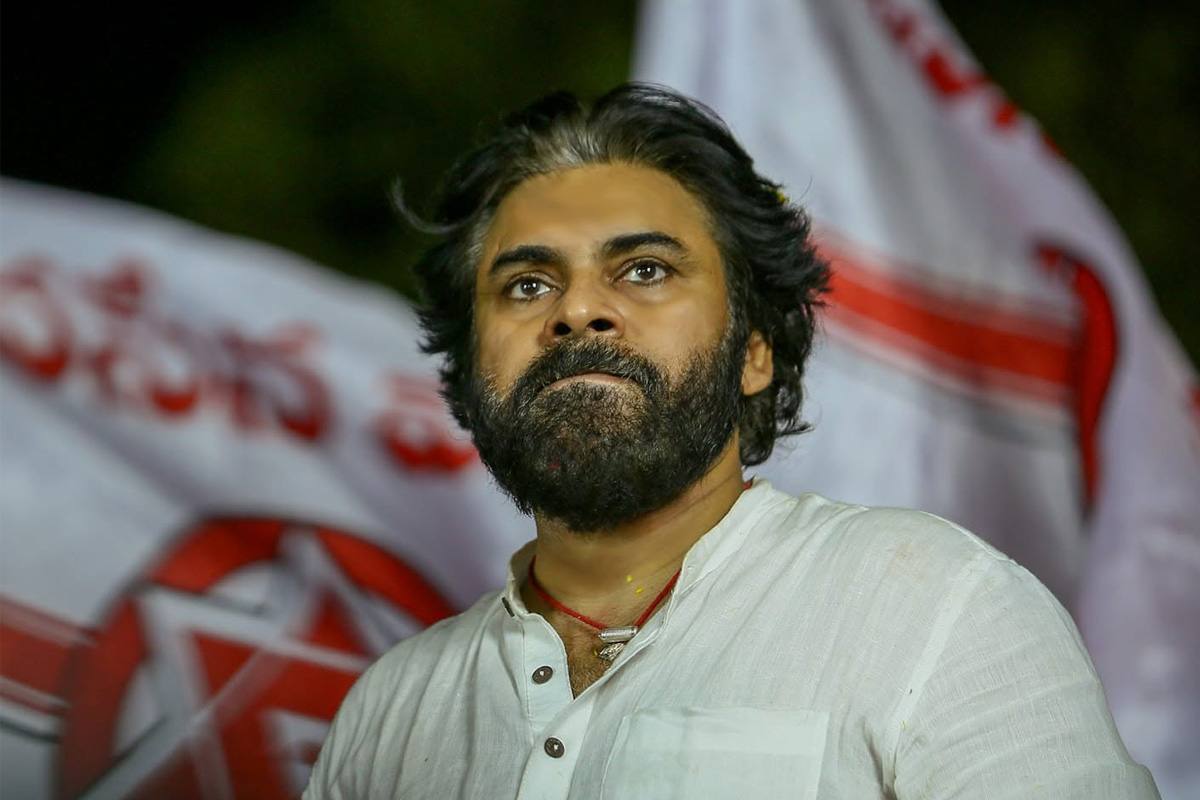
Deputy Chief Minister of Andhra Pradesh Pawan Kalyan.

Synopsis: Andhra Pradesh’s politics cannot be transformed by personal popularity alone. Pawan Kalyan’s present approach works if he only wants to remain an influential Deputy Chief Minister. To be CM, there is a lot more he needs to do.
More than two years as Andhra Pradesh’s Deputy Chief Minister offer enough evidence to decode Pawan Kalyan, the politician in power. The picture is more complicated than the image of the charismatic leader who brought Jana Sena into government. His record raises questions about institutional commitment, administrative engagement and his ability to build a political organisation beyond his personality.
His conduct as Deputy Chief Minister has increasingly become a subject of discussion in political circles and within his own party. He holds important portfolios and occupies one of the most powerful positions in the state. Yet, he has repeatedly stayed away from Cabinet meetings and, at times, legislative proceedings, while remaining visible at selected party and public programmes. His recent shoulder surgery and health problems provide a legitimate explanation for some absences. But they do not fully explain the larger pattern.
From January to August 18 this year, the Cabinet reportedly met 14 times, but Pawan Kalyan attended only four meetings. He was absent from the August 18 meeting, which discussed increased reservations for Backward Classes in local bodies and proposed direct elections for mayors and municipal chairpersons.
His supporters say his absences are due to medical advice, not politics. That explanation deserves consideration. Illness cannot automatically be interpreted as political strategy. But it does not completely settle the political question either.
What has attracted attention is the contrast between his absence from some institutional responsibilities and participation in other programmes. On July 23, Pawan Kalyan did not attend the Cabinet meeting, but the following day participated in a programme at the Jana Sena camp office welcoming trained Kumki elephants. On August 6, he missed a Cabinet meeting while participating that day in a programme for crochet lace artisans.
On August 13, he did not attend the launch of the Seed Access Road Phase II and steel bridge works, despite being invited by Municipal Administration Minister P Narayana. The same day, he participated in the National Elephant Day programme in Visakhapatnam with Union Minister Bhupender Yadav. These incidents do not prove that Pawan Kalyan is deliberately avoiding government responsibilities. But politics is also about perception. When a leader repeatedly misses institutional meetings while remaining visible at other engagements, questions about priorities are inevitable.
The concern becomes sharper in relation to the legislature. During the recent Assembly session, Pawan Kalyan stayed away citing ill health. On the final day, however, he came to the Assembly premises, met Jana Sena MLAs and left without entering the House. For a Deputy Chief Minister, the legislature is not merely another engagement. It is the institution through which the government is held accountable.
This raises a larger question about Pawan Kalyan’s transition from political celebrity to political administrator. His political career has been built around personal credibility, public communication and an emotional connection with supporters. That helped establish Jana Sena as a serious political force. But governing requires a different discipline: Cabinet participation, legislative engagement, administrative supervision and coordination with government. A leader aspiring to become Chief Minister must demonstrate that capacity consistently.
There is an even deeper issue for the Jana Sena. More than two years in government should have provided the party an opportunity to strengthen its organisation across Andhra Pradesh. Yet its organisational expansion has not kept pace with the political opportunity created by its participation in power. Jana Sena has elected representatives and strong pockets of influence, but its structure remains heavily dependent on Pawan Kalyan’s personal popularity. That is a serious weakness for a party whose leader has ambitions of eventually leading the state.
Andhra Pradesh’s politics cannot be transformed by personal popularity alone. The TDP and YSR Congress have built extensive networks of local leaders and cadres over decades. Jana Sena’s electoral strength remains closely linked to its alliance with the TDP and BJP. In the present political arithmetic, it would be difficult for Jana Sena to independently emerge as the dominant force in the state in the next decade without a major political realignment.
That makes the present period particularly important. If Pawan Kalyan wants to become Chief Minister, this is the time to build stronger constituency structures, a second line of leadership, deeper grassroots networks and a political presence beyond his own personality. The alliance gives him the political space to do this. But continued questions about his engagement with government risk creating a perception that he is willing to exercise political influence without consistently embracing the institutional responsibilities that come with power.
There is also speculation about the relationship between Pawan Kalyan and Chief Minister Chandrababu Naidu. Some believe Naidu is constrained from questioning Pawan Kalyan because of the alliance. There is, however, insufficient evidence to conclude that the two leaders are engaged in a serious confrontation. The more important question is what Pawan Kalyan wants from the alliance.
If he wants only to remain an influential Deputy Chief Minister, his present approach may be sufficient. But if the ultimate objective is the Chief Minister’s chair, the expectations are much higher. A future Chief Minister must be seen as someone who can govern, not merely influence government. He must demonstrate institutional commitment, administrative consistency and the ability to build an organisation capable of winning across the state. Pawan Kalyan has demonstrated that personal popularity can be converted into electoral influence. What he has not yet demonstrated is whether that influence can be converted into a durable political organisation.
His health problems may explain several recent absences and should not be politicised unfairly. But questions about his presence in government, engagement with the legislature and the pace of Jana Sena’s organisational growth are legitimate. Ultimately, Pawan Kalyan does not need to prove that he is popular. He needs to prove that he is ready: ready to govern, ready to build and ready to take Jana Sena beyond his personality. The opportunity is already in his hands. What he does with it will determine whether his Chief Ministerial ambition remains a popular aspiration or becomes a realistic political possibility.
From our archives:
Back pain or political pain? Questions over Pawan Kalyan’s walkout from Andhra Pradesh Cabinet meet
If Raavan is UAPA accused, what about Pawan Kalyan’s own words?
YouTuber Raavan’s arrest: For Pawan Kalyan, Andhra Pradesh is his fiefdom



