

Published Jun 07, 2026 | 2:25 PM ⚊ Updated Jun 07, 2026 | 2:25 PM

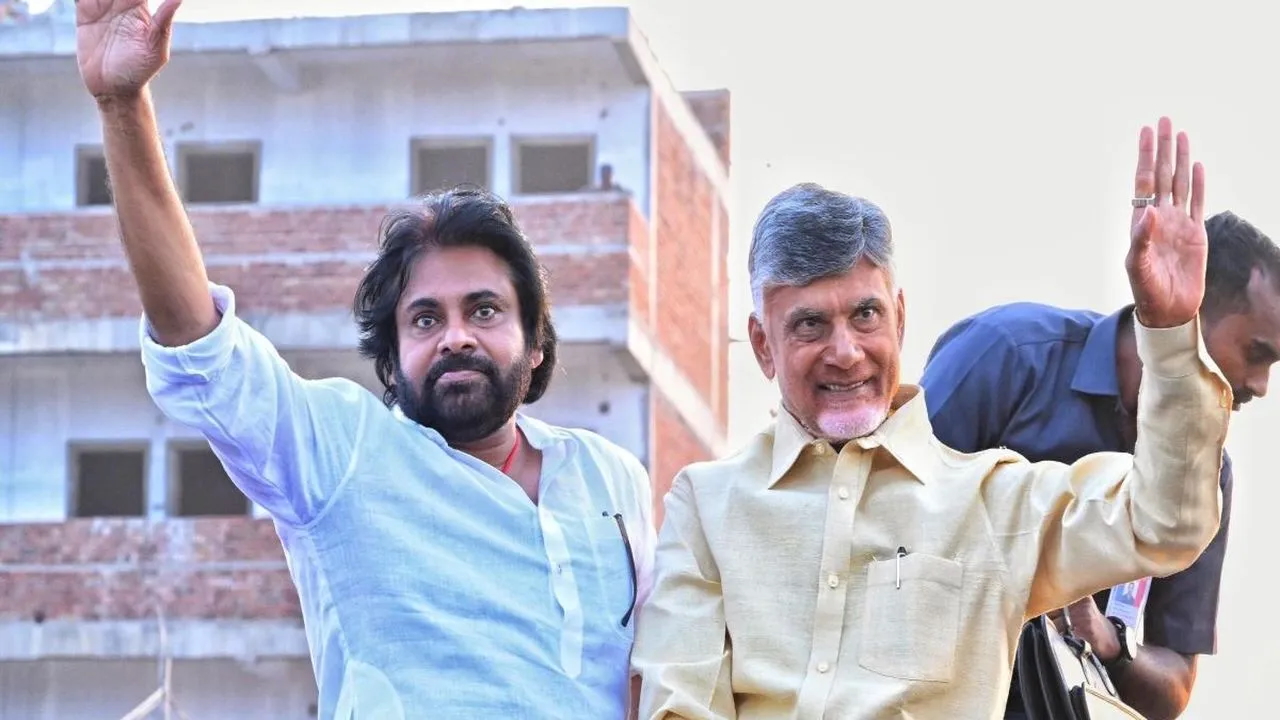
Chandrababu Naidu with Pawan Kalyan. (X)

Synopsis: The recent early exit of Pawan Kalyan from a meeting of the Andhra Pradesh Cabinet reportedly stemmed from his discontent over the government’s decision-making, with the TDP leadership allegedly taking decisions on governance without informing its alliance partners. However, his unhappiness is open to question, as his party, Jana Sena, is also accused of following a similar style of functioning.
Is Deputy Chief Minister Pawan Kalyan unhappy over the way the NDA government in Andhra Pradesh is treating him? Questions in this regard arose after Pawan Kalyan, founder of the Jana Sena party, abruptly walked out of the last Cabinet meeting held in Amaravati on Thursday, 4 June.
The NDA in Andhra Pradesh comprises the major partner, TDP, Jana Sena and the BJP. Apart from Pawan Kalyan, there are two other ministers from Jana Sena in the state Cabinet.
Information leaked to the media after Pawan Kalyan left the Cabinet meeting, within half an hour after it commenced, was that he was suffering from severe back pain. However, he did not visit any hospital; he went straight to his party office-converted-home and relaxed there.
But what’s the truth?
Information gathered by South First through sources close to him suggested that Pawan Kalyan has not been comfortable with the way important decisions are being made — without any consultation and then placed before the Cabinet for ratification.
“Why should I attend the Cabinet meeting where no meaningful discussion happens on any policy or decision? Everything is predetermined, and ministers merely nod their heads in approval,” Pawan Kalyan is understood to have remarked to his party leaders.
Truth be told, Pawan Kalyan has not attended most of the Cabinet meetings held over the last two years, citing some excuse or the other, mostly health-related.
On rare occasions when he has chosen to attend, he has left midway, just like he did on 4 June.
Also Read: Chandrababu Naidu pushes for delimitation — at least in Andhra
According to those privy to the happenings, major decisions, even regarding ministries held by alliance partners, are formulated at the bureaucratic level, followed by approval from Chief Minister N Chandrababu Naidu and TDP scion and IT Minister Nara Lokesh, before they are brought before the Cabinet.
South First had earlier reported on a new practice by Lokesh wherein he invites all TDP ministers for breakfast on the day of the Cabinet meet and briefs them on the agenda. Viewed differently, the Cabinet meeting has become a mere formality.
Pawan Kalyan, it is said, has also decided to stay away from the award of contracts under the centrally sponsored Jal Jeevan Mission. Although the subject falls under his purview, the decisions on whom to award the contracts are taken elsewhere.
Opposition leaders have often alleged that Pawan Kalyan has been reduced to a “package star”, implying that he is being kept silent by Naidu and company by other means, the reason why he has not challenged even questionable decisions taken by the government.
Non-TDP ministers are also complaining in private conversations that they are not being kept in the loop, even regarding transfers of key officials in departments under their control.
This means that Naidu and company have kept the levers firmly in their control, though, on paper, it is an alliance government.
The frustration faced by Pawan Kalyan sometimes shows up in his speeches too. “I could not achieve anything big in my home state of Andhra Pradesh. Will I become chief minister of Telangana?” was what he said some days ago when there was opposition to his plans to make a foray into Telangana.
Clearly, he has ridiculed himself.
Looking at the issue at a broader level, the reasons for Pawan Kalyan’s unhappiness are unfortunately true about his own functioning. The Jana Sena, for example, has a Political Affairs Committee (PAC). Was it convened before the party’s nominee for the Rajya Sabha, Lingamaneni Ramesh, was finalised a couple of days ago? No.
Ramesh has been the financial backbone for Jana Sena since its birth, donated his land for the party office, is otherwise useful to Kalyan in many ways, and, therefore, he has decided to reward him. The question remains: What happened to the consultative process?
However, the bigger question is whether it is politically prudent for a party, essentially seen as representing the Kapu community, to favour a Kamma, a community that is the backbone for the TDP.
How the BCs and other disadvantaged sections view this is a question that the Jana Sena PAC should have discussed, but apparently didn’t.
Interestingly, the home where Naidu lives, on the banks of the river Krishna in Amaravati, belongs to Ramesh. In many ways, he is the man for both Naidu and Pawan Kalyan.
Also Read: Congress leader Ramachandra Rao dares Pawan Kalyan to prove charge against YSR
Probably responding to the murmurs, Pawan Kalyan’s brother, Konidela Naga Babu, MLC, came out with a post on X on Saturday, 6 June: “A leader’s word is final. None have seen devils and demons in his path. He alone knows what is right and wrong. Shut your doubts, silence your tongues and follow the leader without questions.”
So, are we to assume that whatever Pawan Kalyan achieved was solely because of his efforts, without any contribution from the dozens of Jana Sena leaders and the thousands of activists and supporters on the ground? One can view the statement as the worst display of peak arrogance.
However, this non-consultative process is not limited to Jana Sena. Over the years, almost all parties have given up the democratic practice of involving PACs, politburo or parliamentary boards before making decisions on crucial appointments or selections.
For that matter, there was no evidence that TDP’s politburo had met before Naidu decided the three candidates from the party for the Rajya Sabha elections.
Similarly, National parties like the Congress and the BJP are no exception to this, with decisions often being taken by a small group without a larger consultative process.
(Edited by Muhammed Fazil.)



