

Published Oct 27, 2026 | 7:00 AM ⚊ Updated Oct 27, 2026 | 7:10 AM

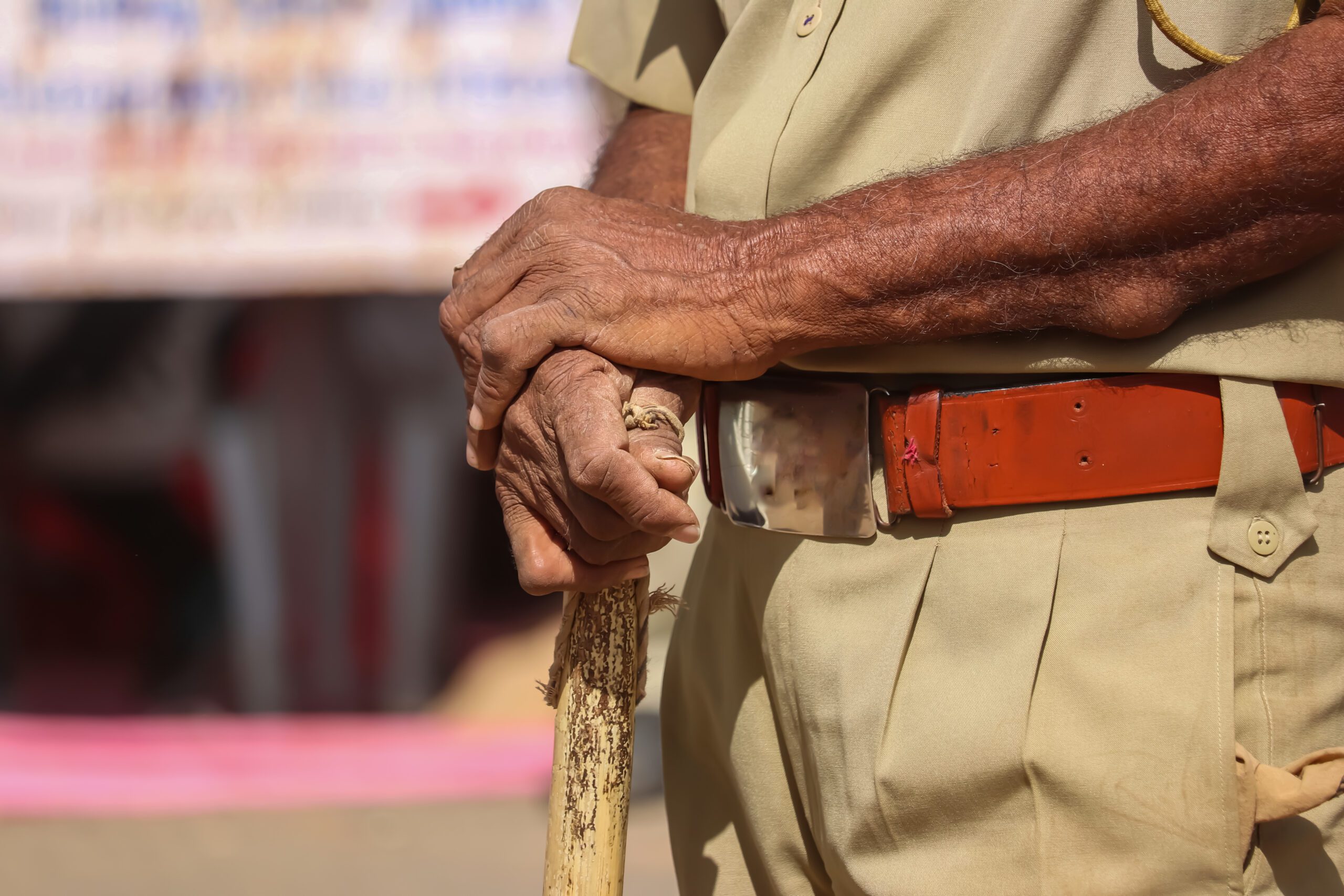
The present increasing trend in crime is largely due to population growth and social, cultural and economic changes.

Synopsis: As Tamil Nadu Police battles to regain its lost glory, community policing can be a step in the right direction. Different areas will need different policing approaches, depending on the people who live there and the types of offences prevalent in those areas. Here are a few practical steps to make community policing effective.
The image of Tamil Nadu Police is deteriorating by the day. Remember, this is a force that had drawn comparisons with England’s renowned Scotland Yard when it came to competence. Recent reports of 10 children going missing in the last month and the escape of 17 prisoners from a district jail in Theni are just the latest in a long list of headaches plaguing the force.
Earlier, allegations against the police were considered politically motivated and highly exaggerated due to media hype. These allegations are increasingly proving true, as evidenced by frequent failures.
The entire police force cannot be dismissed as corrupt and characterless. The good, the bad and the ugly exist in all ranks. The misdeeds and failures of the police are often blown out of proportion, with the expectation being that Caesar’s wife must always be above suspicion.
But it cannot be denied that frequent incidents of corruption, negligence, custodial violence, lockup deaths and suicides by police personnel lend credence to the arguments of social media activists and others who are against the police.
The prevailing situation serves as a wake-up call for the police to revamp their working pattern and make themselves more people-friendly. The good reputation of the force is essential not just for the department but also for the government in power. This is what cops are paid for, along with the fringe benefits and gravy trains attached to the job.
A quote attributed to Gandhiji about businesspeople applies to police personnel too.
Victims who come to the police station with a grievance are the most important visitors to the station. They are not dependent on the police; we are dependent on them. They are not an interruption to our work; they are the purpose of it. They are not outsiders to our public service; they are part of it. We are not doing a favour by serving them; they are doing us a favour by allowing us to do so.
We must also acknowledge that the present spike in crime is also driven by population growth and social, cultural and economic changes resulting from advances in technology that help fraudsters and antisocial elements too. Cybercrime is a glaring example of this.
To fight the growing challenges and win over the public, an idea that can be considered in earnest is enlisting public cooperation through community policing.
Community policing, when implemented properly, can definitely be a step in the right direction. Neighbouring Kerala’s Janamaithri Suraksha Project is proof.
The Irinjalakuda Police Station, which falls in the Thrissur district, in fact went on to become the first ISO 9001-certified Janamaithri Police Station in India after the project was inaugurated in the state in 2008. Janamaithri translates to friendship with the people.
Any community policing initiative needs to be rolled out with the understanding that a one-size-fits-all approach will not help, and policing approaches will have to vary, depending on the nature of the people living there and the types of offences prevalent in those areas.
This information can be gained only if the police forge bonds with the public and interact with those identified as informants among them. Only grassroots-level officers working in the field can do this effectively.
To achieve this, the entire jurisdiction of a police station should be carved up and each area assigned to a constable or head constable, who will act as the officer in charge of that particular area. He can visit the area irrespective of his duty hours.
With the help of the Village Administrative Officer (VAO) and municipal corporation officers, he will collect particulars of the families and other institutions in the area. He can establish contact with people who are easily accessible in his area and exchange mobile numbers with them.
These may include senior citizens, retired government officers and social activists. Apart from these, vegetable vendors, launderers, tailors, etc., who are permanent occupants of roadside platform shops, can also be of help, as they are very good informants.
People, preferably youths, who voluntarily come forward to help the police can be identified, and their services can be utilised to prevent crime and gather intelligence. At present, these youngsters are being misused by politicians and so-called social activists to gain personal and political mileage.
The constable in charge of a particular area should develop a good relationship with the people there so that even the smallest piece of information or incident comes to his notice through them.
The public will have fewer reservations in contacting a familiar person — the constable assigned to their area — than they will have in contacting the Station House Officer (SHO). Even when the constable is on other duty or resting at home, he can contact them over the phone to obtain current information.
If he receives a call on such an occasion that requires police action, he can pass the information on to the patrol vehicle so that the concern can be addressed immediately. With such a close police-public relationship, no individual can exercise undue influence or dominance in a particular area and emerge as a ‘pirabala rowdy‘ (famous rowdy) or ‘Dada‘.
Even minor issues, such as family quarrels, can be enquired into by the police constable (PC) or head constable (HC), with a proper entry in a register and the knowledge of the SHO. This could help prevent suicide, murder or even rioting. As the saying goes: a stitch in time saves nine.
Advantages:
We must also acknowledge that the days when constables only had a 10th-standard certificate are long gone. Now, even engineering graduates are joining the police force as constables. They are employed only in mundane jobs such as beat duty, patrolling, picketing and bandobust. Even in these duties, they are not allowed to put their abilities to the best use, as some senior officers underestimate their knowledge.
Given the mistakes and misconduct of some subordinates, senior officers judge them all by the same yardstick and impose blanket restrictions, such as prohibiting them from receiving complaints and issuing CSR numbers or contacting the parties concerned under the pretext of conducting an enquiry.
These kinds of blanket orders will only serve to dampen morale and curb the enthusiasm of those in the lower ranks. It does an injustice to their abilities.
It is the duty of superiors to get work out of those under them without allowing them to exceed their limits. A ship will be safe in the harbour if it is anchored permanently, but that is not the purpose for which it was built. It must go on a voyage, face the challenges at sea and reach its desired destination.
These constables are highly educated individuals who have been suitably trained by the department. They can think reasonably well and act at their own discretion. Their discretion would create havoc only when their intentions are mala fide.
Those with such intentions can be found out and isolated if they are under the constant and close supervision of senior officers. Here, we must also accept one bitter truth.
Because of these blanket restrictions, lazy personnel can comfortably hide behind them and use them as a convenient excuse. Very few officers who want to prove their efficiency will think about the possibilities.
One more step needs to be taken. Senior officers who enter the police department directly as Deputy Superintendents of Police (through the State Public Service Commission) and Assistant Superintendents of Police (through the UPSC and the IPS) begin their careers in supervisory roles. Such officers need to be given the benefit of field experience.
The theoretical knowledge of police work imparted during their basic training, along with a short period of practical training, is not sufficient to understand the nuances of fieldwork performed by subordinate police officers, from the rank of constable to Inspector, particularly the practical aspects of investigation.
This knowledge can be acquired only through close and frequent interaction with their subordinates, in addition to visiting and inspecting police stations and examining records and case diary files. Only then can senior officers catch the lower officers when they have slipped and offer suitable, well-informed guidance and suggestions to improve the quality of their work.
These days, with a few honourable exceptions, most senior officers avoid doing this, owing to their ego. In years gone by, these officers equipped themselves with thorough knowledge, and none of their subordinates could escape disciplinary action when warranted. This does not mean that all officers today are inefficient.
Most have either not tried their best or have been prevented from doing so by compelling circumstances. Nowadays, very few maintain that level of professional standard. That is why they cut a sorry figure in court, while the affected victims and social media users sling mud at them.
In the 1970s, when we were SHOs (Sub-Inspectors), the station writer, usually a Grade I or Grade II police constable, would receive all petitions submitted by the public, make entries in the Petition Register and General Diary, and keep them ready for the SHO’s perusal without waiting for any direction or instruction from anyone, unless the matter involved a serious offence.
The SHO would go through the petitions and endorse them to head constables for enquiry and report.
If he felt that he had to enquire into certain issues personally, he would direct the HCs to produce the parties concerned. Every day, during the morning roll call, the SHO would interact with the HCs regarding the petitions pending with them and give them instructions then and there.
This practice not only helped resolve minor issues at the outset, preventing them from developing into lasting enmity between two groups, but also helped establish good rapport with the police.
In a recent incident, a woman Inspector was arrested for alleged money laundering under the nose of her superior officers. In another incident, an Inspector received a huge sum of money from a murder case suspect, and that too in Chennai, the state headquarters.
When these officers have not even been able to keep watch over the clandestine criminal activities of their own subordinates, how are they going to succeed in monitoring the bad elements?
Let me end by saying that this is not to blame senior officers, but a humble request to them to rise to the occasion. Tamil Nadu Police can be the pride of the state once again if everyone in the force applies their hearts and minds to achieve this.
Also Read:
Woman alleges sexual assault by police officer during anti-SIR protest in Chennai
(Edited by R Rajesh Kumar.)



