
Published Jul 26, 2026 | 10:31 AM ⚊ Updated Jul 26, 2026 | 10:31 AM

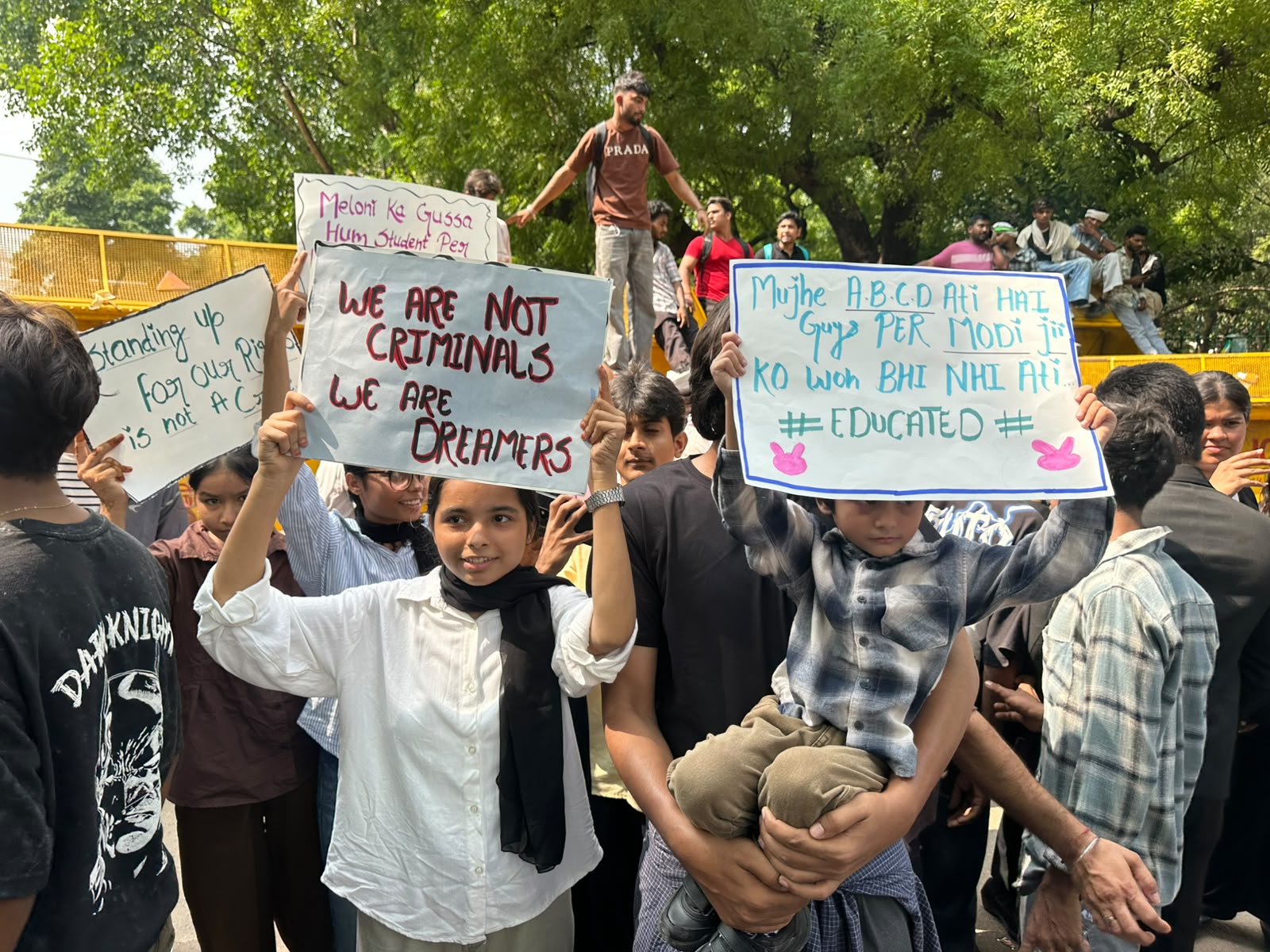
The CJP said it will continue the agitation seeking Pradhan's resignation. (Likhitha Nair)

Synopsis: The student-led protests forced the government to accept their demands after 35 days on the streets. But the sequencing matters. The government responded only after public anger spilled onto the streets. Genuine reform demands greater acknowledgment and humility from those in power.
There is a familiar saying in Indian politics: wisdom often arrives only when the consequences become unavoidable.
The Union government’s handling of the nationwide agitation over examination paper leaks has once again proved the point. For weeks, students, parents and civil society groups directed their demands for accountability primarily at Union Education Minister Dharmendra Pradhan. Only after sustained protests, police action against demonstrators in New Delhi, and mounting political pressure did the crisis reach the highest levels of government. On Saturday, Pradhan submitted his resignation to Prime Minister Narendra Modi.
The resignation is a significant development. Yet it also raises the same uncomfortable question that has shadowed this episode from the beginning: if moral and political responsibility ultimately had to be accepted, why did it require weeks of street mobilisation, injuries, internet restrictions and the disruption of ordinary life before it was forthcoming? Timely acknowledgement and corrective action might have prevented confrontation and limited the erosion of public confidence in institutions.
This pattern is not new. Whether it was the eventual repeal of the three farm laws after prolonged protests, the political controversy around the linkage of women’s reservation with delimitation, or the delayed response to repeated examination irregularities, corrective measures have frequently followed sustained public pressure rather than proactive leadership. In a democracy, delayed accountability exacts costs that extend far beyond the immediate grievance.
The protests themselves, led largely by the youth-driven Cockroach Janta Party (CJP) movement and supported by activist Sonam Wangchuk’s hunger strike, highlighted deeper anxieties.
Students were not merely demanding a ministerial scalp. They were asking for transparency in competitive examinations, institutional reform of bodies such as the National Testing Agency, compensation for families affected by the NEET-related distress, and an end to the criminalisation of peaceful dissent. Images of police action against demonstrators triggered a legitimate debate about the balance between maintaining public order and protecting constitutional rights. Peaceful protest is not a favour granted by the state; it is a protected democratic right. Governments may disagree with protesters, but they must exhaust dialogue before resorting to force.
The controversy has also drawn the judiciary into the conversation. Remarks attributed to members of the Supreme Court during related hearings attracted criticism from sections of civil society, who felt the institution should display greater sensitivity toward citizens raising issues of public importance. Public confidence in democratic institutions rests not only on constitutional authority but also on the perception that those institutions remain accessible, impartial and empathetic.
It would be a mistake to reduce this crisis to a partisan contest between the Bharatiya Janata Party and the Congress. Political parties have traded accusations—Rahul Gandhi pointing to repeated leaks under the present government, with BJP leaders also highlighting similar instances in opposition-ruled states. Such exchanges risk obscuring the larger truth.
The integrity of competitive examinations affects millions of students, unemployed youth and their families. Every compromised examination is not only an administrative failure; it is an erosion of faith in meritocracy. With one of the world’s youngest populations, India’s educational and recruitment systems directly shape economic opportunity, social mobility and trust in governance.
Political accountability extends beyond legal liability. Lal Bahadur Shastri’s resignation as Railway Minister after a major accident—despite the absence of personal culpability—remains a widely cited example of moral responsibility. Modern governments, across ideological lines, often appear reluctant to accept such responsibility. Criticism is frequently treated as a challenge to authority rather than an opportunity for course correction. That approach weakens democratic culture.
The government’s recent announcements—willingness to hold consultations, consideration of a stronger law against examination malpractices, proposals for fast-track courts, and administrative changes—are welcome. So is Pradhan’s decision to step down.
Yet the sequence matters. These measures arrived after public anger had already spilled onto the streets and after ordinary citizens had borne the costs of disrupted transport, restricted movement and heightened tension. The students may not have secured every demand, but their movement compelled the government to address issues it had previously resisted acknowledging.
Democratic governance is strengthened not by denying mistakes but by recognising them promptly, correcting them transparently and preventing their recurrence. Accountability delayed is accountability diminished.
Governments derive lasting legitimacy not merely from electoral victories but from their willingness to listen, respond and act in the public interest. When institutions acknowledge failures with humility rather than reluctance, public trust is reinforced and democratic values are protected. The resignation of a minister is one step. Ensuring that the systems which failed so many young Indians are genuinely reformed remains the larger, unfinished task.
Also Read:
Jantar Mantar protests mark the birth of fear among Modi and his men
No country for the young: The grim numbers fuelling the angst among India’s youth
Gen Z protest is not ‘unserious’, it is civil disobedience dismantling Modi’s crafted image
(Edited by R Rajesh Kumar.)



