

Published Nov 10, 2026 | 9:30 AM ⚊ Updated Nov 10, 2026 | 9:30 AM

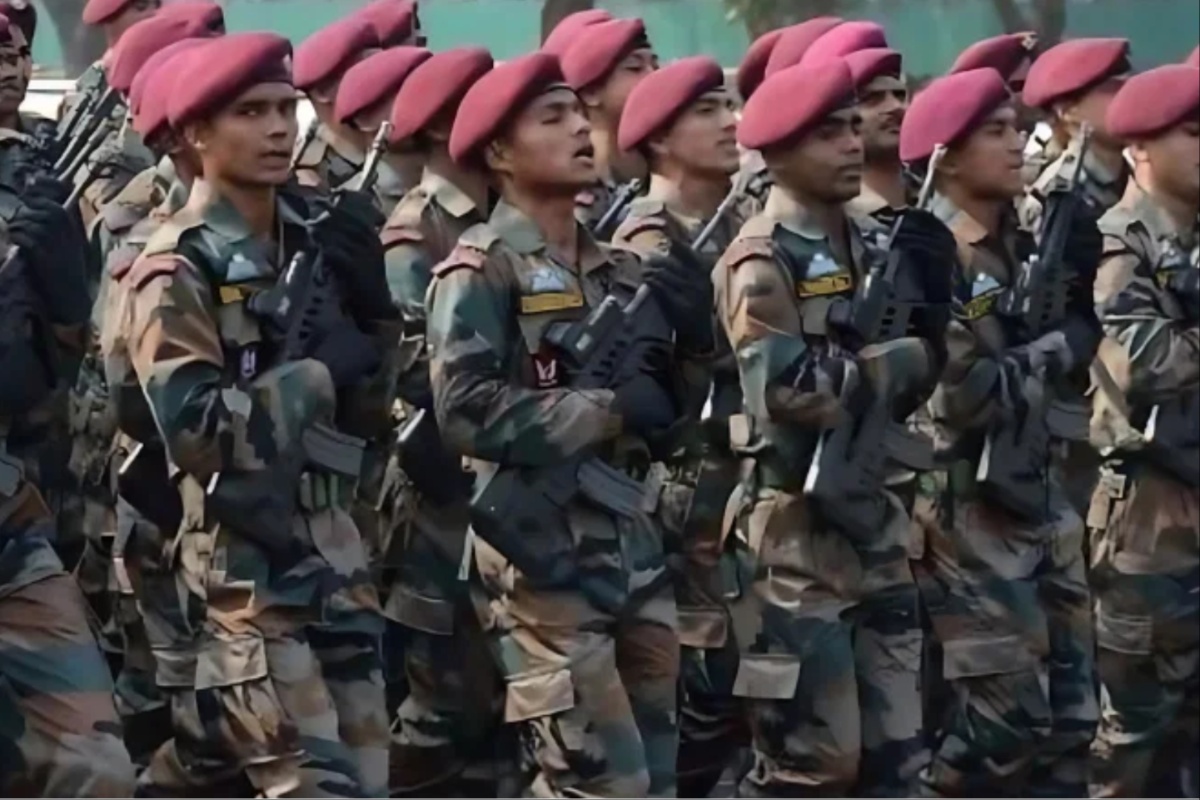
Under the scheme, the government reportedly intends to recruit at least 50,000 to 60,000 personnel every year. (Photo| Scope Defence Academy)

The Agnipath scheme introduced by the Union Government has once again become a subject of intense national debate. Chief of Defence Staff General NS Raja Subramani has announced a fresh decision taken by the Union Cabinet following its three-day deliberations.
By December 31 this year, around 18,000 Agniveers recruited into the three armed forces are expected to complete their tenure and leave military service. Against this backdrop, under a revised arrangement, 25 per cent of Agniveers completing their four-year service will be eligible for permanent recruitment, based on their performance and capabilities. The remaining 75 per cent will be given an opportunity to continue serving in the armed forces for another two years.
There have been no regular recruitments to the armed forces for many years. At the same time, it is estimated that more than 50,000 personnel retire from military service every year. Citing the need to address a shortage of young soldiers in the interest of national security, the Union Government introduced the Agnipath scheme in 2022 to recruit personnel at the lower ranks of the three services.
Introduced in haste in 2022, without any meaningful discussion in Parliament or consultation with the Opposition, the scheme immediately attracted widespread criticism. Opposition parties vociferously demanded its withdrawal and insisted that soldiers should instead be recruited through the regular recruitment system.
Young people aspiring for regular employment in the armed forces openly expressed their opposition to the scheme that year. This triggered a massive wave of protests across the country, with thousands of young people taking to the streets demanding its withdrawal.
Railway services were disrupted in Bihar, where trains and buses were set on fire. Young men and women organised rail blockades and demonstrations in several places, including Uttar Pradesh, Rajasthan, Karnataka, Tamil Nadu, Hyderabad, Delhi and Kolkata.
A nationwide Bharat Bandh was also observed during this period. In some places, police opened fire on protesters.
Although the protests had no clearly defined leadership, social media played a significant role in mobilising young people. In today’s terminology, the movement could also be described as a Gen Z-led protest.
Despite these widespread demonstrations, the government refused to withdraw the Agnipath scheme.
By July 2024, approximately one lakh Agniveers had reportedly been trained in different batches.
Young men and women between the ages of 17.5 and 23 are eligible for recruitment under this scheme. Those who leave the armed forces after completing their tenure are not entitled to pensions or other benefits available to regular soldiers. In effect, they are no different from contractual workers employed by private companies. They have neither job security nor the range of service benefits enjoyed by regular personnel. They are, in essence, contract soldiers.
Under this contractual recruitment model, the government reportedly intends to recruit at least 50,000 to 60,000 personnel every year. Since these recruits will not be entitled to regular pensions and other long-term benefits, the government may save a considerable amount of money. But the most important question before the country is whether soldiers with just six months of basic training and little operational experience can genuinely protect national security. Do they possess the necessary capabilities to defend the country effectively? The government’s casual approach to military recruitment has caused considerable concern and anger among Opposition parties, military officers and defence experts.
After receiving military training at public expense and completing four or six years of service, will these thousands of young people actually find opportunities to pursue alternative careers? Apart from knowing military drills and how to handle weapons, what other employable skills will these contract soldiers acquire?
In a country already grappling with widespread unemployment, there is a legitimate concern that these young people, equipped primarily with military skills, may eventually end up working as private security personnel or members of private armed groups for various organisations or individuals. Only time will tell whether such a situation emerges.
Meanwhile, several multinational companies have already entered India’s defence sector, particularly in weapons manufacturing. If Agniveers leaving military service begin offering their services to such private companies, or find employment with them, the possible consequences for the country in the coming years are a matter of serious concern.
Among the private-sector companies manufacturing weapons, fighter aircraft components, missile components and defence equipment for the Indian armed forces, Tata Advanced Systems plays a particularly important role. The company manufactures aircraft components, missile systems, radars and military vehicles. It also supplies Pinaka multi-barrel rocket launchers and defence vehicles to the Indian Army. In addition, it collaborates with international defence companies such as Boeing and Lockheed Martin.
Larsen & Toubro (L&T) is another major player providing advanced technologies to the defence sector. It manufactures K-9 Vajra tracked self-propelled howitzers and submarines.
Mahindra Defence Systems, part of the Mahindra Group, manufactures land-based and naval equipment required by the armed forces. The Kalyani Group’s Bharat Forge has established a reputation for manufacturing advanced artillery guns, including the Bharat 52 and Garuda, as well as missile components.
Adani Defence and Aerospace is involved in the manufacture of drones, small arms and unmanned aerial vehicles. In collaboration with Israeli companies, it also manufactures advanced drone systems.
Apart from these major corporations, several start-up companies have also entered the defence manufacturing sector. These companies are engaged in supplying weapons and defence equipment not only to the Indian Government but also to other countries.
In fact, the Union Government initially considered a proposal in 2020 called ‘Tour of Duty’, reportedly modelled on Israel’s system of civilian military training. The idea was to provide military training to ordinary citizens so that they could be inducted into the armed forces whenever required. For reasons that remain unclear, the proposal was subsequently shelved, and the government later introduced the present Agnipath scheme.
Several people have expressed concern that the defence sector should not be treated as an employment guarantee programme for the unemployed. Nor should it be privatised under any circumstances. However, over time, the responsibility for manufacturing weapons in India has also been opened up to private companies.
If the monopolistic tendencies and commercial interests that have emerged in weapons manufacturing begin to influence the country’s military establishment as well, what could be the consequences for India’s external and internal security? The apprehensions surrounding such a possibility cannot simply be dismissed as baseless.
On the one hand, the government repeatedly claims that India faces security threats from all sides. On the other hand, it is introducing temporary recruitment arrangements that could weaken an institution like the armed forces, which fundamentally requires continuity, experience and stability. An inexperienced and inadequately trained military force could prove extremely damaging to the country during wartime. This is why several political parties have consistently demanded the withdrawal of the scheme right from the beginning.
Several retired military officers have also strongly criticised the Agnipath scheme.
Some political parties have expressed apprehensions that the BJP might use the Agnipath scheme to recruit temporary personnel, provide them with military training and, after their service tenure ends, use these trained young men to build its own armed cadre. Such concerns have also been raised in the political debate surrounding the scheme.
Several petitions were even filed in the Supreme Court seeking its withdrawal.
Even now, Opposition parties argue that the minor changes introduced in the scheme offer little meaningful relief. Young people who complete four years of service and are now given the option of serving for an additional two years will, at the end of six years, once again find themselves facing unemployment. The Opposition continues to demand the scrapping of the Agnipath scheme and a return to regular recruitment in the armed forces.
The ongoing Russia-Ukraine war offers another disturbing example of the consequences of unemployment. When Russia invited people from other countries to join its forces and fight on the battlefield, several young Indians, driven by the country’s severe unemployment crisis, reportedly travelled to Russia to fight, even without proper military training. Some of them lost their lives.
Against this backdrop, what assurance can anyone give that Agniveers, after completing six years of service and receiving some military training, will not eventually be pushed into working as mercenaries for whoever will employ them, to earn a livelihood? When they leave the armed forces without secure employment opportunities, who can guarantee that these young men will not be forced to sell their military skills to armed groups as well?
This is a serious question that the government cannot afford to ignore.
Also Read:
Is democracy banned in universities? How Jamia became ‘a police camp’ before sanity prevailed
Forget NDA vs INDIA, Modi vs Rahul: The real battle is between universal and limited franchise
(Edited by R Rajesh Kumar.)



