

Published Aug 15, 2026 | 12:47 AM ⚊ Updated Aug 15, 2026 | 12:47 AM

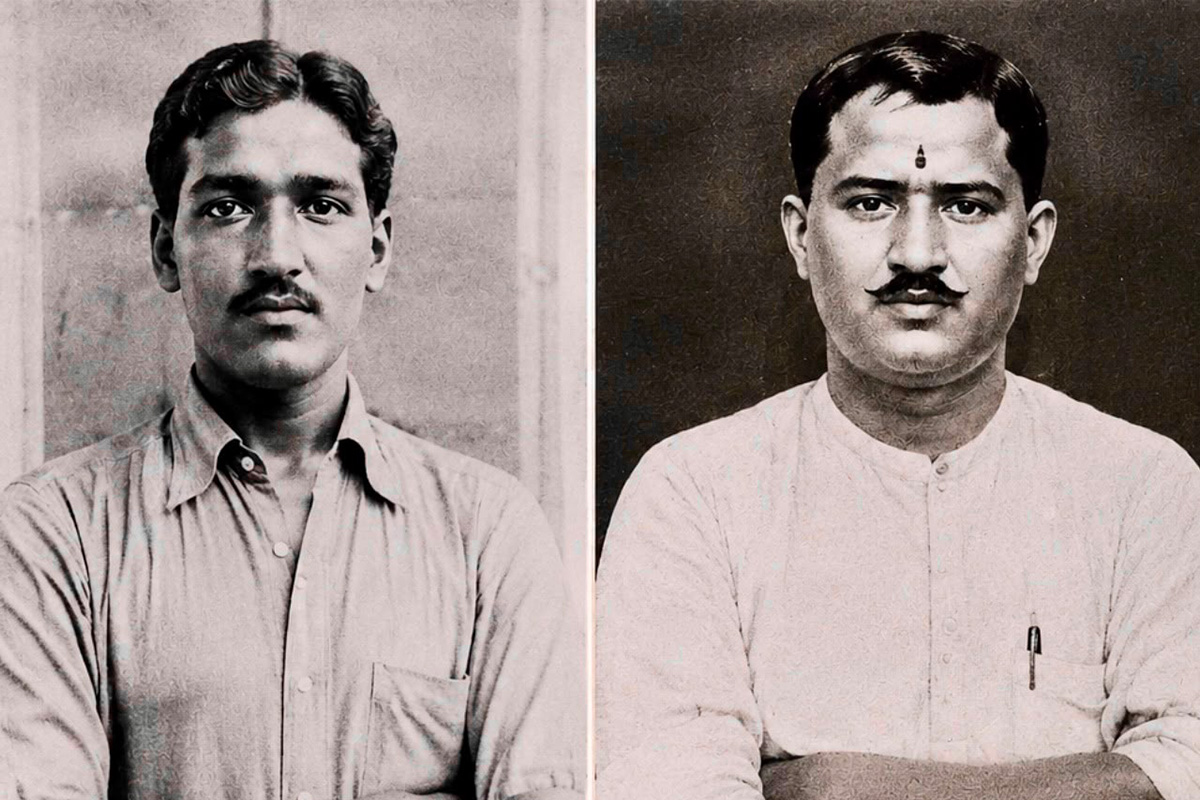
Ashfaqullah Khan and Ram Prasad Bismil dreamt of a country where a Hindu could trust a Muslim and a Muslim would not have to doubt a Hindu.

Synopsis: The friendship of Ram Prasad Bismil and Ashfaqullah Khan was not just personal. It was a political statement. Bismil’s last words must be reflected on as India enters its 80th year as an independent nation: “If a dedicated Muslim revolutionary like Ashfaq could become the most loyal colleague of an Arya Samajist like me, why could Hindus and Muslims not forget their petty interests and unite?” Why not indeed?
As India enters its eightieth year of independence, there is a question we must ask ourselves amid the celebrations: How well do we remember the men who won this freedom for us?
The India we call free today was formed by the blood, tears, and dreams of so many people who found little space in the chapters of our history books and whose pictures are not even familiar to the new generation.
Two of them were Ram Prasad Bismil and Ashfaqullah Khan. One was a Hindu; the other, a Muslim. But in their struggle against British rule, they were bound by one overriding faith—freedom. And they had only one motherland—India.
Shahjahanpur in Uttar Pradesh brought the two men together. Born in 1897, Ram Prasad Bismil was a poet, writer, and revolutionary. Ashfaqullah Khan was three years younger. Their passion for poetry and freedom brought them closer together.
Their friendship was not merely personal. At a time when the British government was trying to divide Indians along religious lines, their friendship itself was a political statement. Ashfaq, a Muslim, became one of the most trusted colleagues of Bismil, a Hindu. Religion did not become a wall between them. Rather, they remained true to their respective faiths while respecting one another.
According to family memoirs, when Bismil performed the sacred fire ritual, Ashfaq would pray nearby, and the two would eat from the same bowl. They lived by a simple truth: although their paths to God were different, their love for the motherland knew no religious boundaries. Ashfaq called Bismil “Ram.” The depth of their friendship surprised even the people of Shahjahanpur, according to their biography published by the National Book Trust.
Also Read: The chauvinism of clothing: What the “lungiwala” remark against John Brittas reveals about India
The Train to Kakori
The young revolutionaries of the Hindustan Republican Association stopped a train carrying money to the British government treasury on August 9, 1925, at Kakori, near Lucknow. Among them were Bismil and Ashfaq. They aimed to use the money seized from the British government to procure weapons and other supplies for the freedom struggle. The incident went down in history as the Kakori Revolution. It was not merely an adventurous act. Afterwards, the British government launched a fierce manhunt for the revolutionaries. Bismil was captured.
Ashfaqullah Khan, who wanted to go abroad and continue the revolutionary struggle from there, was also captured.
At the end of the trial, they were sentenced to death. It is worth remembering how young they were at the time: Bismil was thirty, and Ashfaq was twenty-seven. They dedicated their lives to India at a time when they were just starting out. On December 19, 1927, Bismil was hanged at Gorakhpur Jail. Ashfaqullah Khan was hanged on the same day at Faizabad Jail.
Even as they walked to the gallows, they carried in their hearts a dream of an independent India. Through their lives, they proved that one can love and respect another person’s faith while remaining true to one’s own religious beliefs. That is why their friendship is even more relevant today.
Also Read | The politics of forgiveness: Prime Minister Modi and the burden of example
Bismil’s last wish
The words Bismil addressed to his country just days before his execution should still move us.
He asked, “If a dedicated Muslim revolutionary like Ashfaq could become the most loyal colleague of an Arya Samajist like me, why could Hindus and Muslims not forget their petty interests and unite?”
“If the country is at least a little saddened by our deaths, then Hindu–Muslim unity should be established. That is our last wish, and our true memorial,” Bismil pleaded. Even after a hundred years, those words still resonate across the soil of India.
Their dream was of a country where a Hindu could trust a Muslim and a Muslim would not have to doubt a Hindu. A country where a Christian, a Sikh, a Buddhist, a Jain and a person without religion could all say, “This is my country.”
A country where a person’s patriotism was not measured by their name. A country where one’s food, clothes and prayers were not used to judge one’s Indian citizenship. Ashfaq and Bismil painted such an India through their lives.
On Independence Day, we will remember Gandhi, Nehru, Patel, Subhas Chandra Bose and Bhagat Singh. Of course, we should remember them. But many other names in the history of India’s independence should also be remembered.
We should remember Rajendranath Lahiri of Kakori, Thakur Roshan Singh, and Sachindranath Bakshi. We should remember Chandrashekhar Azad. We should remember Peer Ali Khan, the freedom fighter and bookseller who was hanged by the British in Patna in 1857.
We should also remember the thousands of men and women who died in different parts of India without ever having their names or photographs included in the great history books. Freedom was not given to us as a gift. It is someone’s lost youth. It is the tears shed by many mothers. It is the unfulfilled love of many. It is a noose tied tightly around someone’s neck. When you understand its value, the national flag becomes more than just a piece of cloth.
If Ashfaq and Bismil stood before us today, what would they ask us?
“In the India for which we gave our lives, do you love one another by asking about each other’s religion?”
“If we could die together, can’t you live together?”
India’s freedom today must be protected not only at the borders; it must also be protected in our minds.
Freedom is wounded when religious hatred turns our neighbour into our enemy. Freedom is diminished when caste denies another human being their dignity. Freedom is suffocated when someone who expresses a different opinion is branded a traitor.
Every August 15, when the national flag is hoisted, let us pause for a moment to remember those two young men, along with the many other freedom fighters who died prematurely. Therefore, the greatest tribute we can pay them on this Independence Day is to pass on an India free from hatred to the next generation.
An India where Ashfaq’s namaz and Bismil’s prayer have a place under the same sky.
An India that does not divide people by name, religion, or caste. An India that brings people closer to one another. Because the freedom they won for us must live on in the India we build together.
(Edited by R Rajesh Kumar.)



