

Published Nov 12, 2026 | 7:15 PM ⚊ Updated Nov 12, 2026 | 7:15 PM

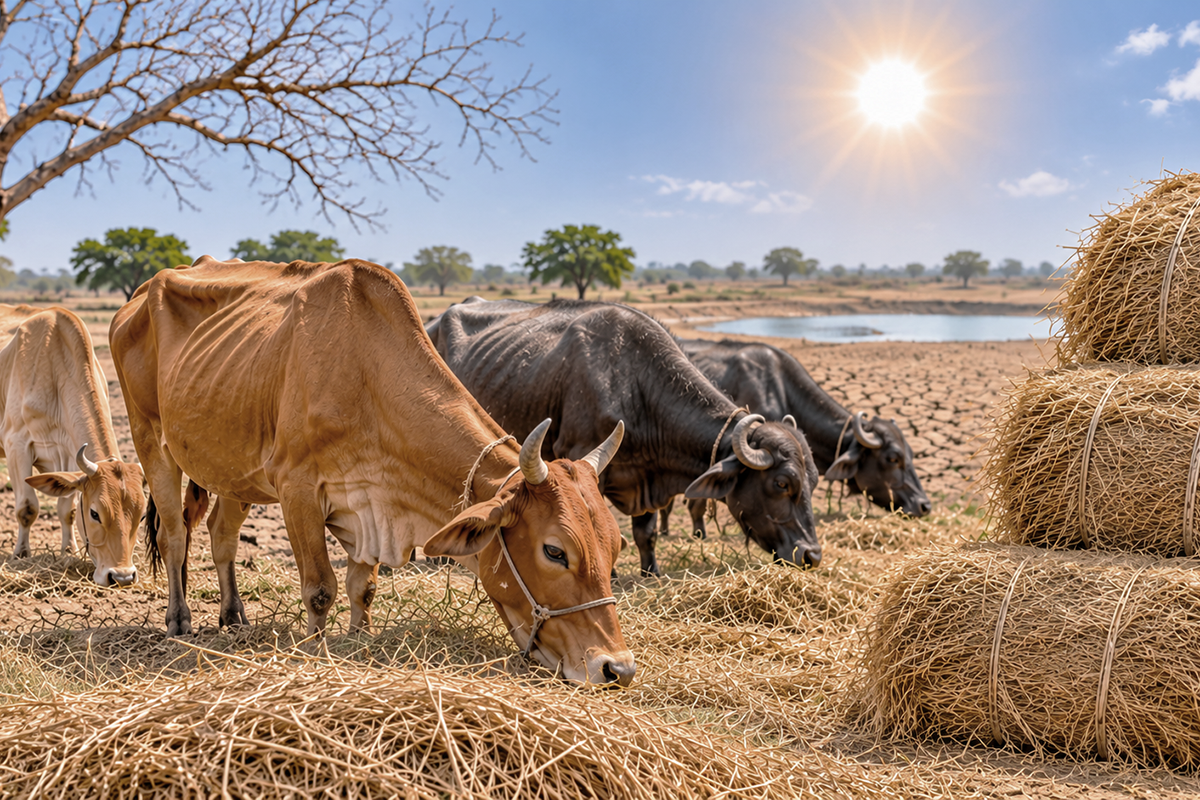
In October 2026, the Chief Minister warned that El Niño-linked drought could last 8–10 months, with low reservoir levels. (AI generated image)

Super El Niño is likely to hit dairy farming in rural Telangana. Fodder shortage due to reduced paddy transplantation may be one of the prime reasons for this, with the appeal of Chief Minister A Revanth Reddy to stall the cultivation of paddy set to add to the woes of the dairy farmers in the state.
Telangana’s dairy economy operates on a precarious nutritional base.
Detailed assessments by the National Institute of Animal Nutrition and Physiology and the ICAR-Indian Grassland and Fodder Research Institute estimate the state’s annual green fodder requirement at approximately 6.37 million tonnes. Against this demand, actual availability of fodder is only about 2.38 million tonnes, resulting in a structural deficit of nearly 62 per cent.
Dry fodder, drawn mainly from paddy and maize crop residues, remains in surplus — around 15 million tonnes available against a requirement of 12.75 million tonnes — while concentrates continue to fall short. Although crop residues supply the bulk of dry matter, the persistent scarcity of quality green forage limits milk yields, reproductive efficiency and overall animal health across rural herds.
The bovine population, according to official departmental figures consistent with the 20th Livestock Census, stands at roughly 42.33 lakh cattle and 42.26 lakh buffaloes. High-yielding milch animals ideally require 25–30 kilograms of green fodder every day to maintain production; many small and marginal farmers are able to provide substantially less. This nutritional shortfall keeps average productivity modest even in normal years and leaves the entire system highly exposed to climatic shocks.
Milk production under pressure
Milk production statistics reveal both the sector’s significance and its sensitivity.
Telangana produced 59.35 lakh tonnes in 2024-25 and targeted 61.75 lakh tonnes for 2025-26. Yet organised procurement has faced pressure.
The state-owned Vijaya Dairy’s average daily collection rose to approximately 4 lakh litres in 2024-25 before declining to 3.36 lakh litres in 2025-26. The drop reflects the combined effects of a prolonged lean season and emerging weather-related constraints on fodder availability and animal performance.
Super El Niño conditions in 2026 have sharply aggravated these vulnerabilities. Deficient and erratic monsoon rainfall, extended dry spells and higher temperatures have reduced both the area under rain-fed fodder crops such as sorghum, maize, bajra and cowpea and the biomass these crops produce.
Grazing lands and common property resources have deteriorated, while lower cereal output has cut the volume of crop residues available for livestock.
In several districts, dry-fodder prices have risen steeply; reports indicate that bundles that earlier sold for around ₹80 now fetch nearly ₹240. For smallholders who purchase a significant portion of their feed, these cost increases place severe pressure on already thin margins.
The impact on rural milk production is both immediate and multi-dimensional. Nutritional deficiency combined with heat stress can reduce milk yields by 10 to 30 per cent, shorten lactation periods, lower fat and solids-not-fat content, and lengthen inter-calving intervals. Animals lose body condition, fertility declines, and the risk of distress sales of cattle and buffaloes increases.
In October 2026, the Chief Minister publicly warned that drought-like conditions linked to El Niño could persist for eight to ten months, with reservoir storage critically low and a large number of agricultural pump sets already non-functional. The state government has initiated contingency measures, including cultivation of fodder on tank-bed (shikham) lands under the employment guarantee scheme, establishment of village-level fodder and drinking-water centres, and accelerated distribution of subsidised fodder seed. These interventions aim to stabilise short-term supply, yet they operate against a deep and long-standing structural deficit.
The consequences extend well beyond farm gates. Reduced milk volumes lower household cash income at a time when feed costs are rising.
Many dairy farmers operate close to the margin; sustained pressure can force distress sales, eroding the capital base of the rural dairy economy. Urban markets, already dependent on inflows from neighbouring states, face tighter supplies and upward pressure on consumer prices. The organised cooperative network experiences lower procurement volumes, while private dairies and informal channels absorb residual milk under varying terms of trade.
Feed constitutes 60 to 70 per cent of the cost of milk production. Any sustained increase in fodder prices or reduction in availability therefore translates rapidly into higher production costs and lower returns for farmers. The structural 62 per cent green-fodder deficit means that even moderate monsoon shortfalls can push the system into acute shortage, particularly in the central and southern districts that are less self-sufficient in dry matter.
Closing this gap requires both immediate buffering and longer-term structural reform. Expanding the area under drought-tolerant perennial grasses such as bajra-Napier hybrids, improving crop-residue utilisation through urea treatment and fortification, establishing village fodder banks, and promoting silage and hay conservation can reduce seasonal vulnerability.
Allocating a higher and more consistent share of cultivated land to fodder crops, supported by targeted irrigation where feasible and effective extension services, remains essential. Strengthening veterinary support to maintain animal productivity under stress, expanding access to quality concentrate feed, and ensuring timely procurement-price support can help protect farmer incomes during climatic shocks.
Telangana requires more than six million tonnes of green fodder every year and currently produces less than half that quantity. Super El Niño has laid bare how narrow the margin of safety has become for the dairy households that form the backbone of the rural economy. Without sustained investment in fodder security, recurring climate shocks will continue to convert a chronic deficit into repeated crises for milk production and rural livelihoods.
Also Read:
Rice and paddy crisis in Telangana: Artificial scarcity before the real shortage
Beyond welfare: Telangana must prepare for the El Niño threat
(Edited by R Rajesh Kumar.)



