

Published Apr 16, 2026 | 8:51 PM ⚊ Updated Apr 20, 2026 | 8:17 AM

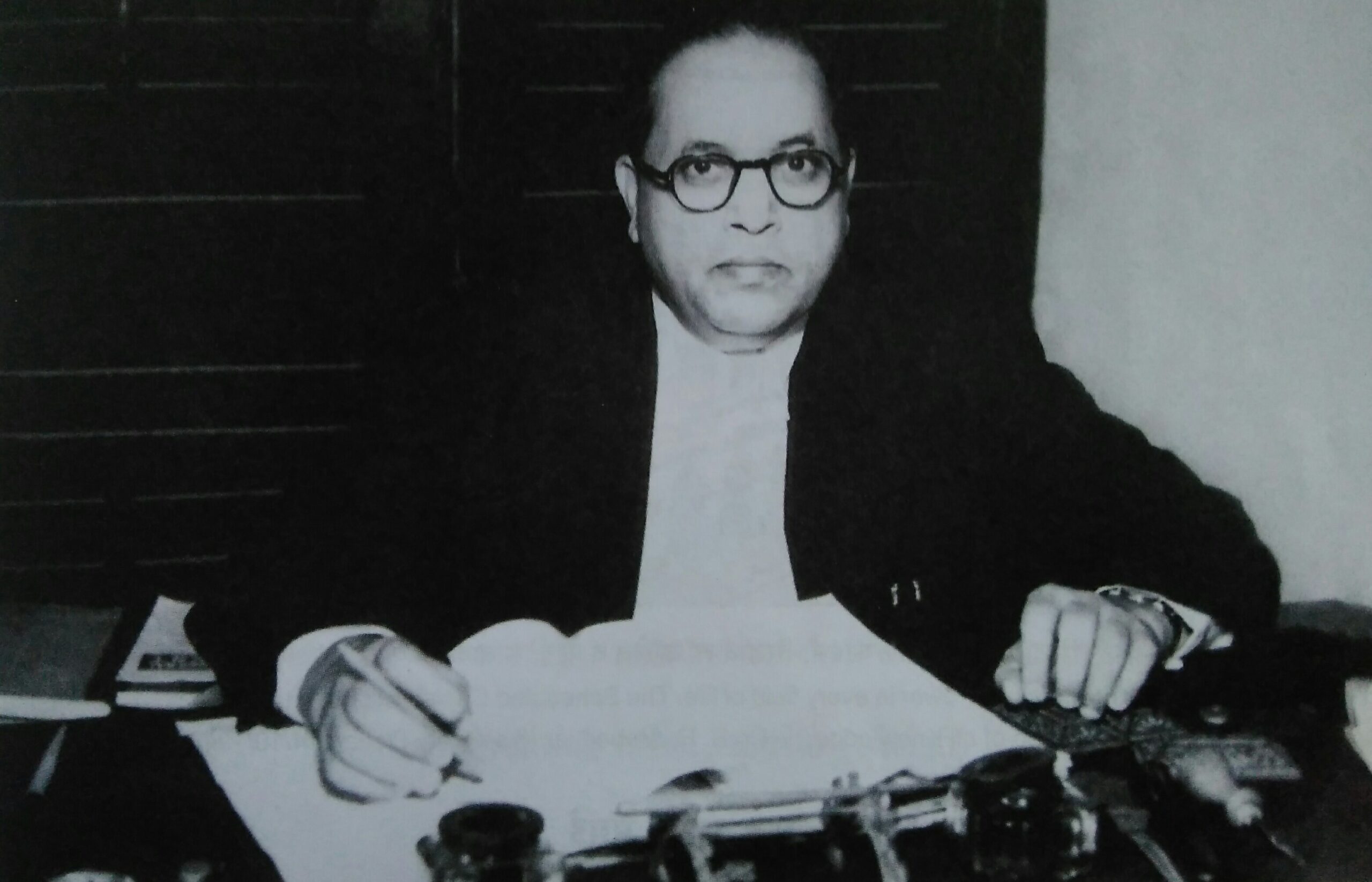
Dr BR Ambedkar’s democratic vision strongly upheld political equality and universal adult franchise.

Synopsis: If delimitation is based only on population, large states will gain more Lok Sabha seats. Together, they can form dominant blocs that will shape national policy. This is a result of structure, not political intent. Concentrated representation brings concentrated power. Ambedkar was wary of such concentration. He warned that large units could dominate and distort the federal balance.
As India approaches delimitation, a routine constitutional process has become a major national debate. The issue is not just about redrawing constituencies. It concerns the nature of Indian democracy, how representation is structured, how power is distributed, and how the Union holds together.
At its core, delimitation rests on a simple democratic tenet: every citizen’s vote must bear equal value. Representation in the Lok Sabha is meant to reflect the population. Over time, demographic changes create imbalances, necessitating periodic readjustment. This principle is consistent with Dr BR Ambedkar’s democratic vision, which strongly upheld political equality and universal adult franchise.
From this perspective, states with higher population growth, such as Uttar Pradesh, Bihar, Madhya Pradesh and Rajasthan, argue that they are underrepresented and deserve a greater share of seats. This claim is constitutionally valid and reflects the logic of electoral equality.
A look at likely outcomes makes the concern clearer. Uttar Pradesh, which currently has 80 Lok Sabha seats, could rise to around 120–130 seats if representation is aligned strictly with population. Bihar may increase from 40 to nearly 60, while Madhya Pradesh and Rajasthan could also see substantial gains.
Also Read: The 131st Amendment Bill is not delimitation. It is South India’s disenfranchisement
In contrast, southern states such as Tamil Nadu (currently 39), Kerala (20), Karnataka (28), Andhra Pradesh (25) and Telangana (17) are expected to see only marginal increases. Kerala, in particular, with near-zero population growth, may see virtually no gain.
This widening gap is not merely statistical. It suggests that a few large states could together command a decisive share of parliamentary power, raising concerns about the emergence of dominant blocs.
Yet, the concerns raised by southern states bring into focus another equally important principle, federal fairness. Leaders across political lines, including MK Stalin, A Revanth Reddy, Pinarayi Vijayan and Siddaramaiah, along with opposition formations such as the Bharat Rashtra Samithi, have voiced similar apprehensions.
Except for N Chandrababu Naidu, there appears to be a broad consensus among southern leadership that the proposed approach raises serious concerns. This convergence itself is significant, indicating that the issue transcends party politics.
Importantly, this concern is not confined to the South alone. The Indian National Congress has articulated its position clearly and forcefully.
Leaders such as Rahul Gandhi have cautioned that delimitation must not become a tool for political imbalance. Other national and regional parties, including the Samajwadi Party, Bahujan Samaj Party, Aam Aadmi Party and Trinamool Congress, have also raised questions about the implications of a purely population-based approach.
This wider political resonance suggests that the issue has national dimensions, even if it is most sharply felt in the South.
Also Read: Delimitation and South India’s compulsions: Not wrath, but a test of federal maturity
Over the past five decades, states such as Tamil Nadu, Kerala, Karnataka, Andhra Pradesh and Telangana have made remarkable progress in human development. They reduced fertility rates, expanded education, improved public health and contributed significantly to economic growth. These outcomes were not accidental. They were the result of sustained policy choices aligned with national priorities, especially population stabilisation.
However, under a strictly population-based delimitation, these states may see little or no increase in their representation in Parliament. Kerala presents the clearest case. With near-zero population growth, it is likely to gain no additional seats. In effect, its success becomes a disadvantage. This leads to a troubling question: should better governance result in reduced political voice?
This is where Ambedkar’s insights acquire contemporary relevance. He cautioned that democracy cannot be reduced to mere arithmetic. “Democracy is not merely a form of government; it is a mode of associated living,” he observed, emphasising fairness and participation. He also warned that in India, “majority is not a political majority but a communal majority,” reminding us that numbers often overlap with deeper social and regional identities.
If delimitation is based only on population, large states will gain more Lok Sabha seats. Together, they can form dominant blocs that will shape national policy. This is a result of structure, not political intent. Concentrated representation brings concentrated power.
Ambedkar was wary of such concentration. He warned that large units could dominate and distort the federal balance. He focused less on regions and more on preventing powerful blocs from oppressing others.
In this context, the idea of “balkanisation” has entered the debate. It does not mean secession. Instead, it refers to a gradual erosion of trust. When regions feel unheard, see their contributions overlooked in national policy, or notice decisions driven by dominant states, alienation grows. Even subtle alienation can weaken the Union.
Also Read: Redrawing India’s democracy: The delimitation Bill’s hidden cost
Ambedkar warned that political democracy cannot survive without social democracy. Similarly, federal democracy requires regionally fair representation. The issue is a moral paradox. Southern states met national population control goals and invested in human development. If this progress costs them influence, it shows that good governance has political penalties. Ambedkar would reject this. He emphasised real, not just formal, equality and equity.
To be clear, southern leaders do not oppose delimitation itself. Keeping seats frozen forever is neither democratic nor sustainable. The real worry is about how it is done. A mechanical, population-only method risks making democracy increasingly about numbers rather than good governance.
The way forward is to reconcile political equality with federal balance. Expanding the Lok Sabha’s size guarantees that all states are represented without diminishing any region’s voice. Strengthening the Rajya Sabha’s role as a real federal chamber is also key. Overall, new institutional mechanisms are needed to check excessive concentration of power. Delimitation is not simply technical; it tests our constitutional sense. It demands maturity, dialogue and a commitment to equity.
Ambedkar’s warning remains: even a good Constitution depends upon its implementation. India must answer a simple, crucial question: will delimitation broaden inclusion or create structural imbalances that hurt unity? This answer will shape not just representation, but the Union’s future.
(Edited by Dese Gowda)



