

Published Nov 17, 2026 | 9:30 AM ⚊ Updated Nov 17, 2026 | 9:30 AM

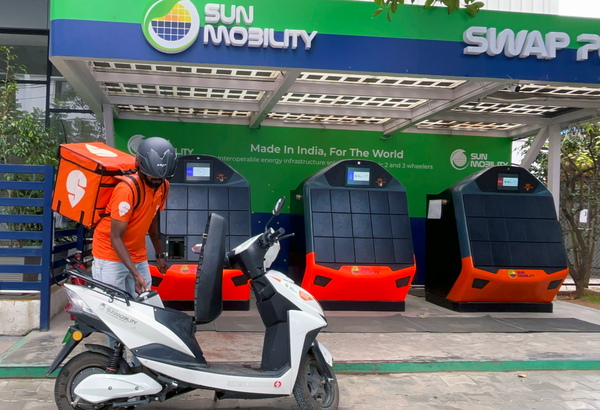
The attraction of gig work is not merely the flexibility it offers.

The growing presence of delivery executives, cab drivers, online service providers and freelance professionals on the streets of Telangana reflects a significant transformation in the employment choices of young people.
What was once considered a supplementary source of income is increasingly becoming the principal livelihood for thousands of youths. The attraction of gig work is not merely the flexibility it offers. It also exposes a deeper problem in the employment market: the widening gap between the aspirations of educated young people and the availability of stable, adequately remunerated jobs.
Telangana, particularly Hyderabad, has emerged as an important centre of this transformation. The expansion of food delivery, quick commerce, e-commerce, ride-hailing, logistics, fintech and other technology-enabled services has created an employment ecosystem that did not exist in its present form a decade ago.
Companies can engage workers without maintaining conventional employment structures, while young people can enter the market without undergoing lengthy recruitment procedures. For many, the mobile phone has become an employment office, the vehicle a workplace and the digital platform an employer.
The scale of this transformation is becoming increasingly visible. Nearly six lakh people in Telangana are estimated to be working with multinational companies and digital platforms as delivery personnel, cab drivers and other service providers. This represents a substantial expansion from earlier estimates of approximately 3–4.5 lakh workers in 2025. The expansion of gig employment is also moving beyond Hyderabad into emerging urban centres such as Warangal and Nizamabad.
But what is driving this increasing dependence on gig employment? One important factor is the employment uncertainty confronting educated youth. Telangana’s Periodic Labour Force Survey figures for 2023–24 placed unemployment among people aged 15–29 at 16.6 per cent, compared with the national average of 10.2 per cent.
The State’s youth unemployment rate had increased from 14.2 per cent in 2021–22 to 15.1 per cent in 2022–23 before reaching 16.6 per cent. Urban youth, particularly women, faced even greater difficulties in finding employment. These figures help explain why many young people are prepared to accept platform-based work rather than remain unemployed while waiting for conventional jobs.
The second attraction is the relatively easy entry into the gig economy. A graduate looking for an office job may have to wait months for an interview, undergo several recruitment stages and compete with hundreds of applicants. A delivery platform or a ride-hailing company, on the other hand, offers a comparatively quicker entry.
Educational qualifications are often not the deciding factor. A two-wheeler, a driving licence, a smartphone and the willingness to work long hours can be sufficient. For engineering graduates, intermediate-qualified youth and even postgraduates who cannot secure employment matching their qualifications, this becomes an immediate economic alternative.
A study undertaken for the Telangana Labour Department in May 2025, covering approximately 1,300 gig workers, provides an interesting picture of their economic circumstances. Average monthly earnings were estimated at around ₹20,000, but there were considerable differences between occupations. Professional service providers such as electricians and carpenters earned approximately ₹27,206, while four-wheeler ride-hailing drivers earned ₹25,425.
Food and grocery delivery workers earned around ₹24,053, whereas two-wheeler ride-hailing workers earned ₹16,138. E-commerce delivery personnel were at the bottom, with average monthly earnings of just ₹13,753.
These figures also expose the difference between gross earnings and actual income. A delivery executive may appear to earn a reasonable amount through daily orders, but fuel, vehicle maintenance, insurance, mobile expenses and other operating costs consume a substantial portion of the earnings. Loan instalments on vehicles further reduce the money available to households.
Workers are frequently required to remain available for 10–12 hours a day, sometimes throughout the week, to maintain a reasonable income. Platform commissions, reported in the range of 20–30 per cent in the State study, add another dimension to the financial pressure.
An important finding is that gig work is no longer confined to those seeking additional income. The State study indicated that 58 per cent of the workers had completed graduation or intermediate education, while another three per cent were postgraduates. Around 30 per cent had studied up to SSC and nine per cent below that level. The average worker belonged to the 26–35 age group.
These figures suggest that gig employment is increasingly absorbing people who would otherwise be looking for conventional full-time jobs.
It is therefore misleading to regard gig work merely as a secondary employment option. For students, salaried employees and professionals, it can certainly provide supplementary income. But for a considerable section of delivery personnel, drivers and service providers, it has become the principal source of household earnings. The exact proportion depending exclusively on gig work is not yet established through a comprehensive official survey. Nevertheless, the long working hours and educational profile documented by the State study indicate that dependence on this employment model is substantial.
There is also a larger national context. NITI Aayog estimated India’s gig workforce at 77 lakh in 2020–21 and projected that it could reach 2.35 crore by 2029–30. This would account for 6.7 per cent of the non-agricultural workforce. Telangana’s expanding digital services sector is part of this larger transition.
Also Read: A mirror to Telangana’s industrial landscape: Few and insecure jobs, uneven growth
However, flexibility should not be confused with security. Workers can choose when to log in, but their earnings depend on the number of orders, customer demand, platform incentives and algorithm-driven allocation. There is no assurance of a fixed monthly salary. An accident, illness, vehicle breakdown or sudden change in platform policies can immediately interrupt their income. Women also remain underrepresented, accounting for only around nine per cent of the workforce covered by the State study.
The Telangana Platform Based Gig Workers (Registration, Social Security and Welfare) Act, 2026, which came into force on June 2, 2026, is an important step towards addressing these vulnerabilities. The proposed registration mechanism, welfare board, grievance redressal arrangements and social security provisions need effective implementation. The government’s announcement of a dedicated registration application for nearly six lakh workers offers an opportunity to build a reliable database and identify their actual needs.
Ultimately, the expansion of gig employment presents Telangana with both an economic opportunity and a policy challenge. It creates immediate earning opportunities, supports digital businesses and provides an entry point into the labour market. But it cannot become a substitute for productive industrial employment, skilled jobs and secure career opportunities. The government must examine whether young people are choosing gig work because they genuinely prefer its flexibility or because conventional employment is beyond their reach.
The distinction is crucial. A young person voluntarily taking up delivery work to supplement a salary represents one employment choice. A graduate spending 12 hours on the road because there is no other way to support a family represents an employment crisis. Telangana’s real achievement should not be measured merely by the number of people registered on digital platforms, but by how many can eventually move from uncertain daily earnings to secure, dignified and adequately paid employment.
(Edited by Fayisa CA)



