

Published Nov 14, 2026 | 10:24 PM ⚊ Updated Nov 14, 2026 | 10:24 PM

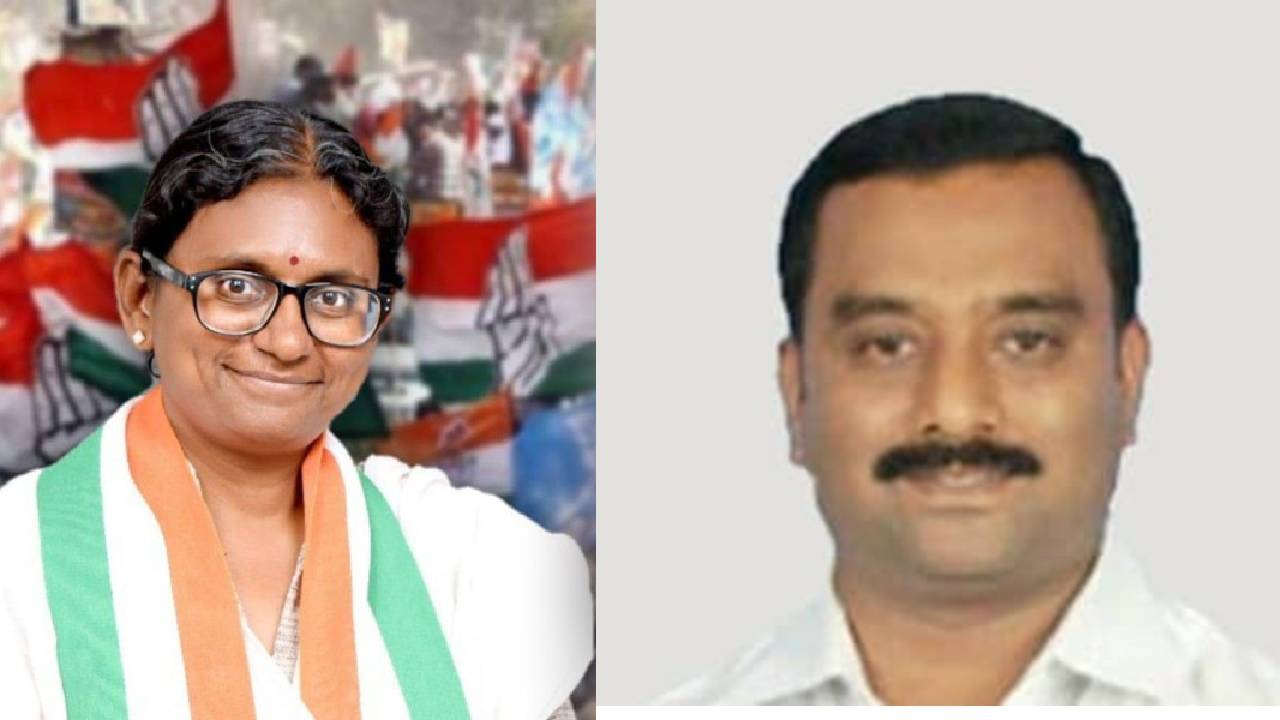
Meenakshi Natarajan and BM Sandeep Kumar.

Synopsis: On 14 November, the Congress replaced Meenakshi Natarajan with BN Sandeep as AICC general secretary for Telangana. Here’s a look back at Natarajan’s stint, her actions, the trust deficit and the confusion that followed her appointment on 14 February 2025. Sandeep is the fourth AICC in-charge for Telangana in three years.
On Valentine’s Day 2025, the AICC announced the appointment of Meenakshi Natarajan, considered close to Rahul Gandhi, as its general secretary for Telangana. A little over a year later, on Children’s Day 2026, the Congress national leadership replaced Natarajan with BM Sandeep — the fourth in three years.
“Congress president has appointed BM Sandeep Kumar as AICC in-charge for Telangana, with immediate effect,” an official communication from party general secretary (organisation) KC Venugopal said. The communication appreciated Natarajan’s contributions.
Incidentally, Sandeep’s appointment came on a day when Rahul Gandhi was in Telangana, dedicating the gig workers’ welfare legislation and participating in the Bharat Summit.
Thakare, Das Munshi, Natarajan — now Sandeep!
Also Read: Meenakshi Natarajan appointed AICC in charge of Telangana
No one expected A Revanth Reddy, who led the Congress to power in Telangana in 2023, to have smooth sailing as chief minister. Reddy, then president of the Pradesh Congress Committee, had capitalised on anti-incumbency, voter fatigue, and dissatisfaction among the youth, farmers, and the rural populace to hand the Bharat Rashtra Samithi an embarrassing defeat.
Telangana chief minister Revanth Reddy.
Opposition to Reddy-led government came not only from the BRS or the governors, but — unexpectedly — from within the party also. Though internal squabbles within the Congress have long ceased to be news, Reddy ran into opposition from someone who was officially “the bridge” between the Pradesh Congress Committee and the All India Congress Committee — or more precisely, the party high command.
The stated role of AICC general secretaries in charge of states is manifold. They act as the vital link between the national leadership, viz., the Congress president and the Working Committee, and PCCs.
Organisational supervision, coordination and communication, electoral and campaign management, and conflict resolution are also responsibilities of those in charge of states.
In Telangana, however, conflict was the mainstay, as the developments over the past three years revealed. The state had three AICC general secretaries overseeing its affairs, starting with Manikrao Thakre, who passed on the mantle to Deepa Das Munsi.
In February 2025, when the AICC announced the appointment of Meenakshi Natarajan to replace Das Munsi, the PCC welcomed her with open arms.
“She is a role model for all others,” TPCC President B Mahesh Kumar Goud then said. He also recalled Natarajan’s days at the helm of the National Students Union of India (NSUI) and the padayatra she had led from Bhoodan Pochampally to inspire party workers.
Also Read: Meenakshi Natarajan’s ‘simplicity’ leaves an impact
The initial warmth and bonhomie did not last long. The relationship between the government — and by default the PCC — and Natarajan soured. The issues were not explicitly personal, not Reddy vs Natarajan. They were mostly about control over the organisation, government decisions and the influence of the high command.
One issue that rocked the Congress boat was over the state government’s decision to develop or auction around 400 acres at Kancha Gachibowli. This land was allotted to the University of Hyderabad.
Students, faculty, environmental organisations and civic bodies stood up against the government, even as Reddy appeared stubborn and sent in backhoes to prepare the ground. The face-off became intense, with neither side ready to blink first. The agitating students got a shot in the arm when Natarajan visited them in support of their cause.
Her move caught the Reddy government off guard. Natarajan’s stand on the issue was seen as a departure from the government’s position.
The government’s embarrassment turned worse when the Supreme Court issued an order against the move to clear the forest. The relationship between the government and Natarajan curdled.
Not surprisingly, the Congress’s win in the 2023 November Assembly elections attracted many BRS leaders to its fold. The party did not hesitate in accepting them. Their crossing the floor, incidentally, late became another bone of contention.
Natarajan opposed the appointments of several leaders to the District Congress Committees, much to the chagrin of the party’s state leadership. Several leaders openly aired their disappointment, and some even resigned. It was then reported that she preferred long-time party workers to recent entrants, especially from other parties.
While Reddy was open to inducting influential leaders to expand the party in Telangana, Natarajan treaded cautiously when it came to accommodating leaders from the BRS and other parties.
Reddy might have taken Natarajan’s opposition as a personal snub, albeit indirectly. He himself was a relatively new entrant. He had joined the Congress after leaving the Telugu Desam Party in 2017.
Natarajan’s style of functioning often raised doubts about a trust deficit. She took out a statewide padayatra in July 2025, a public outreach programme in which she met grassroots-level party workers and commoners. She visited tribal areas in Adilabad unannounced. The state unit suspected she was gathering information directly for the high command—not the information it wanted to pass on to the national leadership.
The trust was lost. Both sides frowned at each other. The government and the PCC felt that their political space and freedom had been encroached upon. The balance of power had been lost. Then came the fatal blow.
Also Read: 56 students named, 2 in custody; 4 cases against BRS leader, 1 against media platform
In June 2026, Natarajan’s nomination to contest the Rajya Sabha from Madhya Pradesh was rejected after the BJP complained that she had failed to mention a case registered against her in Telangana.
The Congress fought in vain for Natarajan, even in the Supreme Court. Amid all these developments, the BJP fired another salvo that left the Congress in disarray. The BJP said it received the information regarding the case from the Congress camp.
“We’re getting papers from Telangana, where their (the Congress) government is in power. It must have been the Congress people themselves who gave us the information — this is the state of the Congress,” Madhya Pradesh Minister Kailash Vijayvargiya told reporters in Bhopal.
Natarajan put up a brave facade. “It became evident that they were engaging in politics designed to trample upon the Constitution and democracy…They are clearly attempting to manipulate the Rajya Sabha election just as they previously subverted elections in Madhya Pradesh…This is not merely about a Rajya Sabha seat or a specific candidate; it is about the broader struggle for the “Idea of India” and democracy that our leader, Rahul Gandhi, is waging a critical battle for our nation today,” she said.
Despite the Congress’s fight for “justice” and Natarajan’s dignified response, the seeds of mistrust already sown on Telangana’s political soil have sprouted and flourished.
Congress’s search for the alleged mole failed. The BJP and BRS took the opportunity to drive a wedge between the Congress high command and the PCC.
“The whole INC India brigade and its bagpipers in the media shouting from rooftops cannot answer a single question. Who from its ranks brought the Telangana case to the public domain? Better to plug that hole to arrest future embarrassments,” senior BJP leader BL Santosh taunted the grand old party.
BRS leader T Harish Rao tried to be more specific, and blamed a close aide of the chief minister for “leaking the information” that derailed Natarajan’s candidature. Still, no names surfaced.
For Natarajan, her gig as the AICC in-charge in Telangana might not have been a sweet experience, at least for now. For Sandeep from Karnataka’s Chikkamagaluru, Natarajan’s stint could become a lesson in managing the party’s affairs in the state. His experience as AICC secretary in charge of Maharashtra, and previously for Gujarat, might come in handy in the coming days.
(Edited by Majnu Babu).



