

Published Aug 29, 2026 | 8:00 AM ⚊ Updated Aug 29, 2026 | 8:00 AM

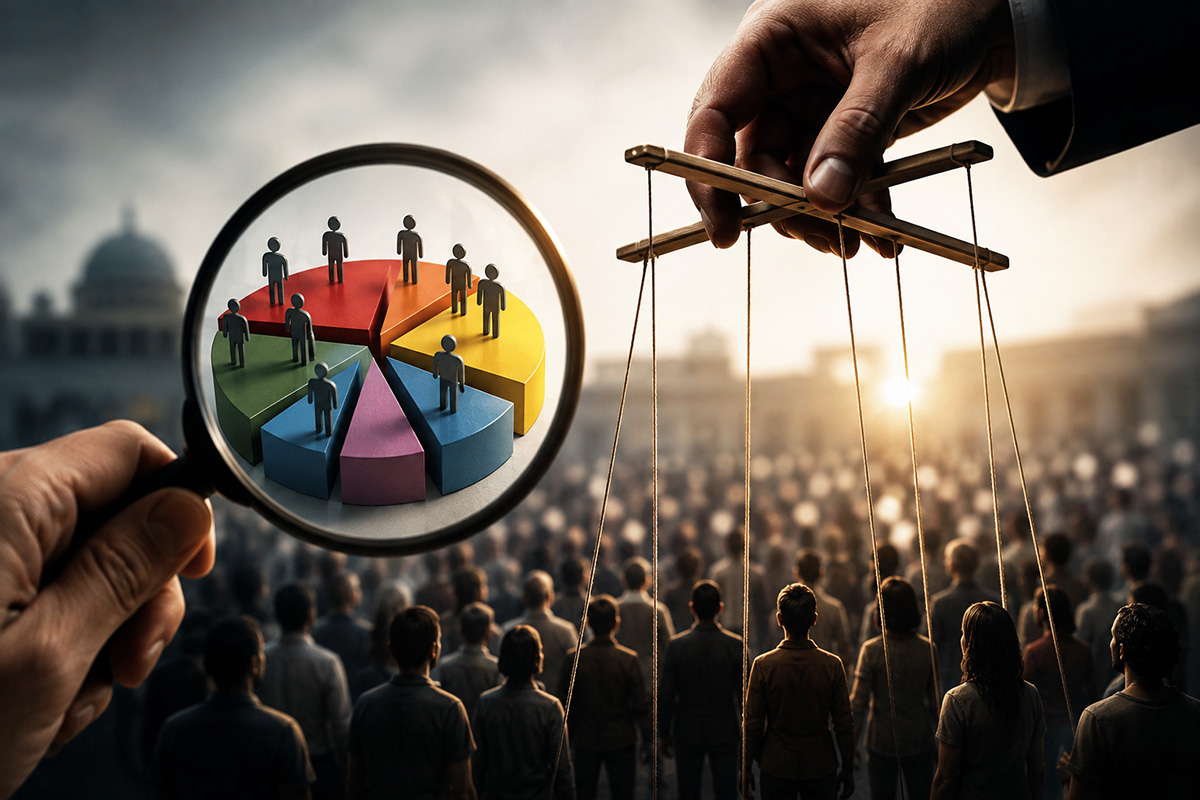
Image used for representational purpose. (AI generated)

Synopsis: Opinion polls can illuminate public support, but the very act of publishing a poll can alter the political environment. Used carefully they can clarify; used carelessly they can distort, turning surveys from mirrors of opinion into engines that help manufacture it.
The other day, a nationwide survey that a national television channel claimed to have conducted revealed that its findings gave scope for the revival of the BJP-led NDA in the country if a snap election were conducted.
The claim was presented with the usual visual flourish—colourful graphics, percentage bars, and confident anchors—yet it immediately raised a deeper question that transcends any single party or election cycle: how much do such surveys genuinely measure public sentiment, and how much do they actively shape it?
In theory, they are instruments of measurement.
Professional pollsters sample voters, apply statistical weights, and produce estimates of voting intention, leadership preference, or which issue matters most to voters.
When conducted rigorously—with transparent methodology, adequate sample size, proper randomisation, and clear disclosure of margins of error—they can offer useful snapshots of the electorate at a given moment. In practice, however, the boundary between measurement and influence is porous. The very act of publishing a poll can alter the political environment it claims only to describe.
One well-documented mechanism is the bandwagon effect.
Voters who are undecided or weakly attached may move toward the party or candidate shown to be leading, either because they wish to be on the winning side or because the apparent front-runner acquires an aura of inevitability. A complementary underdog effect can sometimes operate in the opposite direction, but empirical evidence suggests the bandwagon tendency is more common in multiparty systems where strategic voting is already prevalent. When a survey proclaims that a particular alliance is “surging” or “set to return”, it supplies a narrative that campaigners, media, and social-media influencers quickly amplify. The narrative itself becomes a political resource.
The recent television survey is illustrative.
By framing the results as evidence of a possible “revival” of the BJP-led NDA in a hypothetical snap poll, the report did more than report numbers; it invited viewers to imagine a different political reality. Whether the underlying data were collected through a scientifically defensible method remains unclear from the public presentation. Many such exercises rely on online panels, limited geographic coverage, or opaque weighting procedures. When methodology is not fully disclosed, the audience is left unable to judge reliability. Yet the headline travels farther than the caveats.
This pattern is not confined to one channel or one party. Across democracies, polls have been used to set expectations, demoralise opponents, or pressure fence-sitting leaders. In India, the proliferation of exit polls, pre-poll surveys, and mid-term “mood-of-the-nation” exercises has intensified the cycle. Each release generates days of commentary that treat provisional estimates as near-certainties. Parties that appear to be gaining momentum gain fundraising advantages, media attention, and the psychological edge that comes from perceived electability. Parties shown trailing face the opposite pressures. In short, the poll can become a self-reinforcing instrument of political influence.
First, sampling error and non-response bias remain stubborn problems, especially in a vast and diverse electorate.
Second, the timing of surveys matters; a poll taken immediately after a policy announcement or a high-profile event can capture temporary swings rather than durable preference.
Third, the commercial incentives of media organisations and polling agencies can reward dramatic rather than cautious findings. A sober report that notes wide margins of error and competing interpretations is less likely to dominate the news cycle than a bold claim of impending revival or collapse.
None of this means that every poll is worthless. High-quality surveys that publish full methodological notes, archive raw data where feasible, and avoid over-claiming remain valuable for researchers, journalists, and citizens. They can highlight shifts in public priorities—on inflation, employment, security, or governance—that parties ignore at their peril. They can also serve as an early-warning system when governments drift too far from popular concerns. The difficulty lies in distinguishing these disciplined exercises from the more theatrical productions that treat percentages as political ammunition.
A healthier information environment would require greater transparency. Media organisations that commission or publicise surveys should routinely disclose sample size, sampling frame, response rates, weighting schemes, and the precise wording of questions. Independent verification or peer review of major national polls would further strengthen credibility. Viewers and readers, for their part, would benefit from treating any single survey as one data point among many rather than as a definitive verdict.
Historical experience shows that polls have both correctly anticipated outcomes and spectacularly misread them; the wise response is calibrated caution rather than either blind faith or wholesale dismissal.
Ultimately, public support is not conferred by survey graphics. It is earned—or lost—through policy performance, organisational strength, leadership credibility, and the everyday judgements of citizens.
Opinion polls can illuminate those judgements, but they cannot manufacture them. When a nationwide survey is presented as evidence that one alliance is poised for revival, the prudent reaction is not to accept or reject the claim outright, but to ask the harder questions: How was the sample drawn? What assumptions underpinned the projections? And how might the very publication of these numbers alter the behaviour of voters, donors, and political actors in the weeks that follow?
Democratic politics is noisy, contested, and often unpredictable. Polls are part of that noise. Used carefully, they can clarify; used carelessly, they can distort.
The distinction rests less on which party appears to benefit on any given day and more on whether the instruments of measurement themselves retain public trust. Without that trust, surveys risk becoming not mirrors of opinion but engines that help manufacture it—an outcome no healthy democracy should welcome.
Also Read:
The decline and fall of opinion polls in India
The outrage economy: Why media prefers mudslinging over hard-nosed political journalism
(Edited by R Rajesh Kumar.)



