

Published Apr 30, 2026 | 11:25 AM ⚊ Updated Apr 30, 2026 | 11:25 AM

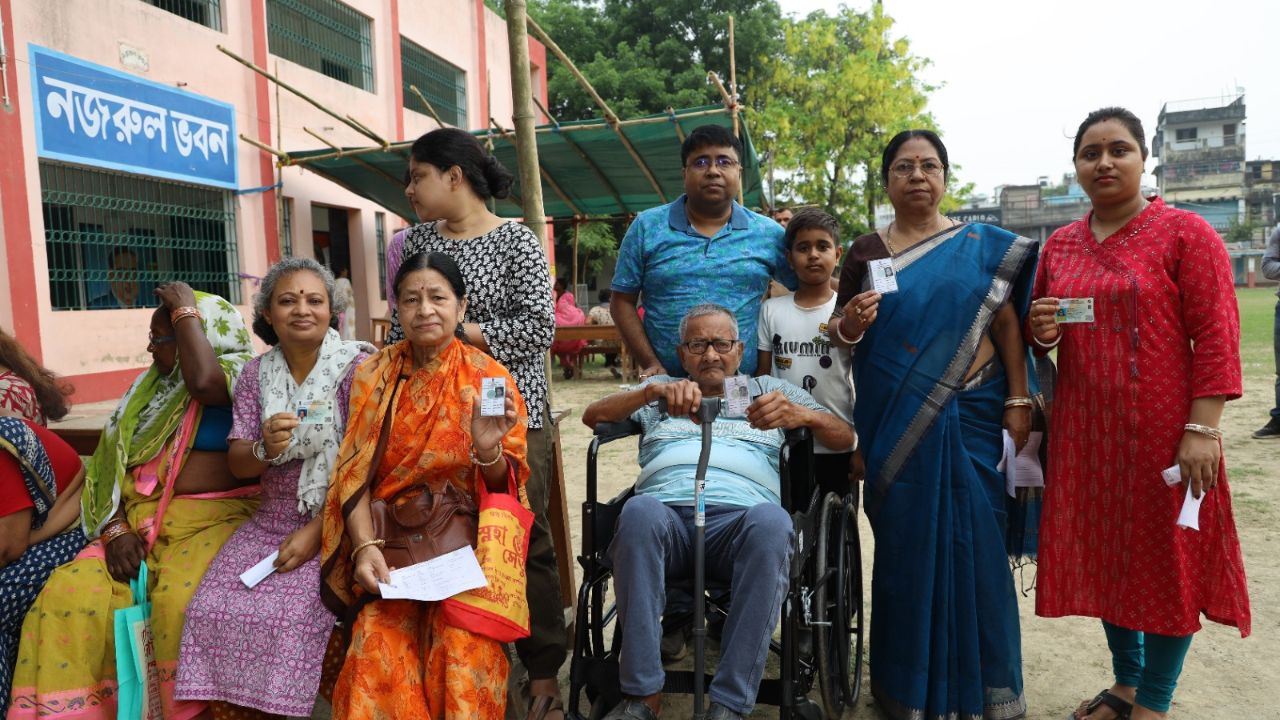
Voters at a polling booth in West Bengal.

Synopsis: Exit polls have evolved into a spectacle embedded within India’s electoral theatre. As voting concludes, television studios erupt into a frenzy of projections, graphics, and confident declarations of victory and defeat. West Bengal’s complex socio-political fabric exposes both the promise and pitfalls of exit poll predictions.
Exit polls, by their very nature, occupy an uneasy space between prediction and perception. They can neither claim the authority of a realistic forecast nor the neutrality of a purely objective assessment. Increasingly, they are viewed through the prism of perceived institutional bias, where the political leanings —subtle or overt — of survey agencies appear reflected in their projections.
This growing scepticism is not incidental; it arises from repeated divergences between forecast and final verdict, raising serious questions about methodology, sampling integrity, and, more crucially, intent. As a result, exit polls are no longer seen as neutral statistical exercises but as narratives shaped as much by political currents as by voter responses.
Over time, exit polls have evolved into a spectacle embedded within India’s electoral theatre. As voting concludes, television studios erupt into a frenzy of projections, graphics, and confident declarations of victory and defeat.
The performative aspect often overshadows the scientific rigour that such exercises demand. Nowhere has this phenomenon been more sharply scrutinised than in the fiercely contested elections of West Bengal — a state whose complex socio-political fabric exposes both the promise and pitfalls of exit poll predictions.
Also Read: Trinamool Congress set for a comfortable win in West Bengal
At their core, exit polls are designed to capture voter preferences immediately after ballots are cast. In theory, they offer a snapshot of electoral sentiment, built on structured sampling and statistical modelling. However, their reliability depends on several critical variables: Sampling accuracy, respondent honesty, regional diversity, and methodological robustness. In West Bengal, each of these variables presents distinct challenges.
The state’s diversity complicates uniform sampling. From the urban dynamism of Kolkata to the rural expanses of Purulia and Cooch Behar, voting behaviour varies sharply. Exit poll agencies often struggle to construct samples that reflect this heterogeneity. Even minor imbalances in representation can produce disproportionately distorted projections, undermining credibility.
Compounding this is Bengal’s politically charged environment. Allegations of intimidation, intense polarisation, and deeply entrenched loyalties influence not just voting behaviour but also responses to pollsters. Many voters may conceal their true preferences or offer misleading answers. This “shy voter effect” has repeatedly undermined exit poll accuracy, revealing the limits of surface-level data collection in contested political settings.
Methodology further complicates the picture. Polling agencies rely on varied techniques — face-to-face interviews, telephonic surveys, and digital tools — each with inherent limitations. Face-to-face methods risk interviewer bias; telephonic surveys exclude sections without reliable access; digital approaches suffer from uneven penetration. In a state like West Bengal, such methodological constraints can significantly skew outcomes.
Another persistent weakness lies in translating vote share into seat share. India’s first-past-the-post system ensures that even marginal vote differences can produce large disparities in seat allocation. Exit polls may estimate vote shares with some accuracy, but often falter in converting these into seats. Bengal elections have repeatedly demonstrated this gap, where predicted margins diverge sharply from actual tallies.
The regulatory framework also shapes credibility. Restrictions imposed by the Election Commission of India on publication timing aim to ensure fairness but compress analysis time. In the race for viewership, media organisations often prioritise speed over precision, amplifying errors and reinforcing public scepticism.
Yet, dismissing exit polls entirely would be simplistic. When conducted rigorously, they can offer insights into voting patterns, regional swings, and emerging trends. In Bengal, they have occasionally captured broad directional shifts, even if finer details elude them. For political parties, they serve as early indicators to shape post-election strategies.
The larger concern lies in their influence on public discourse. In a politically sensitive state like West Bengal, premature projections can shape narratives, influence perceptions, and even affect post-poll alignments. When these predictions go wrong — as they often have — the credibility of polling agencies and media institutions suffers. This erosion of trust carries deeper implications for democratic engagement.
The Bengal experience underscores the need for reform. Greater transparency in methodology, clearer disclosure of sample sizes and margins of error, and independent audits can enhance reliability. Equally important is media literacy, enabling viewers to interpret projections critically rather than accept them as definitive outcomes.
In conclusion, exit polls in West Bengal illustrate both the potential and limitations of predictive electoral analysis. They add immediacy and drama to democracy but remain constrained by methodological and contextual challenges.
Until these limitations are addressed, exit polls will continue to function less as reliable forecasts and more as informed — but often fallible — interpretations of an electorate whose final voice is heard only in the counting halls.
(Views are personal.)



