

Published Jul 26, 2026 | 2:42 PM ⚊ Updated Jul 27, 2026 | 3:13 PM

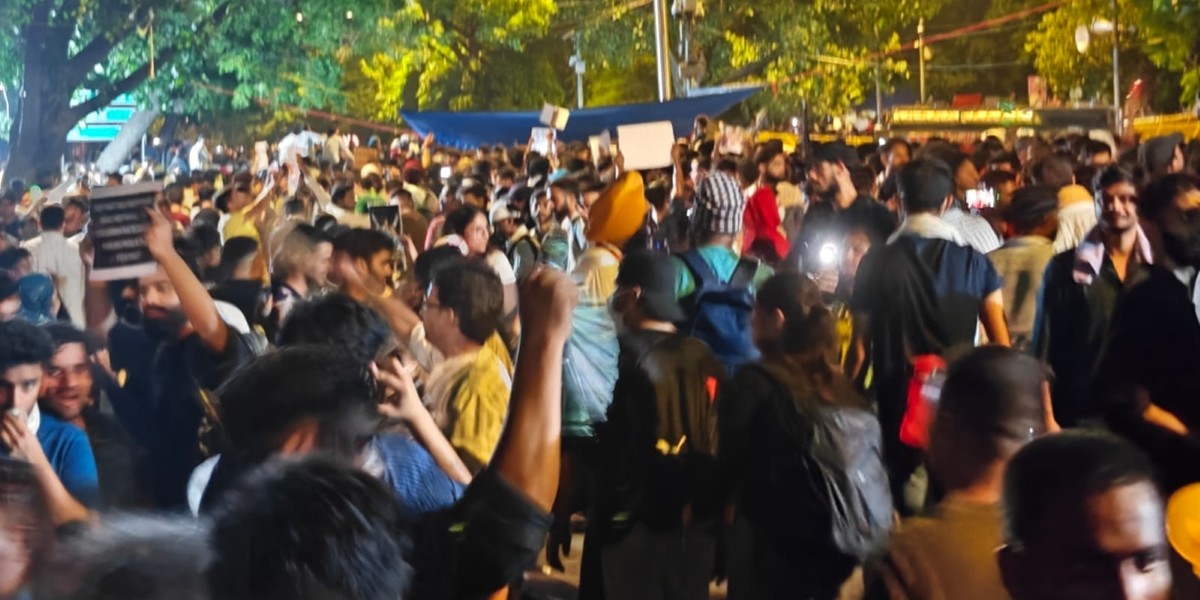
Jantar Mantar protest. (Supplied)

Synopsis: The CJP’s protest victory should not be considered an end point but rather a disruption that can be further intensified to bring about systemic change benefiting the country. Now is not the time to rest, it is an opportunity to address other grave issues affecting the nation and hold the government to account.
The Cockroach Janta Party’s victory in the wake of the NEET scandal is complete and consequential. Having compelled the system to confront the paper-leak crisis and accept accountability, the “cockroaches” must now refuse complacency and concentrate their strength on the larger issues confronting the country, thereby assuming the greater responsibility that genuine success demands.
In the summer of 2026, a judicial slur became a political standard. When the Chief Justice of India (CJI) compared unemployed young people and digital critics to “cockroaches” and “parasites,” the remark was intended as dismissal. Instead it produced the Cockroach Janta Party, a satirical yet determined youth movement that transformed an insult into an identity and institutional failure into a national demand.
The NEET-UG paper-leak scandal—cancelling an examination taken by more than two million medical aspirants—became the decisive battleground. Evidence of a multi-state racket circulating the question paper forced the National Testing Agency (NTA) to scrap results and order a re-test. Families who had spent years of savings on coaching, and students who had subordinated every other ambition to a single high-stakes paper, watched their efforts nullified by institutional negligence.
Reports of suicides linked to the cancellation deepened the sense of betrayal. Through sustained protest at Jantar Mantar and beyond, the movement extracted visible political pressure, bureaucratic transfers, judicial scrutiny, and a national conversation on examination integrity.
The resignation demand directed at the Union Education Minister and the push for a new Public Examinations Act marked a clear triumph of organised youth power over institutional evasion.
Also Read: At Jantar Mantar, a generation that stopped being afraid
This victory must not be treated as an endpoint. Success on NEET has conferred moral authority and organisational momentum; it has also conferred a heavier duty. The movement’s refusal of victimhood—its deliberate embrace of the cockroach image as a symbol of resilience and ubiquity—now requires that the same energy be directed at the full spectrum of national failures.
India’s youth unemployment remains stubbornly high among graduates. The mismatch between educational credentials and available work is not an abstraction but a daily reality for millions.
Centralised high-stakes tests, intended to democratise opportunity, have concentrated risk so that a single leak or evaluation error can devastate an entire cohort. Coaching industries thrive on anxiety while the state offers little by way of alternative pathways or credible safety nets. When institutions fail, the cost falls almost exclusively on students and their families. The cockroaches have demonstrated that such costs need not be absorbed in silence. Their next obligation is to insist that the same insistence apply across the country’s structural problems.
Responsibility therefore expands beyond any single examination. It must encompass redesigning the entire examination ecosystem so that transparency is the default rather than an afterthought, and so that accountability travels upward as readily as blame travels downward. Independent oversight of testing agencies, public databases of past irregularities, time-bound investigations with real consequences, and diversification of assessment methods are minimum requirements for restoring faith.
Equally urgent is a serious policy response to the employment crisis. Degrees without jobs, and jobs without dignity, will continue to produce the very “parasites” the establishment claims to despise. The movement’s hard-won moral capital will be squandered if it remains fixed on one grievance while the larger architecture of distrust persists.
Also Read: Jantar Mantar protests: Why accountability arrived only after the streets forced it
The power of the Cockroach Janta Party lies precisely in its capacity to invert hierarchies of contempt. By surviving and by speaking, young people have shown that generational anger, when organised with satire and persistence, can force the state to acknowledge what it preferred to minimise. That capacity must now be applied to the jobs crisis, the quality and relevance of education, the reliability of public institutions, and the widening gap between political rhetoric and lived reality.
Governments that once treated exam scandals as temporary storms now face a constituency that measures performance by institutional reliability rather than by aspirational slogans. Opposition parties that seek to harvest the discontent must themselves offer concrete alternatives rather than mere denunciation. Media and civil society must resist the cycle of outrage-and-amnesia that allows each scandal to fade once the next one arrives.
Complacency after victory would be the surest form of self-defeat. A re-conducted examination or a reshuffled bureaucracy may quiet the streets for a season, but the underlying grievances—broken meritocracy, precarious futures, and a political culture that lectures youth while failing them—will not dissolve.
The cockroaches have already proved their ability to organise, to satirise, and to persist. Their greater service is to insist that responsibility is not a favour granted by those in power but an obligation owed to those whose lives hang on the integrity of public systems, and to apply that insistence with equal force to every major challenge the country confronts.
In the wake of the NEET victory, the real test is whether the movement treats its success as a conclusion or as a mandate. The wiser course is the latter. India’s demographic dividend will not deliver itself; it must be earned through institutions that work and through a generation willing to hold those institutions to account across the full range of national issues. The cockroaches, by winning and by refusing to rest, have made that obligation harder to evade. No one should grow comfortable until it is fulfilled.
(Edited by Fayisa CA)



