

Published Jul 26, 2026 | 8:00 AM ⚊ Updated Aug 10, 2026 | 11:21 AM

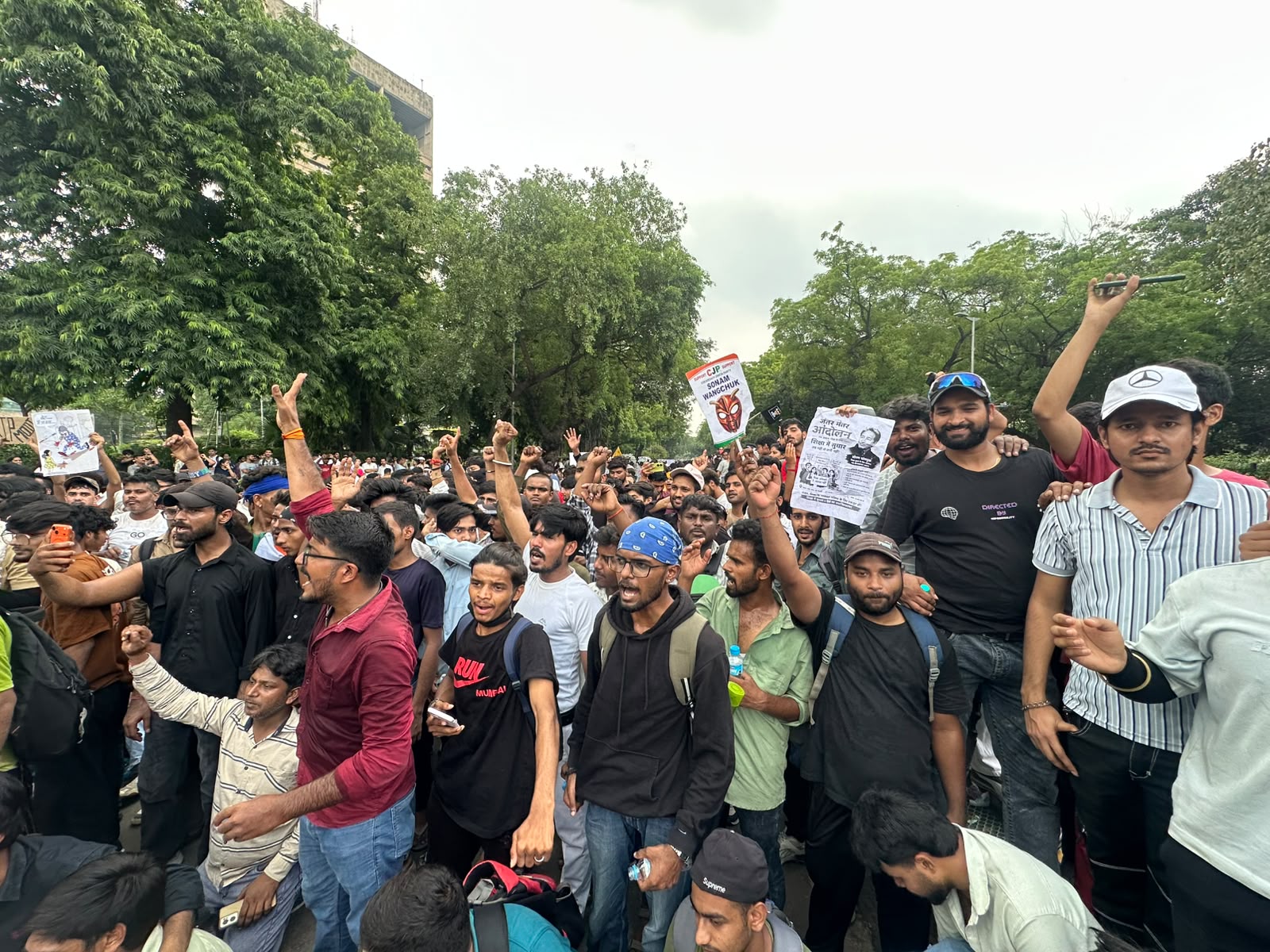
Protesters at Jantar Mantar (Likhitha Pankajakshan)

Synopsis: The resignation of Dharmendra Pradhan has handed India’s Gen Z their first real scalp. The young crowd that forced it out of the government is not calling it a victory. It called it the beginning.
The word spread through the crowd before anyone believed it. A boy near the dais heard it first. He turned to the girl beside him, and said it out loud, and then it passed across the tens of thousands packed into Jantar Mantar on a heavy July afternoon.
He’s gone. Pradhan’s gone. By the time the news reached the far end, past the tricolours and the hand-painted placards and the water bottles that were being passed around to beat the heat, it had stopped being a rumour. It became a roar.
They had been sitting on this dusty patch of central Delhi for over a month, in the shadow of the old sandstone observatory. Now, the young people were on their feet. Some danced. Some sat down and cried. Strangers held each other. Somewhere a dhol sounded, and its rhythmic beats did not stop for a long time.
Dharmendra Pradhan, Union Minister for Education, resigned on Saturday, 25 July, taking what he called moral responsibility for the leak of the NEET-UG 2026 paper — the medical entrance test that decides the futures of two million young Indians. Its collapse had become the crack through which a summer of fury erupted like a volcano.
In his letter to Prime Minister Narendra Modi, he framed his exit as an act for the students, saying he did not want the country’s youth trapped in confusion. At Jantar Mantar, nobody was listening to his framing. They were listening to the fact of it.
For a government that has, for the better part of a decade, treated the resignation of a minister as a concession it does not make, this was the thing that was not supposed to happen. It happened anyway. And it happened because of a movement that began, of all things, as a joke.
Also Read: Jantar Mantar protests mark the birth of fear among Modi and his men
The Cockroach Janta Party started life in May as a satire — a digital stunt dreamed up by a communications strategist named Abhijeet Dipke, a needling little parody of Indian political theatre. Somewhere between the memes and the NEET paper leak, it stopped being funny and started being serious.
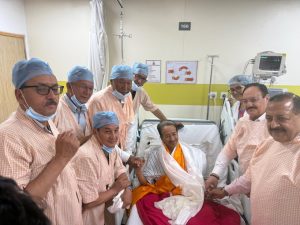
Sonam Wangchuk ended his 26-day fast a little past Thursday midnight in the presence of Union ministers.
The cockroach, the thing you cannot kill, the thing that survives everything you throw at it, turned out to be exactly the metaphor a generation of exam-battered, job-starved young people had been waiting for. By June they were camped at Jantar Mantar and refusing to leave.
When the activist Sonam Wangchuk went on a hunger strike at the site — 26 days, in the end — the sit-in stopped being a fringe story and became a national one. Wangchuk, when the resignation came, called it a victory of peace, patience and perseverance.
The peace had been tested badly. On the 20th July, when the CJP marched toward Parliament, the state came down on them. The authorities cut mobile internet across the area, shuttered metro stations near the site, put up barricades, and declared the march unlawful before it began.
Then the police charged. There was tear gas. There were batons. Reporters on the ground, yours truly included, watched officers swing wooden sticks at a crowd of students and their parents.
What that day did, in the end, was the opposite of what it was meant to do. “Just in a flash — the police started hitting us,” one bruised marcher, Gopal Singh from Haryana, said afterwards, describing officers who, he said, spared neither the women nor the old men.
Dipke went further, accusing male officers of tearing at the clothes of young women and beating them black and blue, and calling the response cruel and evil — allegations the Delhi Police have denied, insisting instead that it was their own personnel who were hurt, 118 of them, in what they described as a violent protest. Amnesty International’s India board demanded an independent inquiry. The videos, released into the void the moment the internet came back on, did the rest.
Also Read: The grim numbers fuelling the angst among India’s youth
The morning after the crackdown, the fear that the state had tried to manufacture had curdled into something harder. The camp was not smaller. It was bigger. They rebuilt it, wounds and all, and they waited.
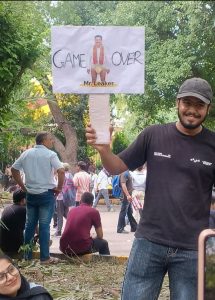
Dharmendra Pradhan resigned on Saturday.
That is the crowd that won on Saturday. And to a striking degree, it refused to celebrate cleanly.
“I’m not very happy, and I’m not very sad,” said Deeksha, from Haryana who now lives in Toronto, who flew down to join her compatriots. “One resignation is a first step. It’s not Dharmendra Pradhan we needed to change — it’s the whole system, and the system starts with the government. We haven’t won anything. We’ve just taken our rights back.”
Then, turning to face no one in particular and everyone: “Modi government, listen to me carefully. Think before your next step. This time we are not going to sit at home.”
That note — glad, but wary, and unmistakably unfinished — ran through nearly everyone.
“I’m happy the protest has ended, for now,” said Priyanka, from Delhi. “The rest is in the government’s hands. But this country has realised the power of its youth.” R Bharathi, from Tamil Nadu, who has settled in Delhi, said she had seen a five-year-old and a woman, near 70, in the same crowd.
“It was bound to happen,” she said of the resignation. “They took far too long to do something so obvious.”
Also Read: Gen Z protest is not ‘unserious’, it is civil disobedience dismantling Modi’s crafted image
Not everyone was ready to soften. Bhumika Singh, from Noida, refused to smile. She accused the Delhi Police of brutality against women on the day of the march.
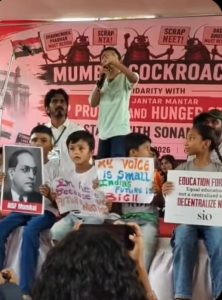
The entire nation took up the agitation.
She demanded answers from the government, and said the movement should now demand the resignation of the Home Minister, Amit Shah. She blamed Shah for issuing the orders — an accusation, forcefully made, that the government has not addressed.
“We can’t just sit back after one resignation,” she said.
For Laxmi, a Delhi University student who had been on the ground almost from the start, the anger was about the silence.
“For a month, this government said nothing to us. Nothing.” What she wanted, she said, was simple and enormous at once: stop the leaks, build schools and hospitals, and stop the politics of communalism.
R Pankaj, up from Punjab, kept coming back to the years. “After 12 years, somebody from this government has resigned. Twelve years.”
The mainstream media, he said bitterly, had called people like him terrorists and Khalistanis; it was the smaller, independent outlets that had stood with them. Among the crowd, too, were the quietly employed — an engineer from Ayodhya, a former Delhi University student, standing in solidarity with a fight he had aged out of but not forgotten.
What made the day historic was never really about one man’s chair. Pradhan’s departure is the visible wound, but the anger underneath it is broader and older: the paper leaks that have become routine, the exams that decide everything and can be bought, and above all the jobs that are not there for a generation that did everything it was told to do.
This was a middle-class revolt as much as a student one, and it landed on Modi’s government in its third term with a force that older, better-organised opposition parties have not managed in years.
Also Read: Why traditional media is at the receiving end
On stage, the CJP’s spokesman, Saurav Das, was careful to name the stakes. Democracy, he said, is about accountability, and a government that swore no one would ever resign had been made to sit across a table from a group of 20-somethings and give ground.
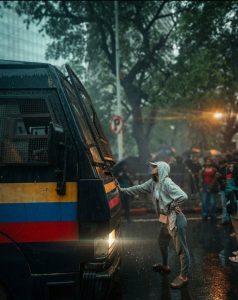
A woman, 27-year-old model Rhiya Ahir, preventing a police van from taking away protesters at Mumbai’s Shivaji Park. (SudhirSuryawanshi/X)
The party’s leaders, Ashutosh and Sourav among them, promised the crowd they would not let the 20 July violence be forgotten, that they had lawyers and that they would push for every officer involved to be named.
And Das left the government with a warning dressed as advice: stop governing by setting Hindu against Muslim, Christian against the rest, and work for everyone, students included, or forfeit the country’s trust.
Then he said the thing that the whole ground already seemed to know.
“This is just the trailer,” he said. “This is only the beginning.”
By dusk the camp had not begun to pack up. The government has said it will withdraw the cases, consider a compensation package for the families of students who died by suicide, and look at the movement’s charter of exam reforms.
There is a new anti-paper-leak law being drafted, with fast-track courts and a special task force, that Pradhan himself pointed to on his way out. Whether any of it survives contact with the machinery of Indian governance is the question the young people on this ground have already decided not to take on trust.
They came here afraid, a month ago. They are not leaving that way. That, more than the resignation, is what changed at Jantar Mantar this week — and it is not the kind of thing a government can shut down by closing a metro station.
(Edited by Majnu Babu).



