
Published Jun 18, 2026 | 11:18 AM ⚊ Updated Jun 18, 2026 | 11:18 AM

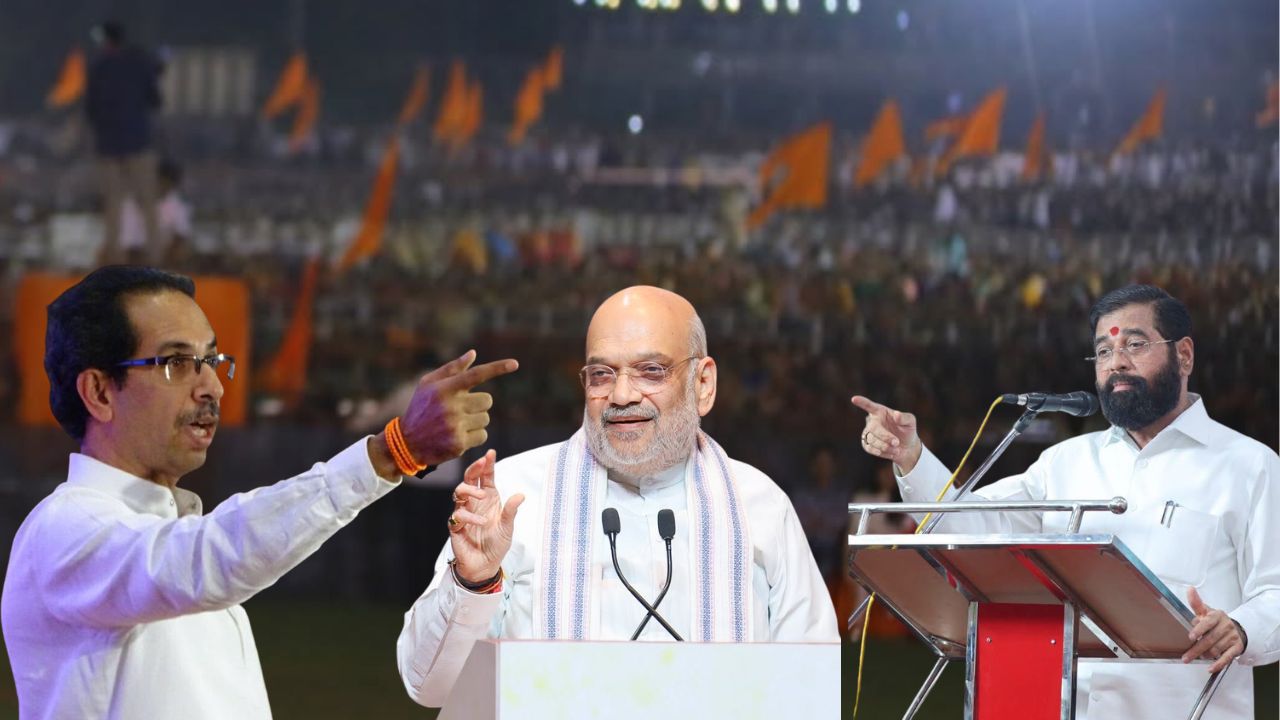
Uddhav Thackeray, Amit Shah and Eknath Shinde.

Synopsis: There may be those who portray the split in the Shiv Sena (UBT) as a “betrayal” and they may be right in saying so too. But such splits are the new normal and not all of them are inherently illegitimate.
In the “Aaya Ram, Gaya Ram” era, defections and party splits were branded as the ultimate political sin. But that was then. They have quietly evolved into accepted instruments of realignment now.
Mainstream media and rival parties might still cry “rebellion” and “betrayal,” yet the legal framework, judicial nods, and electoral outcomes increasingly treat them as pragmatic responses to shifting mandates and internal failures. Far from destroying democracy, these manoeuvres often mirror voter disillusionment and enable fresh governance equations. The ongoing churn in Maharashtra’s Shiv Sena (UBT) in June 2026 is the latest vivid example, building on the playbook perfected since 2022.
The Shiv Sena (UBT) faction led by Uddhav Thackeray is confronting a major rebellion dubbed ‘Operation Tiger’. Reports indicate that six or more of its nine Lok Sabha MPs have moved to merge with the Eknath Shinde-led Shiv Sena, part of the ruling Mahayuti alliance comprising the BJP and Ajit Pawar’s NCP faction. This comes amid internal meetings where Uddhav asserted unity, claiming all nine MPs attended and stood firm.
However, rebel MPs—reportedly including Sanjay Dina Patil, Sanjay Deshmukh, Nagesh Patil Ashtikar, Omraje Naik Nimbalkar, Sanjay Jadhav, and Bhausaheb Wakchoure—have approached the Lok Sabha Speaker Om Birla seeking recognition of a separate group. The move, if it crosses the two-thirds threshold, would invoke the anti-defection law’s merger clause, shielding participants from disqualification.
Loyalists like Sanjay Raut have accused the Shinde camp of offering inducements up to ₹50 crore per MP and of horse-trading, while submitting caveats to the Speaker. Yet the speed and numbers reveal deep frustrations within the UBT ranks over leadership style, post-2024 electoral setbacks, and diminishing relevance in Maharashtra’s power structure. What some frame as treachery is, in reality, a post-verdict realignment reflecting ground realities and voter signals from the 2024 assembly polls.
This pattern is a direct sequel to Maharashtra’s own explosive 2022 Shiv Sena saga.
Eknath Shinde’s rebellion, backed by a majority of MLAs, dramatically toppled the Uddhav Thackeray-led Maha Vikas Aghadi (MVA) government. The Shinde faction successfully retained the original party name and iconic bow-and-arrow symbol through a favourable Election Commission of India (ECI) verdict, forming a stable alliance with the BJP. Uddhav’s residual group was redesignated as Shiv Sena (UBT).
The Supreme Court and other judicial forums largely upheld the primacy of legislative majorities over strict original party discipline in such disputes. The 2026 developments demonstrate that even a faction born from a split is not immune to further fragmentation. Media outrage at the time labelled the original split “backstabbing” and a “BJP-engineered coup,” yet it resolved a long-standing ideological and administrative impasse within Shiv Sena. This paved the way for a decisive mandate in the 2024 Maharashtra assembly elections, where the Mahayuti alliance secured a comfortable majority, underscoring how such realignments can stabilise governance.
The Nationalist Congress Party (NCP) followed a near-identical script in 2023.
Ajit Pawar led around 41 MLAs into the BJP-Shiv Sena alliance, citing the imperative for “stability and development” over prolonged opposition. Sharad Pawar’s faction retained significant prestige and veteran leadership but lost the official party name and clock symbol to Ajit’s group in the ECI verdict, which prioritised legislative strength and organisational control. This split further normalised the principle that numerical superiority and effective control often define the “real” party in the eyes of regulators. Subsequent local body alliances and electoral adjustments showed pragmatism frequently trumping familial loyalty and historical legacies.
Even the Aam Aadmi Party (AAP), once celebrated as a fresh anti-corruption force in Indian politics, has not been spared internal exits. In 2026, several Rajya Sabha MPs, including prominent faces, defected to the BJP, citing issues like centralised decision-making under Arvind Kejriwal, governance shortfalls in key states, and unfulfilled promises. Invoking merger provisions under the anti-defection law, these departures exposed how even “new-age” parties can breed internal authoritarianism and clientelism. Ongoing disqualification battles in various forums continue, but the episodes highlight that ambition, ideological drift, and organisational weaknesses are cross-party constants rather than exceptions.
These Maharashtra-centric episodes are not isolated.
Similar churn has been witnessed across India: Congress leaders streaming into the BJP in states like Madhya Pradesh, Rajasthan, and Haryana; AIADMK MLAs in Tamil Nadu shifting towards new platforms like Vijay’s TVK; and smaller regional outfits or JD(U) fragments routinely realigning based on emerging opportunities. The Tenth Schedule of the Constitution, with its exemptions for mergers backed by two-thirds of legislators, when combined with Speaker and ECI decisions that often favour demonstrable majorities, has effectively legitimised this political fluidity. Judicial restraint in intervening too deeply has further entrenched the new normal.
Critics rightly warn of the darker sides—rampant horse-trading, alleged cash incentives, opaque funding channels, and the gradual erosion of voter trust when elected representatives switch sides mid-term. When “rebellion” consistently delivers power and ministerial berths, public cynicism towards the political class deepens.
Yet dismissing every split as inherently illegitimate ignores the democratic dynamism inherent in India’s federal, multi-party system. Regional parties often excel in addressing local aspirations but frequently fracture under the weight of national pressures, leadership vacuums, or failure to adapt to changing voter priorities. Defections and splits enable necessary adaptation and course correction; ultimately, voters deliver their verdict at the ballot box, as evidenced by Maharashtra’s repeated electoral endorsements of realigned formations.
Challenges undoubtedly remain. Allegations of Speaker bias, delays in disqualification proceedings, weak intra-party democracy, and insufficient transparency around funding invite abuse and undermine credibility. Targeted reforms—such as empowering independent tribunals for defection cases, enforcing stricter timelines for decisions, and mandating greater disclosure of incentives—could curb excesses without stifling legitimate political choice and realignment.
Ultimately, Indian politics operates as a vibrant marketplace of interests, ideas, and ambitions. Labelling routine realignments as perpetual rebellion or moral failing serves partisan scripts more than analytical truth. As factions within parties like Shiv Sena (UBT) face continued churn while others consolidate power, this fluidity has the potential to forge more responsive coalitions and governance models—provided that popular mandates and mechanisms of accountability remain robust.
The latest Maharashtra drama surrounding ‘Operation Tiger’ is neither a shocking anomaly nor an unmitigated tragedy; it is the new normal in Indian politics.
Also Read | Splits, splinter groups and the politics of vengeance: Exploiting loopholes in anti-defection laws
(Edited by R Rajesh Kumar.)



