

Published Jun 01, 2026 | 7:00 AM ⚊ Updated Jun 01, 2026 | 7:00 AM

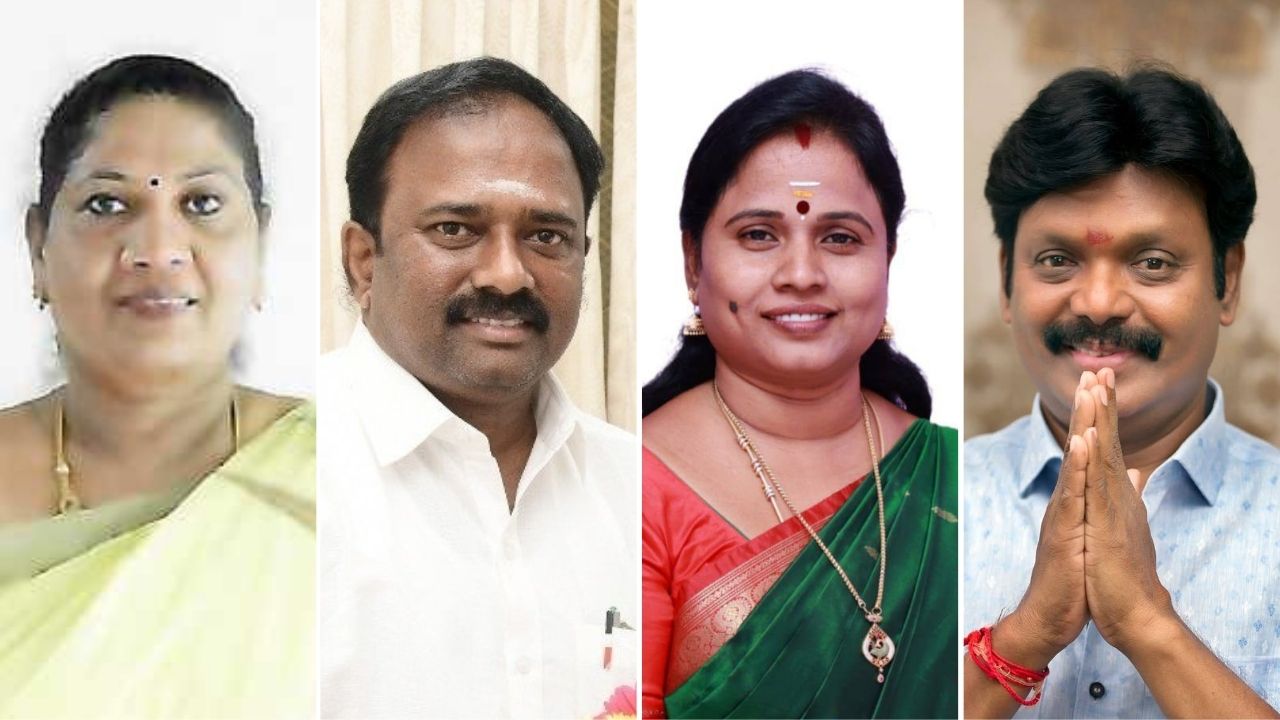
Within weeks of the election results, four AIADMK MLAs resigned from the Assembly and joined the TVK.

Synopsis: The resignation of four AIADMK MLAs just weeks after being elected and their subsequent entry into the ruling Tamilaga Vettri Kazhagam has prompted allegations that the TVK is engaging in the same brand of political horse-trading it entered politics opposing. Unlike similar episodes in other states, however, legal experts say this case falls outside the scope of the Anti-Defection Law, as it does not prevent MLAs from resigning and joining another party.
In 1967, Haryana MLA Gaya Lal changed political parties three times in a single day. Lal’s flip-flopping between the Congress, the United Front, the Congress again and finally the United Front prompted then Haryana Congress leader Rao Birender Singh to famously dub him “Aaya Ram, Gaya Ram”, a phrase that has since inspired countless jokes and cartoons.
The incident was symptomatic of what was considered a fundamental flaw in Indian electoral democracy: elected representatives often switched political loyalties for personal gain, undermining voter mandates.
Nearly two decades later, Parliament, under the Rajiv Gandhi-led Congress government, enacted the Anti-Defection Law through the 52nd Constitutional Amendment in 1985, inserting the Tenth Schedule into the Constitution.
The objective was to curb such defections, which were seen as a betrayal of the mandate on which representatives had been elected, and to bring stability to elected governments.
But the law has not managed to stamp out defections entirely. MLAs and parties alike have frequently found creative ways to circumvent it.
In the last decade in particular, post-poll alliances and governments with slender majorities in states such as Karnataka, Madhya Pradesh and Maharashtra have proved vulnerable to engineered defections.
Now, the newly elected Tamilaga Vettri Kazhagam government in Tamil Nadu stands accused of indulging in the same brand of political horse-trading.
Also Read: Vijay meets PM Modi, raises ‘Vande Matharam’, Mekedatu dam issues
Within weeks of the election results, four AIADMK MLAs—Madurantakam Maragatham Kumaravel, Perundurai Jayakumar, Dharapuram Sathiyabama and Ambasamudram Esaki Subbiah—resigned from the Assembly and joined the TVK.
Their resignations now necessitate by-elections in four constituencies, in addition to Trichy East, which fell vacant after Chief Minister Vijay resigned the seat having contested from two constituencies.
AIADMK General Secretary Edappadi K Palaniswami condemned the alleged poaching, accusing the TVK—which entered politics projecting itself as a “clean” alternative to the established Dravidian parties—of introducing a “debased culture of horse-trading politics” in Tamil Nadu.
He further alleged that the episode was a “pre-planned conspiracy”. According to him, resignation letters were obtained from four MLAs in the presence of the Speaker on the lower floor of the Secretariat and, within 10 minutes, they were issued party membership cards in the office of a TVK minister on the upper floor.
Notably, the resignations followed a brief tussle within the AIADMK legislature party. Earlier, a group of 25 MLAs led by senior leaders CV Shanmugam and SP Velumani had extended support to the TVK.
That faction has since reconciled with Edappadi K Palaniswami and publicly declared that there is no split within the AIADMK.
Speaking to South First, AIADMK Rajya Sabha MP and head of the party’s advocates’ wing IS Inbadurai said the party has now sought pardon for 21 of the 25 MLAs after having initially requested action against all of them under the Anti-Defection Law.
“We had already submitted a letter to Speaker JCD Prabhakar seeking action against all 25 MLAs under the Anti-Defection Law. We have now requested that 21 of them be pardoned. However, we have urged the Speaker to initiate action against the remaining four legislators,” Inbadurai said.
AIADMK leaders Agri Krishnamurthy, an MLA, and Dhanapal, an MP, met Tamil Nadu Governor Rajendra Vishwanath Arlekar on 30 May and submitted a petition alleging that horse-trading may have taken place in connection with the resignation and defection of the four MLAs.
But do the AIADMK’s charges have any merit under the existing Anti-Defection Law?
Also Read: Six dalits hacked over banner dispute in Tenkasi; Residents protest seeking justice
Legal experts say that nothing prevents an MLA from resigning from one party and joining another, as doing so falls within an individual’s political rights.
The Anti-Defection Law, incorporated through the Tenth Schedule of the Constitution, lays down the grounds on which legislators can be disqualified.
Under Paragraph 2 of the Tenth Schedule, an MLA or MP can be disqualified if they voluntarily give up membership of their political party. Legislators can also face disqualification if they vote against the official party whip without prior permission.
Initially, the law provided protection in cases where one-third of legislators split from a party. However, this provision was widely misused to engineer political breakaways.
To address this, Parliament enacted the 91st Constitutional Amendment in 2003, removing the “split” provision and making defections more difficult. Today, only mergers involving at least two-thirds of a legislature party receive protection under the law.
Even so, parties across India have repeatedly found ways to circumvent the spirit of the legislation.
A notable example came in Karnataka in 2019. A year after the Assembly election delivered a hung verdict, several MLAs from the ruling Congress-JD(S) coalition resigned and defected to the BJP, leading to the collapse of the HD Kumaraswamy government in less than a year and paving the way for a BJP government headed by BS Yediyurappa.
Speaker KR Ramesh Kumar promptly disqualified the MLAs under the Anti-Defection Law and, crucially, barred them from contesting elections until the end of the Assembly’s term.
The Supreme Court later upheld the disqualifications but struck down the Speaker’s decision barring them from contesting elections.
Following the verdict, many of the disqualified MLAs contested the by-elections as BJP candidates and returned to the Assembly.
Retired Madras High Court judge Justice D Hariparanthaman said Supreme Court rulings make it clear that even if an MLA is disqualified under the Anti-Defection Law, there is no bar on contesting elections again.
According to him, the present anti-defection framework contains no effective mechanism to prevent an individual legislator from resigning and subsequently joining another party.
However, he argues that the provision allowing two-thirds of a legislature party to merge with another political party should be revisited.
“Had such a split not emerged under the leadership of CV Shanmugam, these four MLAs may not have left the party. Therefore, the Anti-Defection Law must be amended in a way that gives greater authority to the original political party. Only then can such instances of political defection be reduced,” Hariparanthaman said.
Also Read: ‘Sacrificing cows not obligatory religious practice’: Madras HC bans slaughter during Bakrid
Regardless of the letter of the law, senior journalist RK Radhakrishnan told South First that, on the face of it, the TVK appears to have engaged in horse-trading.
“From the perspective of an ordinary citizen, why would an MLA who spends ₹15–20 crore to win an election suddenly switch parties? Is it really to serve the people?” he asked.
“What else could be the reason other than financial gain? In my 40 years of experience, I have never witnessed anything like this. Tamil Nadu politics has never seen such developments before.”
Radhakrishnan described the TVK’s alleged efforts to engineer the resignations as “immature”, particularly because the party already enjoys the support of a broad ruling coalition.
“You could have attempted to disqualify around 25 AIADMK MLAs and then tried to win those seats to consolidate your majority. When you already enjoy majority support through alliance partners, engineering the resignation of AIADMK MLAs within just 10 days reflects political immaturity,” he said.
“When you claim to represent an alternative and cleaner political culture, such actions become even more shocking.”
Writer and political activist Aadhavan Dheetchanya, however, sees a more calculated rationale behind the TVK’s actions.
“Tamilaga Vettri Kazhagam is essentially a corporate-backed party built through corporate support and corporate-style politics. If, in the future, the party advances policies aligned with corporate interests, its current allies, such as the Viduthalai Chiruthaigal Katchi and the Left parties, are likely to raise objections,” he told South First.
“Anticipating such contradictions, TVK appears to be trying to build an independent majority as a political safeguard.”
(Edited by Dese Gowda)



