


In 2025, South First uncovered several stories that were overshadowed by more popular topics or perspectives. Our stories prompted authorities to respond, acknowledge, and take action.

Published Dec 31, 2025 | 7:00 PM ⚊ Updated Dec 31, 2025 | 7:00 PM

Kerala custodial violence RTI.
The primary objective of news media, considered the fourth pillar of democracy, is to voice the voiceless. It is essential that the media ensure the stories that need to be told are heard by the public. If not, the very purpose of journalism is defeated.
In 2025, South First uncovered several stories that were overshadowed by more popular topics or perspectives. Our stories prompted authorities to respond, acknowledge, and take action.
Here are some of the top stories that were uncovered by South First and the impact they made.
The clinical trials conducted at Bengaluru’s Healthcare Global Enterprises Limited raised concerns over patients’ safety, regulatory compliance, and institutional integrity. In 2023, a major US-based pharmaceutical firm had terminated HCG’s participation in clinical studies for violation of protocols. Adding to doubts over trials at the HCG was a WhatsApp message — later withdrawn — seeking patients from a poor economic background for studies. Later, Dr BS Ajaikumar, Founder and Chairman of HCG, refuted the allegations and said the institution strictly adheres to all guidelines set by regulatory authorities. The report also prompted the Karnataka government to write to the Drug Controller General of India (DCGI), seeking an urgent investigation into alleged irregularities in the functioning of the ethics committee and clinical trials at HCG hospitals.
A South First investigation found that, in a Tamil Nadu village, 24-year-old Sasikumar and his family faced social ostracisation after his inter-caste marriage to Sandhya. When his grandmother passed away, village members denied burial rights, forcing the family to cremate her 10 km away. They also faced threats, economic boycotts, and workplace discrimination, pushing them to seek police intervention. At first, despite filing an SC/ST Act case, authorities have only promised peace talks, raising concerns over delayed justice. However, after the report was published, Tamil Nadu Police arrested a Kanavaipudur panchayat leader for orchestrating the caste-based boycott.
A rise in drug-induced crimes among the youth in Kerala prompted South First to look into the data of drug abuse in Kerala, only to find a shocking truth. Kerala is witnessing the rise of young “cooks”— amateur chemists who are learning to manufacture synthetic drugs using information available online. Unlike the traditional narcotics trade, which relied on smuggling networks operating through ports and airports, this new generation of drug-makers is producing synthetic drugs at locations and times of their convenience. Further, it was found that Bengaluru’s nightlife and underground drug networks are fuelling Kerala’s synthetic drug crisis, while Andhra Pradesh and Odisha are emerging as top cannabis suppliers, according to the Kerala Excise Department. Kerala’s 590-km coastline, combined with inland waterways and well-connected airports, has made it a key entry point for drugs smuggled from abroad and within.
In May, a clash broke out between two communities in Tamil Nadu’s Pudukkottai district. Police said it was the fallout of a drunken brawl between two youth groups over filling petrol. Some others felt it was a land dispute, and many others blamed it on caste discrimination that divides people. The clash occurred after the chariot procession at the Muthumariamman Temple. Besides local residents, people from other villages, too, have gathered at the temple located in an area dominated by the Mutharaiyar community. However, the Dalit residents claimed it was a premeditated attack on them, not a caste-clash.
In October, Kerala native Ananthu Aji died by suicide, unable to bear the trauma due to the childhood sexual abuse he faced. In his final notes and video message, he stated that he decided after being unable to bear the trauma caused by the sexual assault he had faced in RSS camps as a child. His death has sparked a national conversation about the hidden realities within RSS camps and the silence that often surrounds them. However, the RSS distanced itself from the perpetrator, even though locals said he had been an active RSS member.
The Lakshadweep administration’s decision to ban the teaching of Arabic and Mahal languages, and to shut down two government schools, disrupted the foundational education of nearly 350 students in the archipelago, leaving their academic future in limbo. Students were denied their right to education, guaranteed under Article 21A of the Indian Constitution and the Right to Education Act, 2009. Residents claimed that the Lakshadweep administration weaponised the National Education Policy (NEP) 2020 to erase their heritage.
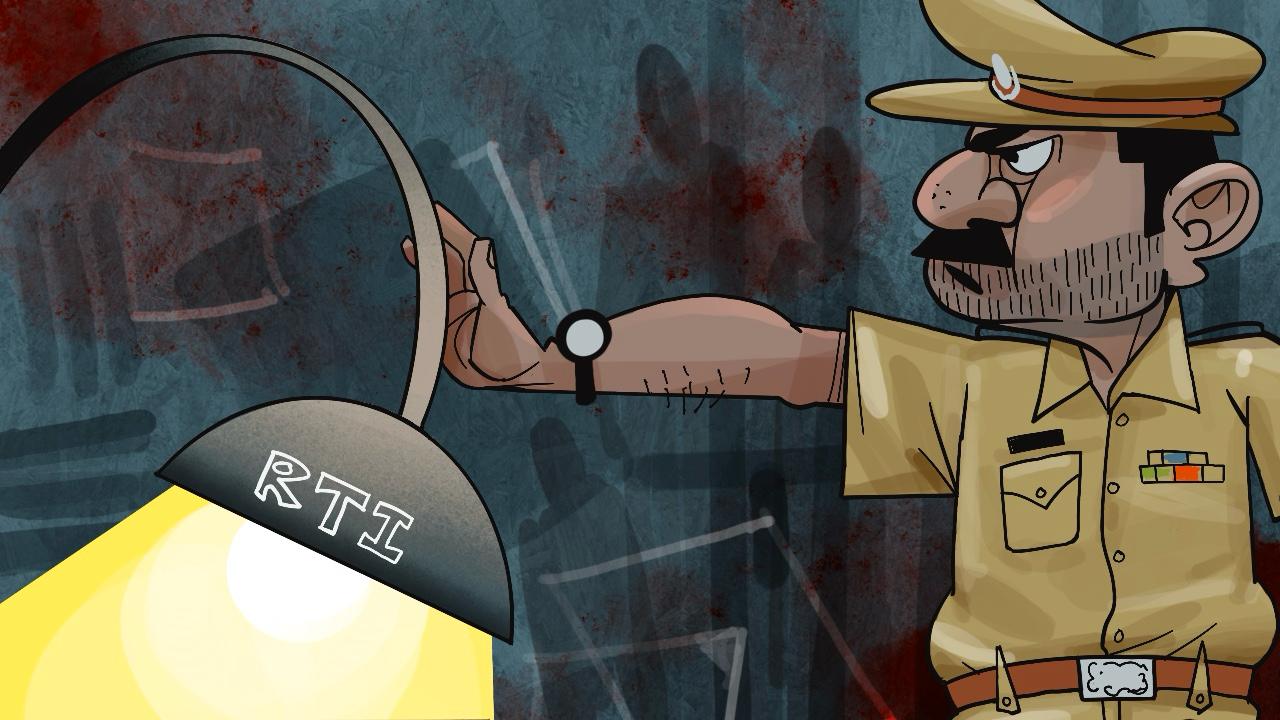
The Kerala Police refused an RTI question seeking the data on violence and deaths inside police stations and prisons. It was denied, saying the application does not fall under the categories of Human Rights Violation and Corruption. Similarly, in the state Assembly, the Home Department, headed by Chief Minister Pinarayi Vijayan, repeatedly sidestepped pointed queries on custodial torture.
Congress leader Rahul Gandhi had alleged voter roll irregularities in Mahadevpura, a part of the Bangalore Central constituency, during the 2024 Lok Sabha elections. However, a South First investigation revealed that, since 2017, Bangalore Central constituency has witnessed repeated irregularities in its electoral rolls, including deletions, omissions and duplications, with online voter applications facing unusually high rejection rates. In Mahadevapura, over 66 percent of online applications were rejected between 2012 and 2018. In 2022, months ahead of the 2023 Assembly Elections, an NGO hired by the BBMP was accused of tampering with electoral rolls.
Despite national warnings, scientific red flags, and known risks for children with conditions like thalassemia and sickle cell anaemia, both prevalent in Kerala’s tribal belts, the state embraced a policy that mirrors Prime Minister Narendra Modi’s much-debated 2021 announcement that over half of India’s population would be fed rice fortified with micronutrients by 2024 as a step towards eradicating anaemia. The FSSAI’s scientific panel recommended in August 2021 that people with thalassemia may take iron-fortified food products under medical supervision, and persons with sickle cell anaemia are advised not to consume them. Activists warned that ignoring these concerns could endanger thousands of people from tribal and marginalised communities, violating their constitutional and medical rights.


