

Published Nov 09, 2026 | 3:58 PM ⚊ Updated Nov 09, 2026 | 3:58 PM

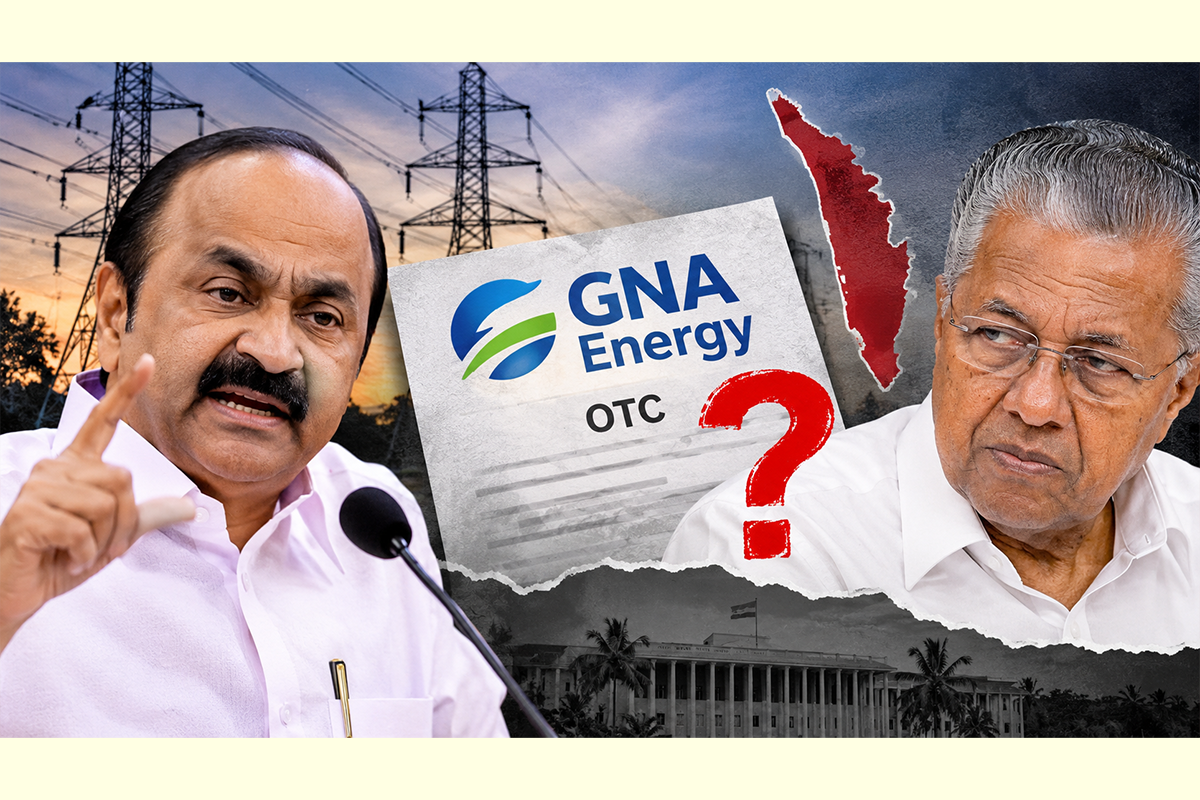
Satheesan maintained that opting for GNA over the Himachal Pradesh proposal would save the state ₹2,232 crore.

Synopsis: The state’s decision to procure electricity through GNA Energy instead of opting for the Himachal Pradesh offer has triggered a political and administrative controversy, with Chief Minister V.D. Satheesan defending the move as a cost-saving measure that would avert power shortages. Leader of the Opposition Pinarayi Vijayan has questioned the transparency of the deal, the Chief Minister’s intervention and GNA’s credentials, while reservations within the Electricity Department and ongoing regulatory investigations involving the company have added to the scrutiny.
A proposal to procure electricity through GNA Energy OTC has snowballed into a major controversy in Keralam, putting Chief Minister V.D. Satheesan at the centre of a political storm.
What was initially presented as a decision to secure power at a lower cost has now triggered a bitter exchange between the chief minister and Leader of the Opposition Pinarayi Vijayan, with questions being raised over the procurement process, the choice of supplier and CM Satheesan’s intervention.
Satheesan maintained that opting for GNA over the Himachal Pradesh proposal would save the state ₹2,232 crore. He argued that Himachal’s quoted rate of ₹14.50 per unit, routed through power trader PTC India Limited, would impose a massive additional burden on the exchequer.
Vijayan, however, accused the government of pushing through the GNA deal by overriding the objections of both the Kerala State Electricity Board (KSEB) and the Electricity Minister. He questioned why the Chief Minister bypassed standard procedures, highlighted the lack of clarity surrounding GNA’s power source, and demanded to know why the contract was awarded without a transparent tendering process.
The controversy acquired further significance with reports of Electricity Minister Sunny Joseph’s reservations over the proposal, concerns raised by former KSEB CMD M.G. Rajamanickam over the procurement process and the ongoing investigations into alleged irregularities involving GNA.
Also Read: 80th anniversary special of Punnapra-Vayalar struggle turns contentious, reopens old wounds in Left
Over the past two days, the exchange has centred on two competing questions: whether Keralam is facing a genuine electricity shortage and whether the CM acted properly in choosing GNA over a proposal to procure power from Himachal Pradesh.
The Opposition has questioned the circumstances under which the GNA offer was accepted. The government, meanwhile, has defended the decision as one taken in the state’s interest to avoid prolonged power cuts, citing the cost, availability and timing of electricity offered by the two suppliers.
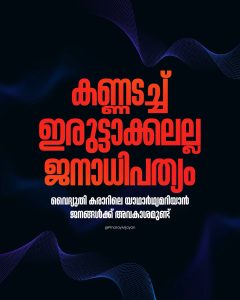
LoP Pinarayi Vijayan’s social media post against CM V D Satheesan
At a press conference on 6 November, Pinarayi Vijayan alleged that the power shortage was being artificially projected and demanded the publication of all documents relating to the electricity procurement deal.
He questioned why the CM had personally intervened in a matter that ordinarily falls within the purview of the KSEB. According to him, both the KSEB and the Minister for Electricity had favoured the Himachal Pradesh proposal, but the CM chose to proceed with GNA.
Vijayan alleged the decision to accept the offer without following transparent procedures raised serious suspicions of impropriety. He also questioned the authority of GNA, describing it as a digital over-the-counter (OTC) trading platform rather than a power generation company.
He sought clarity on the actual source of the electricity being offered through the platform and questioned why the CM had taken a particular interest in the company.
The Opposition leader also pointed to a Securities and Exchange Board of India (SEBI) investigation involving GNA in connection with alleged insider trading linked to shares of the Indian Energy Exchange (IEX). He alleged that the government’s failure to address the corruption charges had only deepened the suspicions surrounding the deal.
Responding to Vijayan’s allegations on 6 November, CM Satheesan dismissed it as factually incorrect and defended the decision to opt for GNA.
He questioned the Opposition leader’s comparison of the GNA offer with the Himachal proposal. Satheesan said the Himachal proposal involved an intermediary margin and cited documents from the KSEB and the Rajasthan Regulatory Commission to argue that Himachal had agreed to supply electricity to Rajasthan at Rs 15.50 per unit.
He also challenged Vijayan to produce documents to substantiate the claim that Himachal had offered electricity to Keralam at Rs 12.50 per unit.
On the question of GNA’s credentials, Satheesan pointed out that the platform had also been used for power purchases during the previous LDF government. He offered to provide details of those transactions, questioning why the Opposition was now raising objections to the platform’s role.
The chief minister also rejected the charge that the state was manufacturing a power crisis.
Quoting a note dated 29 October submitted by the former KSEB Chairman through the Electricity Minister, he said the Board had warned of an immediate risk of prolonged power cuts if alternative supplies were not secured.
The note cited a combination of factors, including deficient rainfall, limited hydropower availability and reported El Niño conditions, which had left the state with little room to absorb further uncertainty in power supply.
Satheesan said Keralam had been forced to impose power cuts in September and managed to overcome the situation in October through purchases from other states and public sector undertakings. The KSEB had informed the government that open tenders had failed to secure the required power and sought an urgent decision to avoid further cuts, he said.
Defending the choice of GNA, Satheesan said the assessment focused on the availability of electricity during non-solar and peak-demand hours, when Keralam faces its greatest pressure on supply.
According to him, the GNA arrangement would provide 385 million units more electricity during non-solar hours than the Himachal proposal. He also said GNA would supply 500 MW during the evening peak period of 6.30 pm to 10.30 pm, while the average supply available from Himachal during December to March would be considerably lower.

CM V D Satheesan’s social media post against LoP Pinarayi Vijayan
He further argued that the Himachal tariff exceeded the Rs 10 ceiling set by the Regulatory Commission, potentially increasing the financial burden on the state. Additional daytime supply through GNA, he said, would also allow Kerala to conserve its hydropower resources for the summer months.
Satheesan maintained that the file had reached him through the Electricity Minister for a final decision and was not called for by his office, rejecting the allegation that he had bypassed the minister or interfered with the movement of official files.
Also Read: Former Excise chief’s report on bribe collection sparks political row in Keralam
The exchange continued on 7 November, with Vijayan insisting that the chief minister’s explanation had failed to address the central questions surrounding the procurement decision.
He asked why the Himachal proposal, which had reportedly received favourable consideration following technical and financial assessments by the KSEB, was discarded in favour of GNA.
Vijayan sought details of the evaluation carried out by the Chief Engineer and asked whether the Board had warned the government of possible financial losses from the GNA arrangement. He also questioned the legal and regulatory basis on which a digital trading platform, which he said was neither a power generator nor a licensed trader, could offer electricity.
Rejecting Satheesan’s reference to power purchases through GNA during the previous government, Vijayan demanded that the relevant documents be made public. He said any earlier purchase made without a tender or regulatory approval should also be disclosed.
He reiterated the allegation that the chief minister had taken a unilateral decision and asked whose interests the agreement served.
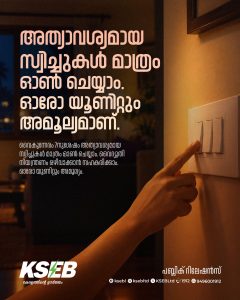
A KSEB poster that calls customers to use electricity judiciously
Vijayan also alleged that the government was using the prospect of a power crisis to justify a questionable transaction.
The Chief Minister’s Office (CMO), in a statement on 7 November, accused Vijayan of repeating the same allegations despite the detailed clarification issued a day earlier.
The CMO also laid out the timeline of the Himachal proposal, stating that Rajasthan had decided to procure power from the former on 18 October and that the proposals were submitted to the Rajasthan Regulatory Commission on 28 October. The KSEB file recommending a decision on power procurement reached the chief minister on 30 October, it said.
Taking aim at Vijayan’s contention that there was no genuine power shortage, the CMO said his criticism of the GNA purchase contradicted his claim that the crisis had been artificially created.
The CMO also pointed to a note from the former KSEB Chairman that had mentioned GNA as an option for power procurement, asking whether Vijayan was unaware of the recommendation.
Also Read: ED registers PMLA case over failed Messi event in Kochi, probes alleged fund diversion
While CM Satheesan has argued that the GNA Energy offer is substantially cheaper and provides more power during peak hours, documents submitted by the KSEB have raised questions about the suitability of the private platform’s offer and the terms of the proposed agreement.
The issue came into sharper focus during the chief minister’s Cabinet briefing on 4 November.
According to the chief minister, the government had two options: power from Himachal Pradesh at ₹14.50 per unit through Power Trading Corporation (PTC) Ltd and two offers from GNA Energy, at ₹8.63 and ₹8.90 per unit. He pointed out that the Himachal Pradesh supply was not a direct government-to-government arrangement, as it involved PTC, a power trading intermediary whose commission was included in the tariff.
Questioning the rationale for paying nearly ₹6 more per unit merely because the source was described as government-backed, Satheesan said the higher-priced option would impose an additional burden of around ₹2,232 crore on the state. The government, therefore, decided to proceed with GNA.
The chief minister also cited the difference in the volume of electricity available under the two proposals. According to the comparison presented by him, Himachal Pradesh could supply 843 million units (MU) until the end of March, against 1,812 MU from GNA.
The difference, he said, was also evident during peak consumption hours, defined as 6 pm to midnight. While the Himachal Pradesh proposal offered 353 MU during this period, GNA could provide 453 MU, giving the latter an advantage of around 100 MU.
Satheesan further referred to the price ceiling fixed by the regulatory authority.
According to the KSEB assessment, procuring electricity from Himachal Pradesh at rates above the prescribed ceiling would create an additional liability of ₹722.91 crore between October and December and ₹1,510.43 crore up to May. The cumulative additional burden would thus come to ₹2,233.34 crore, he said.
However, the chief minister’s defence of the GNA deal contrasts with the position taken earlier by Electricity Minister Sunny Joseph.
In a letter to the Chief Secretary on 19 October, Joseph had expressed reservations about the proposed arrangement with GNA Energy, pointing out that important contractual details were yet to be disclosed. He also noted that both the KSEB and the Energy Department favoured the Himachal Pradesh proposal.
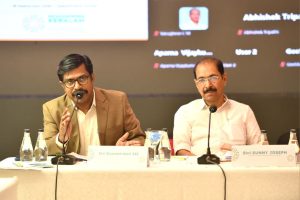
Electricity Minister Sunny Joseph and KSEB former CMD M G Rajamanickam
The minister’s objections centred on three aspects.
First, he argued that the Himachal Pradesh arrangement would ensure a substantial supply during peak consumption hours and guarantee power availability in April and May, when Kerala is particularly vulnerable to shortages. The GNA offer, in contrast, was understood to cover supply only until March.
Second, Joseph questioned whether the lower quoted tariff from GNA necessarily made it the more economical option. Although GNA’s quoted rate of ₹8.48 per unit appeared considerably lower than Himachal Pradesh’s ₹14.50, a substantial portion of the GNA supply would be available during daytime hours, when KSEB does not require additional power and is already surrendering surplus electricity.
Third, the Minister flagged the absence of clarity on the identity of the companies supplying power through GNA, the location of the generating stations, supply guarantees and the complete terms and conditions of the agreement.
However, following the government’s decision to proceed with the GNA arrangement, Joseph recently stated that he had no objection to the decision.
The debate over peak-hour availability has also brought attention to a note submitted by M.G. Rajamanickam, who was then the KSEB chairman, to the government on 19 September.
Rajamanickam’s principal objection was not simply about the availability of electricity. He questioned the decision to enter into a high-value power purchase agreement without following a tendering process.
Adding another dimension to the controversy, GNA Energy Private Limited is under investigation by the Securities and Exchange Board of India (SEBI) and the Central Electricity Regulatory Commission (CERC) over alleged irregularities involving share transactions worth ₹173 crore.
The investigation covers eight individuals, including the company’s managing director. The allegations relate to the use of confidential information about a policy decision of the Central Commission to execute trades in anticipation of a fall in Indian Energy Exchange (IEX) share prices, allegedly generating profits of ₹173 crore.
The investigations and the questions surrounding the company’s role have added to the scrutiny of Keralam’s proposed power purchase arrangement.
(Edited by Fayisa CA)



