

Published Nov 08, 2026 | 12:00 PM ⚊ Updated Nov 08, 2026 | 12:00 PM

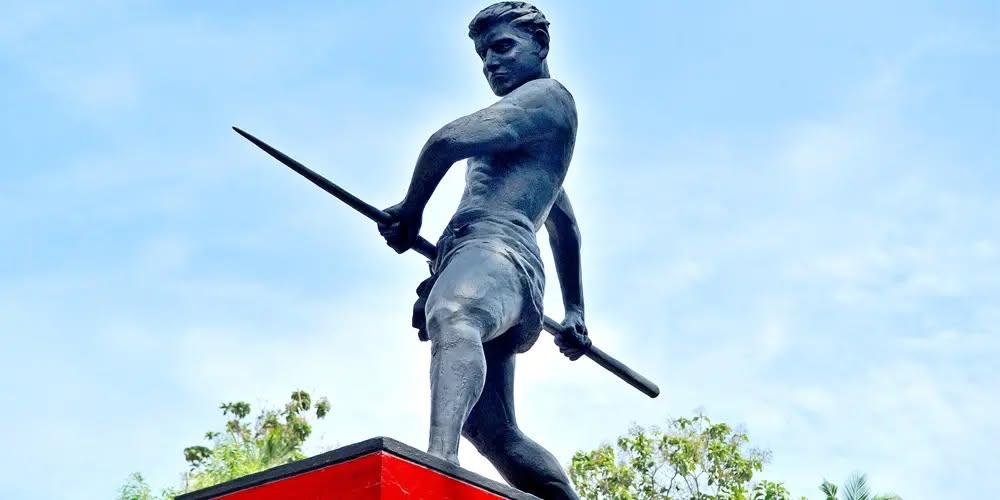
The Punnapra-Vayalar memorial at Alappuzha

Synopsis: The 80th anniversary of the Punnapra-Vayalar uprising, a defining chapter in Keralam’s communist history, has triggered an unexpected turf war between the CPI and CPI(M). A commemorative publication by the CPI(M), featuring photographs and profiles of nearly 60 leaders of the 1946 revolt, has drawn criticism from some CPI leaders, who allege that key figures, particularly T.V. Thomas, have been sidelined. What began as a dispute over photographs has reopened the wounds of the 1964 Communist split, raising larger questions about political legacy.
The communist movement in Keralam has never quite recovered from the divisions that led to the split of the undivided Communist Party of India (CPI) in 1964. The formation of the CPI(M) by leaders who broke away from the parent party did little to end the ideological and organisational rivalry.
In Keralam, where both parties have deep roots and a sizeable following, the differences have often played out more sharply, with the CPI(M) occupying the dominant position and the CPI struggling to assert its independent political identity.
Now, the two parties have found themselves on opposite sides of another battle — this time over the history of a struggle they once shared.
The occasion is the 80th anniversary of the Punnapra-Vayalar uprising of 1946, one of the defining episodes in Keralam’s communist history.
What should have been a joint remembrance of a movement that brought together communist leaders and workers against the erstwhile Travancore princely administration has instead opened up a fresh dispute over historical recognition.
A commemorative special issue brought out by the CPI(M), under the editorial supervision of senior leader and former Finance Minister T.M. Thomas Isaac, has drawn sharp criticism from some section of CPI leaders over the way the uprising was represented.
The immediate provocation was the placement of leaders in a section featuring photographs of around 60 personalities associated with the uprising.
For the critics, the issue is not merely about who appears first or whose photograph gets prominence, but about an alleged attempt to recast a collective struggle through the political prism of the post-1964 divide.
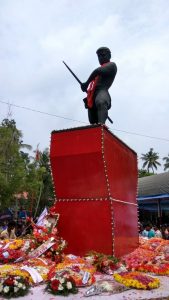
Punnapra-Vayalar memorial at Alappuzha
The Punnapra-Vayalar uprising of 1946 was more than a confrontation between workers and the Travancore State.
It was also a struggle over the future of the princely state and its place in an independent India.
Late veteran Communist leader V.S. Achuthanandan, who had taken part in the Punnapra-Vayalar uprising, offered his account of the historic struggle in a write-up, ‘The Historic Punnapra-Vayalar Struggle’. He portrayed it as a decisive working-class battle against the autocratic rule of Travancore and Dewan C.P. Ramaswamy Iyer’s plan to keep the princely state independent after the British rule ended.
Achuthanandan wrote that while sections of the Travancore State Congress remained confined to the demand for responsible government under the Maharaja, the working class raised a more radical demand for the abolition of princely rule. The workers also saw their struggle as part of India’s wider freedom movement.
The confrontation turned bloody in October 1946.
Workers attacked military and police camps at Punnapra on 23 October. Police retaliated by opening fire, which claimed several lives. A police officer was killed in the ensuing clash while six workers lost lives in another firing at Mararikulam on 25 October.
Two days later, troops surrounded Vayalar and opened fire using machine-guns on volunteers advancing towards them. Hundreds are believed to have died in the violence.
Also Read: Rs 30 sack bought to dump Abhiram’s body; Kerala Police probe private-visuals angle
Historian Robbin Jeffrey, in his essay India’s Working Class Revolt: Punnapra-Vayalar and the Communist ‘Conspiracy’ of 1946, examines three competing interpretations of the uprising.
The communist narrative portrays it as a defining chapter in the freedom struggle, arguing that the revolt thwarted C.P.’s ambition to establish an independent Travancore.
The anti-communist account, in contrast, describes it as a desperate attempt by the Communist Party to regain lost political influence, allegedly at the cost of ordinary workers.
A third interpretation places the uprising within a wider communist strategy to trigger a nationwide insurrection and seize political power.
Jeffrey observes that the third explanation has a certain surface logic, while also containing elements of historical accuracy.
It places Punnapra-Vayalar in the context of the Communist Party of India’s larger political calculations during the turbulent final years of the British rule.
Also Read: Keralam targets 7% growth, Rs 28 lakh crore economy under 15th Plan
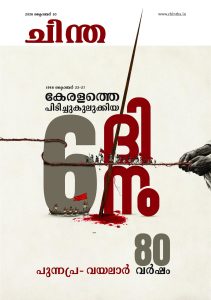
The special edition of Chintha on Punnapra-Vayalar struggle
It was the special issue of CPI(M) mouthpiece Chintha, revisiting the uprising, which triggered a fresh round of differences between the CPI and CPI(M).
Titled ‘Keralathe Pidichu Kulukkiya Aaru Dhinam (The Six Days That Shook Kerala)’, the special issue was brought out under the editorial supervision of Thomas Isaac as part of the anniversary commemorations of the struggle.
The immediate provocation was a section carrying photographs of around 60 leaders associated with the uprising.
CPI leaders objected to C.K. Kumara Panicker being placed eighth and T.V. Thomas ninth, arguing that the latter’s contribution had been relegated to a lesser position. They saw the arrangement as an attempt to downplay the role of Thomas, a prominent leader of the 1946 agitation.
The objections, however, go beyond the order of photographs. Several names, including K.C. Velayudhan, A.K. Paraman, N.D. Varki, K. Madhavan, C.S. Ramakrishnan, A. Sreedharan and veteran woman leader C. Narayaniamma, were allegedly missing or inadequately represented. The grievances have also found an echo among the families of participants and sections of the communist rank and file.
Speaking at an AITUC Foundation Day function in Alappuzha, on 31 October, CPI district secretary T.J. Anjalose accused Isaac of portraying Thomas as a mere ‘guest artist’ in a struggle in which he had played a leading role.
Anjalose pointed out that Thomas, as president of the All Travancore Trade Union Council, headed the organisation that decided to launch the general strike on 22 October, 1946. He also recalled Thomas’s confrontation with Diwan Sir C.P. Ramaswami Iyer at a tripartite meeting at Bhakti Vilasam and his subsequent leadership during the police and military crackdown.
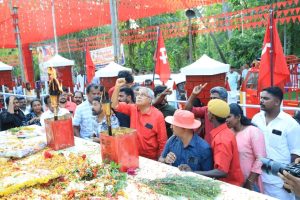
CPI state secretary Binoy Vishwam offering his tributes at the Punnapra-Vayalar memorial in October
Isaac, however, rejected the allegations, arguing that the arrangement had nothing to do with the relative importance of individual leaders. In a Facebook post, he said the photographs, except that of P. Krishna Pillai, who was placed first as a foundational figure, had been arranged alphabetically.
He explained that the first section featured around 20 prominent leaders, followed by another group of more than 40 leaders. The apparent break in alphabetical order, he said, was because Comrade Ben had been included in the second group.
Isaac also urged both parties to put an end to what he described as an unnecessary controversy, pointing out that there were more pressing issues facing the Stat. He also stressed that there were no fundamental differences between the two Communist parties over the uprising.
He dismissed suggestions that the publication was intended to establish one party’s version of history.
The directory, which runs to more than 720 pages, was prepared after extensive discussions. It contains details of more than 1,800 participants, arranged alphabetically and classified according to panchayats, with photographs wherever available.
Also Read: Keralam sanctions ₹1 lakh compensation for construction worker assaulted by Varkala Sub-Inspector
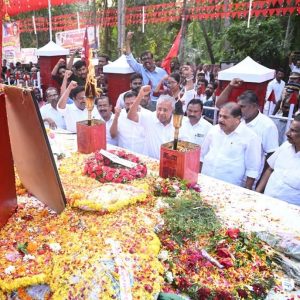
Leader of the Opposition Pinarayi Vijayan offering his tributes at the Punnapra-Vayalar memorial in October
The controversy also brings back the unresolved sensitivities surrounding the 1964 split in the Communist movement.
Though the Punnapra-Vayalar uprising took place well before the division, the two parties have often differed in their emphasis on the leaders, organisations and political legacy associated with the movement.
CPI leaders view the latest publication as an attempt to give prominence to one set of leaders at the expense of those who remained with the undivided party. CPI(M) has maintained that the account does not seek to impose later party identities on the participants of the uprising.
The directory itself was part of a larger archival exercise undertaken under Isaac’s guidance.
An earlier edition, released around the 2025 commemorations, was circulated among CPI leaders for suggestions and corrections. Isaac said draft copies were shared twice and the printed directory was also distributed to district offices of both parties and their local committee offices. He expressed regret that the expected feedback had not come.
He acknowledged that omissions and errors could have crept into the compilation and that some might disagree with the arrangement or the introductory account. The exercise, he maintained, was intended to document the lives and contributions of those who participated in the uprising.
The debate also comes against the backdrop of criticism from outside the Left.
BJP leaders and other critics have questioned the portrayal of the uprising as a freedom struggle, arguing that it was a Communist-led confrontation that resulted in the deaths of poorly armed workers.
For now, a publication intended to preserve the memory of one of Keralam’s defining political struggles has opened another debate within the Left, over who gets remembered, and how history should be recorded.
(Edited by Fayisa CA)



