

Published Nov 26, 2026 | 9:30 AM ⚊ Updated Nov 26, 2026 | 9:30 AM

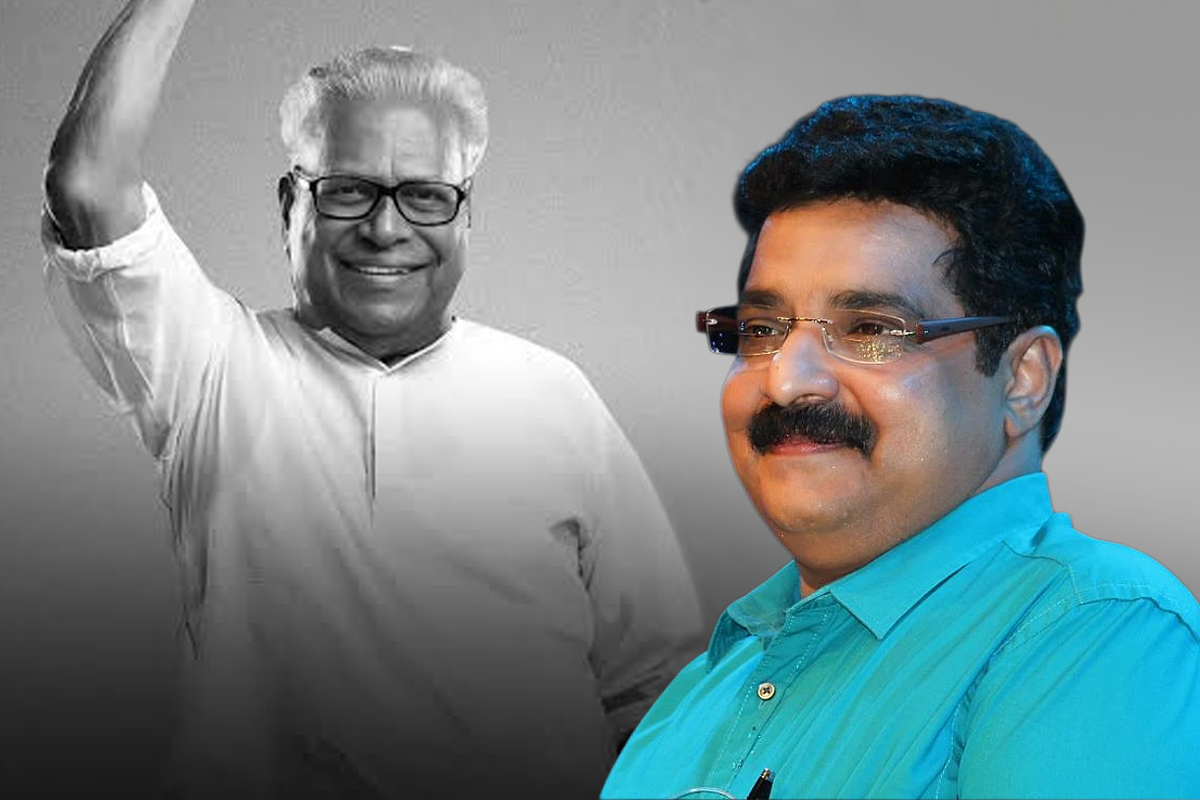
The fifth Administrative Reforms Commission, headed by senior IUML leader M.K. Muneer, has been given an expansive mandate.

Synopsis: Keralam’s fifth Administrative Reforms Commission, headed by M.K. Muneer, has been given a wide-ranging mandate to overhaul the bureaucracy, improve governance and introduce AI into administration. However, the commission faces questions over its effectiveness, with many of the 13 reports submitted by the previous ARC, which cost the exchequer Rs 10.79 crore, still awaiting implementation.
A decade after the previous Left Democratic Front (LDF) government set up an Administrative Reforms Commission (ARC) under former Chief Minister V.S. Achuthanandan, Keralam is preparing for another comprehensive exercise to overhaul its administrative machinery.
The fifth Administrative Reforms Commission, headed by senior Indian Union Muslim League (IUML) leader and former minister M.K. Muneer, has been given an expansive mandate that covers everything from restructuring the bureaucracy and improving public service delivery to introducing artificial intelligence into government functioning.
The commission is expected to begin its work soon as the government has finalised its terms of reference and sanctioned the necessary staff.
Muneer was appointed chairman with Cabinet rank on October 1, while decisions on its terms of reference and staffing were taken on November 19.
Apart from the chairman, the commission will have 17 office staff, while 12 personal staff will be attached to the chairman’s office.
The proposed exercise comes with considerable expectations, particularly at a time when the state is seeking to modernise its administrative system, improve the efficiency of government departments, reduce procedural delays and make public services more accessible. However, the constitution of another commission also revives questions over the utility and financial implications of such an exercise.
The fourth ARC, constituted by the previous LDF government, submitted 13 reports covering several important areas of governance and cost the exchequer Rs 10.79 crore until April 2021.
Yet, many of its recommendations are still awaiting effective implementation.
The new commission will thus have to address an important question even before it starts functioning: how will it ensure that its findings do not meet the same fate?
Also Read: Keralam seeks Centre’s intervention to secure pure petrol samples from OMCs for ethanol tests
The fifth ARC has been entrusted with a wide-ranging mandate to examine the functioning of the state administration in the context of policy changes, institutional developments and technological advances since the earlier commission reports.
It has been asked to not merely identify shortcomings in the existing system but also to assess how far previous reform recommendations have been implemented and what further changes are necessary to make the administration efficient, accountable, citizen-centred and responsive to future challenges.
A major part of its work will involve examining the organisational structure of the government.
The commission will review the respective roles and functioning of the Secretariat, directorates, public sector undertakings, boards, corporations and autonomous institutions. It will also examine the relationships between these bodies, identify overlapping responsibilities and suggest ways to rationalise their functions and workloads.
The Manual of Office Procedure and the Rules of Business, which govern the functioning of government offices and the conduct of official business, will also come under review. The objective is to bring these procedures in line with contemporary administrative requirements, existing laws and policy changes. The commission will also examine the framework used to categorise and grade public sector undertakings and recommend changes wherever necessary.
The commission has been asked to identify such institutional and procedural barriers and recommend measures to facilitate quicker decision-making.
Coordination between government departments and local self-government institutions is another major area of examination. The panel will look into difficulties arising from shared responsibilities, jurisdictional conflicts and inadequate information exchange between departments.
It will also examine the human resource and institutional capacity constraints faced by local governments and suggest ways to improve their coordination with the state administration.
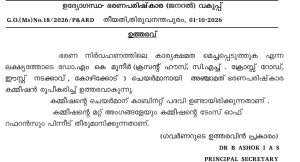
An order on 1 October that appoints M K Muneer as the chairman of the Administrative Reforms Commission
One of the most significant features of the fifth ARC’s mandate is its emphasis on artificial intelligence and emerging technologies.
The commission has been specifically asked to examine the present status of e-governance and administrative modernisation and recommend ways to integrate data analytics, AI and other technological tools into government functioning.
The proposed use of AI in file processing, planning and the e-office system marks an attempt to move beyond the digitisation of existing procedures towards a more technology-driven administrative structure.
The commission will have to submit recommendations on a State AI policy and an appropriate legal framework governing its use. Its terms of reference clarify that technological adoption cannot come at the cost of individual rights and administrative accountability while stressing that safeguards for privacy, transparency, human oversight, and responsibility for decisions made with the assistance of automated systems must be addressed.
Financial management and development planning will also be part of the exercise. The commission will review the implementation of earlier recommendations relating to budgeting, particularly output-based and outcome-based budgeting, and identify administrative shortcomings that have affected their effectiveness.
It will recommend more flexible planning and budgeting mechanisms to meet unforeseen but critical sectoral requirements. The panel will also examine how multi-year projects can be planned, budgeted and executed without delays caused by procedural and financial uncertainties.
The terms of reference extend beyond the conventional areas of administrative reform.
The commission has been asked to examine challenges arising from demographic ageing, migration, urbanisation, disasters, climate change, public health preparedness and the transition towards a green economy.
Also Read: Mohanlal lauds RSS’s cultural role at Kesari event; Empuraan controversy resurfaces
The fifth ARC’s ambitious mandate inevitably brings its predecessor into focus.
The fourth ARC was one of the major institutional decisions taken by the Pinarayi Vijayan government soon after the LDF came to power in 2016.
In August that year, the Cabinet appointed veteran CPI(M) leader and former Chief Minister V.S. Achuthanandan as chairman of the commission, granting him Cabinet rank.
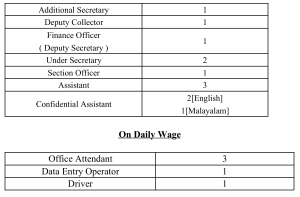
Office staff sanctioned for Muneer led ARC
Former Chief Secretaries C.P. Nair and Neela Gangadharan were appointed members, while retired Additional Chief Secretary Sheela Thomas served as member secretary.
The appointment was widely viewed in the political circles as an exercise to rehabilitate Achuthanandan, who had stepped aside for Pinarayi Vijayan in the race for the Chief Minister’s post.
Although the government projected the commission as an important initiative to reform the state’s administrative machinery, the UDF-led Opposition questioned the need for creating a separate institution with Cabinet rank and a sizeable staff establishment.
The UDF then criticised the expenditure involved and questioned whether the commission would deliver reforms proportionate to the public money spent on it. The appointment itself became a political issue, with critics describing the arrangement as an unnecessary burden on the exchequer and the commission as a “white elephant.”
Despite the political criticism, the fourth ARC undertook an extensive exercise and submitted 13 reports on different aspects of governance.
Its first report, dealing with vigilance reforms, was submitted in 2017. The commission subsequently submitted two reports in 2018, one in 2019, four in 2020 and five in 2021.
The reports covered a wide range of subjects, including reforms in the vigilance system, capacity building of civil servants, welfare legislation, personnel administration and civil service reforms. The commission also examined people-centric service delivery in departments such as land revenue, survey and land records, registration, food and civil supplies, and the police.
Other areas covered included public infrastructure development and management, sustainable development, accountability in administration, public grievance redressal, e-governance and reforms in the Secretariat. The exercise was intended to provide a comprehensive assessment of the State’s administrative machinery rather than a few isolated departments.
Achuthanandan resigned on health grounds with effect from January 31, 2021. The commission’s residual work continued briefly, and its functioning came to a halt in April 2021. The final major report on Secretariat reforms was submitted around March 2021.
The financial details subsequently disclosed in the Assembly became another point of controversy.
In a reply to a question, then Chief Minister Pinarayi Vijayan informed the House that the commission had incurred expenditure of Rs 10.79 crore up to April 30, 2021.
Of this, approximately Rs 8.06 crore was spent on salaries. Achuthanandan himself did not draw a salary, although around Rs 27 lakh was paid towards his expenses.
The Opposition’s criticism was that such a substantial expenditure had not resulted in corresponding changes in the functioning of the administration. The commission had produced a large volume of recommendations, but questions remained over how many had actually been implemented and how far they had improved governance.
The experience of the fourth ARC presents an important challenge for the Muneer-led commission.
The new panel has specifically been asked to assess the implementation of earlier recommendations. This could become one of the most consequential parts of its work.
Several subjects in the new commission’s mandate have already been examined by its predecessor.
Civil service reforms, vigilance, e-governance, public service delivery, Secretariat functioning and administrative accountability were all covered in the fourth ARC’s reports.
The fifth commission will therefore have to establish what has changed since those recommendations were made and why several proposals did not translate into concrete action.
“A review of the earlier reports could help identify recommendations that were accepted but not implemented, those that were only partially implemented and those that were set aside. It could also establish whether the obstacles were financial, administrative, political or related to the absence of clear responsibility among departments,” said an official of the Personnel and Administrative Reforms Department.
Also Read: Reiterating the role of women in Kerala temple theatre: The history of Teviticci system
The fifth ARC is being set up at a time when the state faces mounting administrative and financial challenges.
Citizens expect faster delivery of public services, businesses seek predictable and transparent procedures, and local governments require greater institutional support.
At the same time, the administration has to respond to new demands arising from technological changes, demographic shifts and environmental challenges.
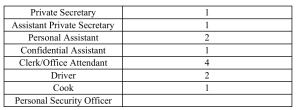
Personal staff sanctioned for ARC chairman M K Muneer alone
“The commission’s terms of reference reflect an understanding of these changing requirements. Its emphasis on AI, digital governance, financial delegation, specialist recruitment and outcome-based budgeting gives it an opportunity to address some of the structural weaknesses that have long affected government functioning,” said the official.
However, the official reminded that the extensive mandate also raised questions about the commission’s ability to complete the exercise within a reasonable timeframe and ensure that its recommendations are practical and implementable.
The experience of the fourth ARC necessitated scrutiny of the size of the new commission and the expenditure involved. With 17 office staff and 12 personal staff for the chairman, the administrative arrangements will themselves come under scrutiny, particularly given the criticism faced by the previous commission over its expenditure.
Ultimately, the fifth ARC will be judged not by the number of reports it produces or the breadth of subjects it examines, but by the changes it can bring about in the day-to-day functioning of the government.
(Edited by Fayisa CA)



