

Published Nov 06, 2026 | 1:15 PM ⚊ Updated Nov 06, 2026 | 1:15 PM

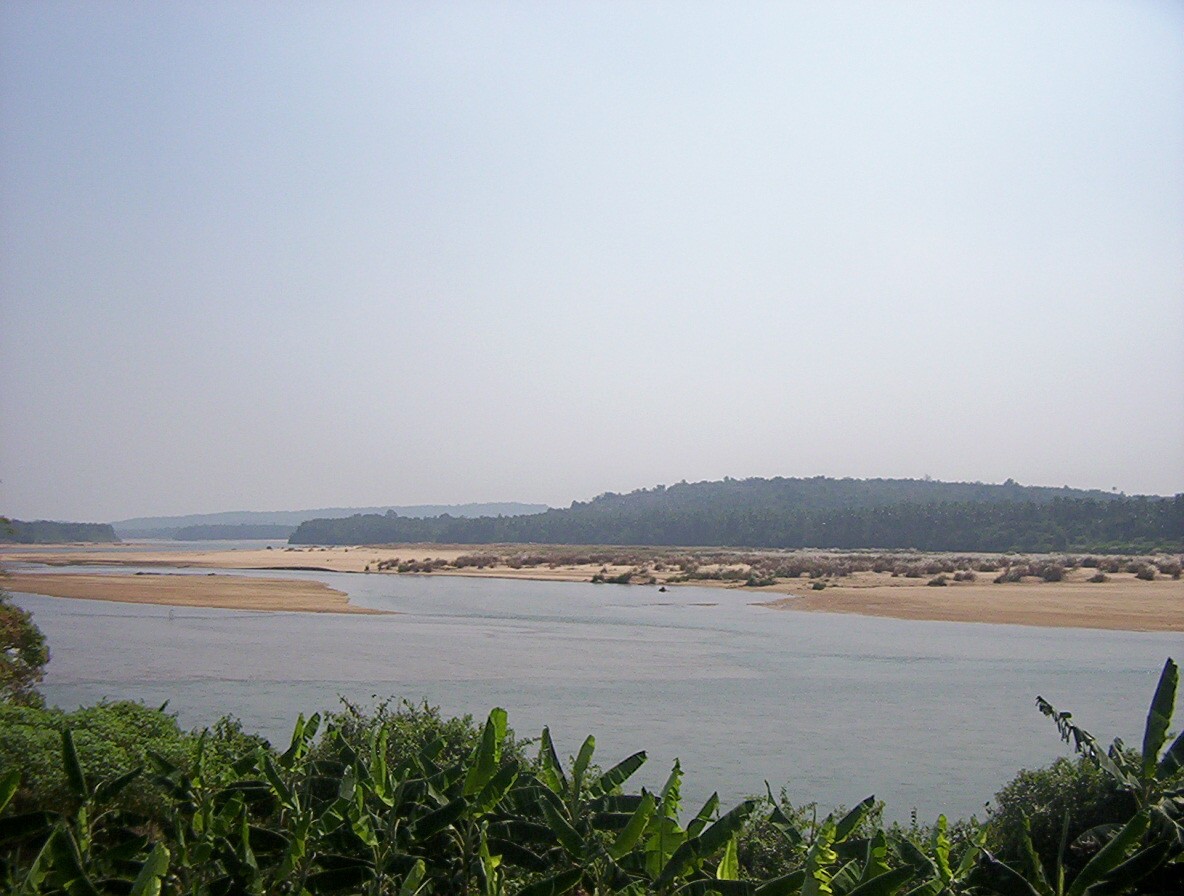
Sand is integral to a river's ecosystem, helping regulate water flow, recharge groundwater and sustain wetlands, paddy field and aquatic life.

Synopsis: After nearly a decade of suspension, river sand mining is back on Keralam’s agenda, with the government identifying 1.7 crore tonnes of mineable sand across 189 sites along 14 rivers. However, incomplete site demarcation and pending environmental clearances mean extraction is yet to resume. As the government explores the possibility of regulated mining and scientific removal of accumulated river sediments to address flooding, environmental activists warn of the damage unchecked extraction could cause to river ecosystems, groundwater and fishing livelihoods.
After nearly a decade without river sand mining, Keralam is preparing to reopen its rivers to extraction, bringing a long-standing environmental and economic debate back into focus.
The government has identified 189 potential mining sites along 14 rivers, with an estimated 1.7 crore tonnes of sand available for extraction.
The move comes amid growing demand for construction materials and renewed arguments that removing accumulated sand deposits could help maintain river flow and reduce flood risks.
But the prospect of mining has also revived concerns over the fragile river ecosystems, the extent of extraction that can be safely permitted and the safeguards needed to prevent environmental damage.
With site demarcation still incomplete and environmental clearances yet to be secured, the proposed return of sand mining raises a crucial question: how much can Keralam take from its rivers without paying a heavy ecological price?
Also Read: Kerala’s changing heat landscape
The state has identified more than 1.7 crore tonnes of mineable river sand across 189 locations in 14 rivers, but resuming extraction remains a distant prospect, with boundary demarcation still incomplete at most sites and environmental clearances yet to be secured.
River sand mining has remained suspended in the state since 2016 for want of environmental clearance.
Though the government has identified potential mining locations and assessed the available sand deposits, extraction can resume only after completing the prescribed procedures and obtaining the necessary clearances.
According to District Survey Reports (DSRs), a total of 17,025,861.48 metric tonnes of mineable sand has been identified at 189 sites along 14 rivers.
These include the Achankovil, Pamba, Muvattupuzha, Periyar, Bharathapuzha, Chaliyar, Kadalundi, Valapattanam, Sreekantapuram, Perumba, Shiriya, Uppala, Chandragiri and Mogral rivers, spreading across the seven districts — Malappuram, Palakkad, Thrissur, Kannur, Kasaragod, Ernakulam and Pathanamthitta.
Of the 189 identified sites, 149 are spread over areas of less than five hectares, while the remaining 40 cover five hectares or more.
Boundary demarcation has been completed at only 62 sites, all of them below five hectares.
The process is yet to be completed at the remaining 127 locations.
Even at the sites where demarcation has been completed, mining cannot begin immediately.
The sites must first obtain a Letter of Intent from the Department of Mining and Geology and environmental clearance from the Department of Environment. Any extraction will have to comply with the government’s Standard Operating Procedures (SOPs) and environmental safeguards.
The figures also come against the backdrop of a wider sand availability assessment undertaken by the CSIR-National Institute of Interdisciplinary Science and Technology (NIIST), an institution under the Central Government.
The sand audit covered 17 rivers across 11 districts — Kollam, Pathanamthitta, Kottayam, Ernakulam, Idukki, Thrissur, Malappuram, Palakkad, Kozhikode, Kannur and Kasaragod.
The report identified potential sand-mining locations in eight districts — Kollam, Thrissur, Malappuram, Palakkad, Kannur, Kasaragod, Pathanamthitta and Ernakulam.
The details were provided by former Water Resources Minister Roshy Augustine in a reply to the Assembly in October 2025.
The District Survey Reports of seven districts — Malappuram, Palakkad, Thrissur, Kannur, Kasaragod, Ernakulam and Pathanamthitta — account for the identification of the 189 sites and the estimated mineable sand deposits.
River sand extraction in Keralam is regulated under the Kerala Protection of River Banks and Regulation of Removal of Sand Act, 2001, amended in 2013, and the Rules framed in 2002. The state also has to comply with the guidelines of the Union Ministry of Environment, Forest and Climate Change and the directions of the National Green Tribunal and the Supreme Court.
The Act envisages a three-tier monitoring mechanism, with the State High-Level Committee headed by the Revenue Minister, District Expert Committees chaired by District Collectors and Kadavu Committees functioning at the panchayat, municipality and corporation levels. No river stretch is leased out to private individuals or agencies, and the activity remains under the control of the state government.
The suspension of sand mining followed years of excessive extraction that damaged riverbeds and riparian ecosystems.
Also Read: Who cleaned cities, who lost forests
At the same time, the state’s move to stop river sand mining to prevent further damage to its river systems has brought an unintended environmental consequence, with the growing demand for an alternative pushing quarrying activity closer to the ecologically fragile Western Ghats.
The construction sector, once heavily dependent on river sand, has increasingly turned to manufactured sand (M-sand), made by crushing rocks extracted from quarries in the state’s midlands and high ranges. The shift has raised concerns over the impact of expanding quarry operations, particularly those close to protected areas.
The scale of the damage caused by indiscriminate river sand extraction had prompted the restrictions in the first place.
A study by the Centre for Water Resources Development and Management (CWRDM) found that Keralam’s rivers were losing sand faster than natural processes could replenish it. The depletion affected river flow, aquatic and riparian habitats, and economic activities such as fishing that depend on healthy river systems.
However, the restrictions also left the construction industry, the biggest consumer of sand, looking for alternatives.
M-sand soon emerged as the preferred substitute, increasing demand for crushed rock and, in turn, putting greater pressure on quarries.
A study titled The Conundrum of River Sand Mining and Biodiversity Conservation in Kerala, India, by researchers in the Department of Civil Engineering at the National Institute of Technology, Calicut, highlights this shift. It points to the expansion of quarrying near protected areas of the Western Ghats following the restrictions on river sand extraction.
The situation has exposed the difficult choices involved in managing the state’s natural resources. While restrictions on river sand mining were intended to protect river ecosystems, the resulting dependence on M-sand has raised fresh questions about the environmental consequences of quarry expansion. The pressure has, in effect, shifted from riverbeds to the hills.
There is also a growing argument for scientific removal of accumulated sand, silt and sediment from riverbeds and reservoirs.
Large deposits, proponents of this approach argue, reduce the water-carrying capacity of rivers and reservoirs, aggravating the risk of localised flooding.
Chief Minister VD Satheesan raised the issue in August, expressing concern over the absence of scientific desilting and sediment removal from rivers and reservoirs. He called for a scientific approach to removing accumulated material to restore the hydraulic capacity of these water bodies and help reduce recurring localised floods.
Also Read: In a land of many claims, Kerala seeks one vision
Meanwhile, environmental activists have questioned the extraction plan, which is likely to commence from December 2026, warning that presenting large-scale dredging as a flood-control measure could open the door to indiscriminate mining without adequate environmental assessment.
The Society for the Protection of the Environment, Keralam (SPEK), argues that sand is an integral part of a river’s ecosystem, helping regulate water flow, recharge groundwater and sustain wetlands, paddy fields and aquatic life.
Its functionaries say there is little clarity on how removing accumulated sand would prevent floods, pointing instead to the reclamation of river floodplains, encroachment on wetlands, intense rainfall and sudden water releases from dams as major causes.
They also warn that excessive extraction lowers riverbeds, affects aquatic vegetation and bottom-dwelling organisms, disrupts the food chain and threatens fish populations and the livelihoods of fishing communities.
Sand beds also act as natural underground reservoirs, storing monsoon water and releasing it gradually during summer. Their removal, activists say, can lower groundwater levels and leave wells, particularly in rural areas, depleted.
They argue that deeper river channels do not necessarily mean reduced flooding.
While acknowledging the construction sector’s demand for sand, SPEK has called for a clear legal framework fixing extraction limits, locations, timing and methods, based on scientific studies and natural replenishment rates.
Separately, Central Water Commission documents point out that sedimentation reduces the live and gross storage capacity of reservoirs, underlining the need for careful sediment management rather than indiscriminate removal.
(Edited by Majnu Babu).



