

Published May 04, 2026 | 7:00 AM ⚊ Updated May 04, 2026 | 7:00 AM

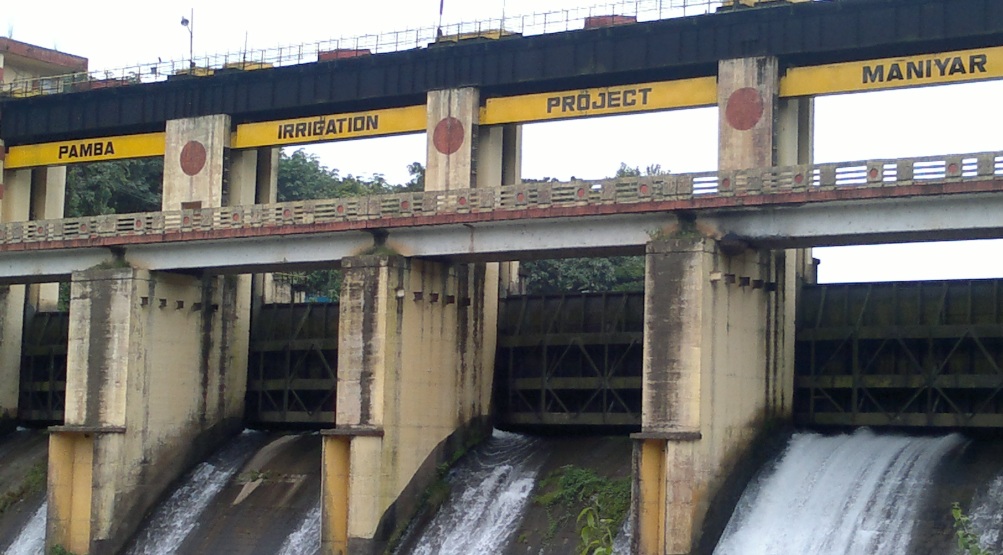
The project can generate power even during peak summer by using tailrace water from the Sabarigiri hydel system. (Irrigation dept, Kerala)

Synopsis: A 12-MW hydel project in Kerala’s Pathanamthitta district has turned into a flashpoint after its 30-year private contract had expired. Questions are being asked over why control wasn’t handed to the state despite a growing power shortage. Allegations of financial loss, political interference, and a stalled takeover have pushed the Maniyar project into the vortex of a high-stakes fight between governance, industry interests, and public accountability.
A 12-MW hydel project tucked away in the Kakkad river basin in Kerala’s Pathanamthitta district has found itself at the centre of a political and administrative storm—just when Kerala is grappling with a tightening power situation.
The Maniyar Small Hydroelectric Project did not begin as a public asset. It traces its origins to a policy decision taken on 7 December 1990 (G.O.(MS) No.23/90/PD) through which the state allowed private players and public undertakings to build hydel schemes at their expense.
Riding on that policy, Carborundum Universal Limited applied for and secured the Maniyar scheme across the Kakkad river. The 12-MW project was commissioned in 1994.
The arrangement followed a BOOT (Build, Own, Operate, Transfer) model. After 30 years of operation, the project was to be handed over to the Kerala State Electricity Board (KSEB). The deadline quietly passed in December 2024.
What followed has raised more questions than answers.
Even as electricity demand surged and the state leaned heavily on expensive power purchases from outside, the private operator continued running the plant for months beyond the agreement period.
The project itself holds unusual value: it can generate power even during peak summer by using tailrace water from the Sabarigiri hydel system, making it a dependable source when reservoirs run low.
Against this backdrop, the KSEB explored an urgent takeover, presenting it as a practical step to shore up supply. But the move quickly ran into political crossfire.
The Opposition alleged that allowing the company to operate the plant for 14 months after the expiry of the contract caused a loss of ₹56 crore to the Board. It has also questioned why power generated at Maniyar was sold at higher market rates while the state continued buying costly electricity from elsewhere.
The controversy has deepened with fresh claims about decisions taken at a Cabinet meeting on 2 May.
The Opposition alleged that the government, led by Pinarayi Vijayan, instructed officials not to proceed with the takeover—allegedly following intervention from Industries Minister P Rajeeve.
The government has, in earlier instances, signalled openness to extending private participation in infrastructure under ease-of-doing-business considerations, adding another layer to the debate.
The Maniyar project now stands at an awkward intersection—a decades-old policy experiment, a missed contractual transition, and a present-day power crunch, as each of those threads is being pulled in different directions.
Also Read: Unannounced power cuts amid heatwave spark political clash in Kerala
Long before Kerala began actively courting private participation in power generation, a policy shift in 1990 quietly opened a new chapter.
Through G.O.(MS) No.23/90/PD dated 7 December 1990, the state allowed private agencies and public undertakings to develop small and mini hydel projects at their own cost.
The idea was straightforward—bridge the widening gap between electricity demand and supply while keeping industries afloat.
Among the early movers was Carborundum Universal Limited, part of the Murugappa Group.
With a strong manufacturing base in Kerala dating back to the 1960s, the company relied heavily on uninterrupted power for its electro-mineral production, a process driven by electric arc and resistance furnaces.
Power cuts were not just inconvenient—they threatened operations.
In 1991, Carborundum approached the state seeking allotment of the Maniyar Hydel Scheme in the Kakkad river basin. The request found favour.
An order dated 18 January 1991 allotted the project to the company as a captive generating station.
A formal agreement was followed on 18 May 1991, between Carborundum and the KSEB, outlining the terms for construction, operation and maintenance in line with the state’s policy framework.
What followed was a swift execution.
By 1994, the 12 MW Maniyar Hydro Electric Project was up and running, built at a cost of ₹22 crore.
The project was designed to harness a clever hydrological sequence: water discharged from the Moozhiyar power house feeds the Kakkad power station, and after power generation there, the same flow supports the Maniyar plant before returning to the river system for irrigation purposes.
For Carborundum, the project turned out to be more than just a power source.
It became the backbone of its Kerala operations. Today, the company runs multiple manufacturing units in the state, employing over a thousand people directly, with many more depending on it indirectly.
Its energy requirement stands at around 28 MVA, making it one of the largest base-load industrial consumers in Kerala. The Maniyar plant alone meets roughly a quarter of that demand.
Inside the company, there is little doubt about the project’s role.
Executives have often pointed to Maniyar as a key factor behind six decades of steady growth in Kerala, helping maintain competitiveness while ensuring a stable power supply.
Three decades on, the project remains central to Carborundum’s plans.
In October 2021, the company approached the state government seeking a 25-year extension of the project’s tenure under the existing terms. The pitch was simple—continued access to captive power would support expansion plans and reinforce long-term investment confidence in Kerala.
Also Read: Summer poses a slithering threat to Kerala homes
The row began as soon as the 30-year contract ended in 2024. The allegations stretched from late 2024 into the Assembly debates of 2025, with the Opposition alleging a high-stakes compromise of public interest and the government standing firm on its policy stance.
It was VD Satheesan, Leader of the Opposition, who first raised the pitch in December 2024.
He accused the state government of handing over “operational and commercial control” of the Maniyar project to the private player in what he described as a major act of corruption.
Satheesan said the original 1994 agreement with Carborundum stipulated that ownership would pass to the state once the concession period ended.
Instead, he alleged, the Left Democratic Front (LDF) government brushed aside objections from the KSEB and moved to extend the contract until 2049.
He went further, claiming the decision was taken arbitrarily, without wider consultations, and with questionable intent.
Satheesan also alleged that Minister Rajeeve played a key role in facilitating what he termed an “illicit deal.”
The extension, he argued, would deprive the financially strained KSEB of revenue at a time when it could least afford it.
The Opposition maintained that KSEB had flagged multiple concerns, even issuing a notice to the company over alleged violations of the agreement. Those warnings, Satheesan said, were ignored.
By January 2025, the issue had reached the Assembly floor.
Chief Minister Vijayan made it clear that the government saw no reason to retreat.
Responding to a submission by senior Congress leader Ramesh Chennithala, Vijayan defended the extension, describing it as consistent with the state’s broader industrial policy.
He pointed to Kerala’s push to improve its “ease of doing business” credentials, arguing that investor confidence depends on continuity and predictability.
The Maniyar project, he said, falls under the category of captive generation units—facilities that allow industries to produce power for their own use. Such arrangements, he added, are well established and part of the government’s long-term approach.
Vijayan also dismissed suggestions of internal discord, insisting there were no differences within the government over the decision. The arrangement allows the company to use the power it generates and supply any surplus to KSEB, he noted, framing it as a practical and mutually beneficial model.
The explanation did little to soften criticism from the Opposition benches.
Chennithala argued that once the agreement period ended, the state had both the right and the responsibility to take over the project. Extending the contract, he warned, could set an unwelcome precedent for other BOOT projects nearing expiry.
Behind the political exchanges lies a more technical disagreement.
KSEB has consistently pushed for a takeover, citing potential financial losses if the extension goes through.
Officials fear that such losses could eventually translate into higher tariffs for consumers. The Industries Department, on the other hand, has leaned toward accommodating the company’s request, viewing it through the lens of investor confidence and industrial growth.
Reports of friction between the two wings of the government added another layer to the controversy, though the Chief Minister publicly downplayed any such divide.
Also Read: Monsoon-driven “moist heatwaves” pose hidden health risk
KSEB had, from the outset, opposed extending the Carborundum contract for the Maniyar Small Hydro Electric Project, placing its concerns on record months before the matter reached the political level.
In May 2022, the board’s Chief Engineer (Commercial & Tariff) formally advised against any extension.
The stand was reinforced later that year when KSEBL chairman and managing director Rajan N. Khobragade submitted a detailed note to the government in December, around the time a high-level meeting was convened involving the Chief Minister and key ministers.
The Board’s assessment hinged on the gains to consumers once the BOOT agreement expires in 2024 and the project reverts to KSEB.
It pointed out that the Maniyar plant could continue operating for another decade without major renovation or fresh capital infusion.
Given its position as a tailrace station of the Sabarigiri project, generation remains steady through the year, offering a reliable cushion during peak summer demand.
KSEB also highlighted the financial upside: surplus monsoon power could be sold, while summer purchases could be trimmed, creating a dual benefit that could be passed on to consumers.
Over 10 years, the projected gain was estimated at ₹139.58 crore.
At the same time, the CMD flagged what he described as irregular practices by Carborundum, noting instances where the company relied entirely on Board supply and open access while allegedly banking its captive generation.
Such a pattern, he warned, ran contrary to the agreement and effectively shifted costs onto other consumers.
The existing row over the Maniyar project has now spiralled into a politically charged controversy, with fresh twists emerging.
The immediate trigger came in the last week of April, when reports surfaced that the state government had asked the KSEB to move swiftly to take control of the Maniyar project from Carborundum.
The directive, conveyed in a letter dated 28 April by the Power Department to KSEB Chairman and Managing Director Minhaj Alam, stressed the need for urgent action.
The timing drew attention.
Kerala is grappling with a severe power shortage, and the 12-MW captive plant has suddenly become critical to the state’s energy calculations.
What followed after the contract expiry is now at the heart of the present dispute.
Chennithala alleged that the government allowed the company to continue operations for 14 months beyond the agreement period, leading to significant losses for the state. Instead of transferring ownership to KSEB on 31 December 2024, permission was granted for continued generation and sale of power, he added.
He claimed the Board had lost around ₹56 crore during this period. The numbers cited added fuel to the debate.
The cost of production at Maniyar is said to be under 40 paise per unit, while electricity was allegedly sold at ₹10 to ₹14 per unit during peak demand. At a time when KSEB was purchasing power from outside at high rates, the optics have become politically sensitive.
The plant, with a capacity of 12 megawatts, can generate roughly 12,000 units per hour. Chennithala argued that if the project had been under KSEB control, the state could have benefited from low-cost power during a critical period.
He went further, accusing Chief Minister Vijayan, Power Minister K Krishnankutty, and the Electricity Board of complicity, demanding a high-level inquiry into the delay in taking over the project and action against those responsible.
Just when it appeared that the government had moved to reclaim the plant, the narrative shifted again on 2 May.
The Opposition alleged that the takeover process itself had been halted.
Chennithala said KSEB officials who arrived to assume control were blocked by company staff. The next step, planned under the supervision of the Pathanamthitta District Collector, was reportedly called off.
He claimed that during a Cabinet meeting on 2 May, Minister Rajeeve intervened, following which the Chief Minister instructed the Chief Secretary to stop the takeover process.
The allegation has raised fresh questions about the government’s position.
The Opposition has framed it as a case of the state prioritising corporate interests over public need, especially during an ongoing electricity crunch.
Chennithala also warned that if the United Democratic Front returns to power, it will move decisively to bring the project under state control.
So far, neither the government nor KSEB has issued a detailed response to the latest round of allegations.
With claims of financial loss, administrative reversals, and political interference all converging, the Maniyar project has become the eye of the storm.
(Edited by Majnu Babu).



