

Published May 01, 2026 | 7:00 AM ⚊ Updated May 01, 2026 | 7:00 AM

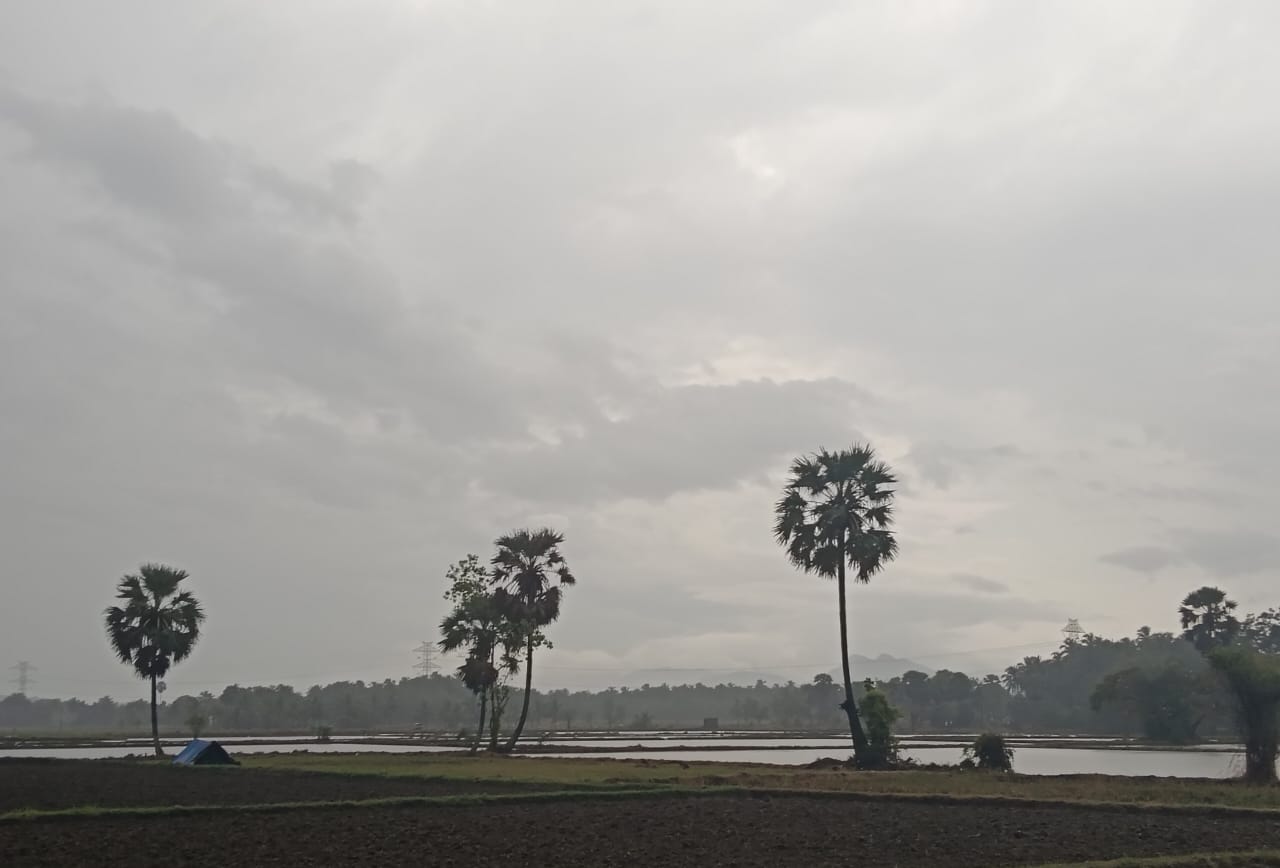
During monsoon breaks, rainfall reduces, and cloud cover clears, allowing intense solar radiation to heat the surface. (South First)

Synopsis: A Climate Dynamics study finds humid, monsoon-driven “moist heatwaves” can be more dangerous to health than dry heat. Their occurrence is tied to shifting monsoon phases, with Tamil Nadu especially vulnerable during monsoon breaks.
More than a billion Indians face a heat threat more dangerous than scorching summers, according to a new study published in the Climate Dynamics journal.
Researchers found that “moist heatwaves” during the monsoon season—where heat combines with high humidity—can sharply increase health risks, even when temperatures appear moderate.
“We often find people being more aware of dry heatwaves in India, but moist heat remains less known and is therefore more dangerous,” the study’s lead author, Dr Akshay Deoras, said.
The research showed that these events follow a predictable monsoon pattern: risk rises in northern India during active phases, and shifts to peninsular regions, including Tamil Nadu, during monsoon breaks when clear skies allow heat to build over already humid conditions.
The study, based on more than 80 years of weather data, revealed that India’s monsoon actively determines when and where moist heatwaves occur.
Unlike dry heatwaves, these are measured using wet-bulb temperature—a metric that captures both heat and humidity and reflects how the human body actually experiences heat stress.
Researchers identified a key driver: the Boreal Summer Intraseasonal Oscillation, a large-scale atmospheric pattern that shapes active and break phases of the monsoon.
During certain phases, “the occurrence of a moist heatwave in northern India [can rise] by 125% above normal,” the study noted, highlighting how sharply risk can increase.
Most significantly, this pattern can now be forecast two to four weeks in advance. “Because we can forecast these monsoon patterns weeks in advance, creating real opportunities to prepare and protect people,” Dr Deoras said.
Also Read: Gig workers push for protections as temperatures soar
While northern India faces peak risk during active monsoon phases, the study showed that danger shifts southward during monsoon breaks—putting Tamil Nadu directly in the risk zone.
During these breaks, rainfall reduces, and cloud cover clears, allowing intense solar radiation to heat the surface. At the same time, the region already has high background humidity due to its coastal geography.
This combination creates dangerous conditions where heat builds but cannot dissipate effectively.
“Since the humid conditions will be very high, your body will lose its capacity to cool itself,” G Sundarrajan, member of Tamil Nadu’s climate change governing council and coordinator of Poovulagin Nanbargal, told South First.
He added that cities like Chennai and Madurai are especially vulnerable due to the urban heat island effect.
“Urban areas are the most challenging, even though the heat could be 35°C, what we feel is much higher,” he said, pointing to the combined stress of heat and trapped moisture in densely built environments.
Also Read: Urban expansion fuels crisis yet to be fully mapped
One of the study’s core findings is that less rain during monsoon breaks can actually increase heat risk in places like Tamil Nadu.
Clear skies allow more solar radiation to reach the surface, rapidly increasing temperatures. “Clouds reflect a lot of solar radiation. If the skies are clear, the danger gets multiplied,” Sundarrajan explained.
This effect is particularly intense in coastal states. “Tamil Nadu is already a coastal state, with high temperatures and high humidity. With clear skies, the danger gets multiplied,” he said, describing how the absence of rain removes a natural cooling mechanism while humidity remains high.
The study similarly noted that reduced rainfall leads to “higher surface heating and reduced evaporative cooling,” creating conditions where moist heat intensifies even without extreme air temperatures.
Also Read: South India faces the worst round-the-clock heat in the country
From a clinical perspective, moist heatwaves are especially dangerous because they interfere with the body’s primary cooling mechanism.
“In hot and humid conditions, the body’s main cooling mechanism—sweating—becomes less effective because the moisture in the air prevents sweat from evaporating,” R Sundararaman, senior consultant, internal medicine at SIMS hospital, said.
“Unlike dry heat, high humidity traps heat, increasing the risk of heat-related illnesses,” he told South First.
This can lead to a rapid progression of symptoms. “Early signs of heat stress include heavy sweating, fatigue, and dizziness. As it progresses, nausea, vomiting, and rapid pulse can be seen,” he said.
In severe cases, “heatstroke can cause high body temperature, confusion, and even loss of consciousness.”
Certain groups are particularly vulnerable. “The most vulnerable groups are the elderly, children, outdoor workers, and people with chronic conditions like heart disease or diabetes,” Sundararaman said. This is due to either prolonged exposure or reduced ability to regulate body temperature.
Also Read: Heat during pregnancy may influence if baby is boy or girl
A key breakthrough in the study is that these moist heatwaves are no longer entirely unpredictable. The same monsoon patterns driving them can be forecast up to two to four weeks in advance.
This opens the door for early interventions. “You will be able to get to know it about a week or 10 days in advance, so that you can get prepared,” Sundarrajan said. “Hospital systems, medical facilities, notifications to people—all those can happen in advance.”
The study said warnings could help authorities increase hospital readiness, adjust school hours, and manage infrastructure stress before conditions worsen.
However, experts said long-term adaptation is equally critical. “We will have to focus more on urban greening, reducing the urban heat effect, getting less concrete, planting more trees,” Sundarrajan said, stressing that mitigation and planning must go hand in hand.
Also Read: Why do heart attacks rise during extreme summer?
Despite its scale, moist heat remains far less understood than dry heatwaves in India—something researchers warned could worsen its impact.
“Moist heat remains less known and is therefore more dangerous,” Dr Deoras said, pointing to a gap in public awareness and preparedness.
For states like Tamil Nadu, where heat and humidity are already part of daily life, this emerging science highlights a critical shift: the most dangerous heat may not come during peak summer, but in the deceptive lull of monsoon breaks.
The study suggested that recognising the pattern—and acting on it—could make the difference between routine weather and a public health emergency.
(Edited by Majnu Babu).



