
Published Jul 01, 2026 | 9:10 AM ⚊ Updated Jul 01, 2026 | 9:10 AM

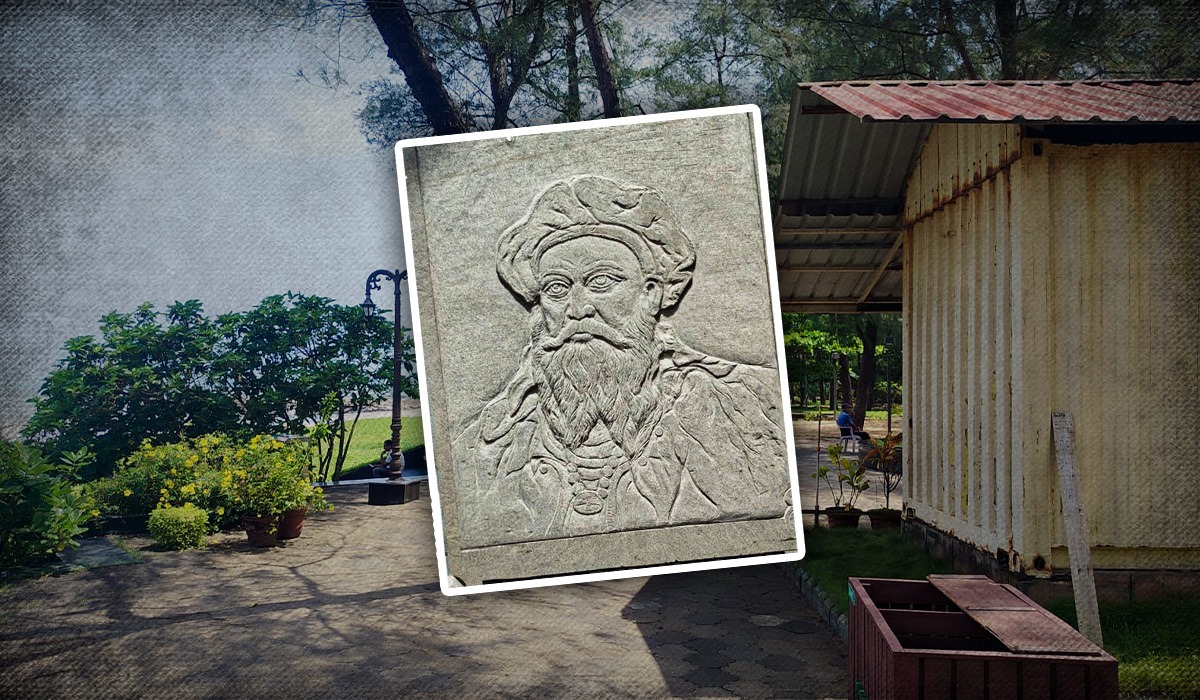
Kappad, the beach where Vasco da Gama landed. (Credit: Anto P Cheerotha)

Synopsis: The surprise begins with Kappad Beach’s toilet. Walking along Kerala’s Blue-Flag-winning beach and meeting the people who embody Kappad, according to the locals, leads to many other discoveries, including coming face-to-face with a very disturbing reality…
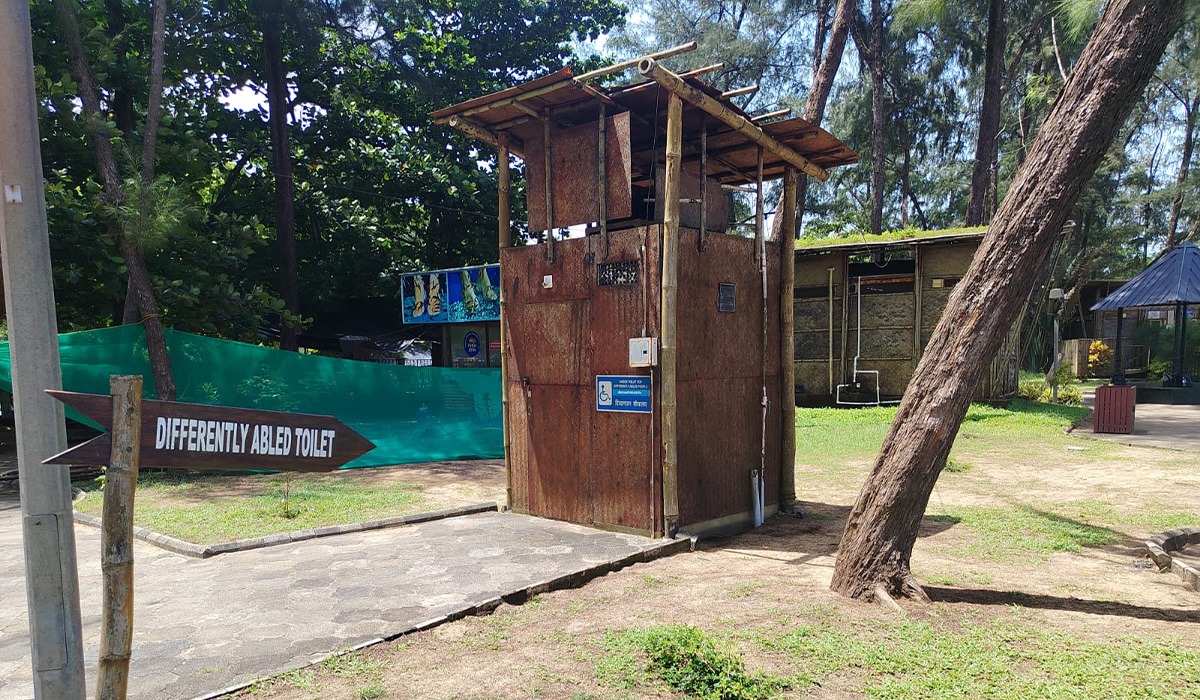
The first thing that surprised me at Kappad Beach was not the sea. It was a toilet.
More specifically, a toilet designed for differently abled visitors.
As someone who has travelled through public spaces across Kerala, I have learned to keep my expectations modest. Public toilets are often unavailable, poorly maintained, or locked. Beaches are rarely associated with accessibility. Yet here, at Kerala’s only Blue Flag-certified beach, I found clean, accessible restrooms maintained to a standard more commonly associated with shopping malls than public tourism sites.
Credit: Anto P Cheerotha
I stood there for a moment, wondering why I was surprised. Perhaps that was the real story.
A society reveals itself not only through its monuments and slogans but through the condition of its public toilets. After using the facility, I stepped outside and spoke to a few members of the cleaning staff. They seemed genuinely pleased when I complimented them on the cleanliness of the place.
Bindu, Shubha and Vineetha, members of the District Tourism Promotion Council (DTPC) contract staff, were taking a short break from their duties. Behind the spotless pathways, waste bins and well-maintained facilities stood their daily labour.
“This is the sixth time Kappad has received Blue Flag certification,” Bindu told me with visible pride. “It is the only beach in Kerala with that status.”
The Blue Flag certification, awarded internationally for environmental management, safety, accessibility and sustainability, requires compliance with dozens of criteria.
“We have twenty-one workers now. Earlier, there were thirty,” she added. Yet despite a reduced workforce, the beach continues to retain its status.
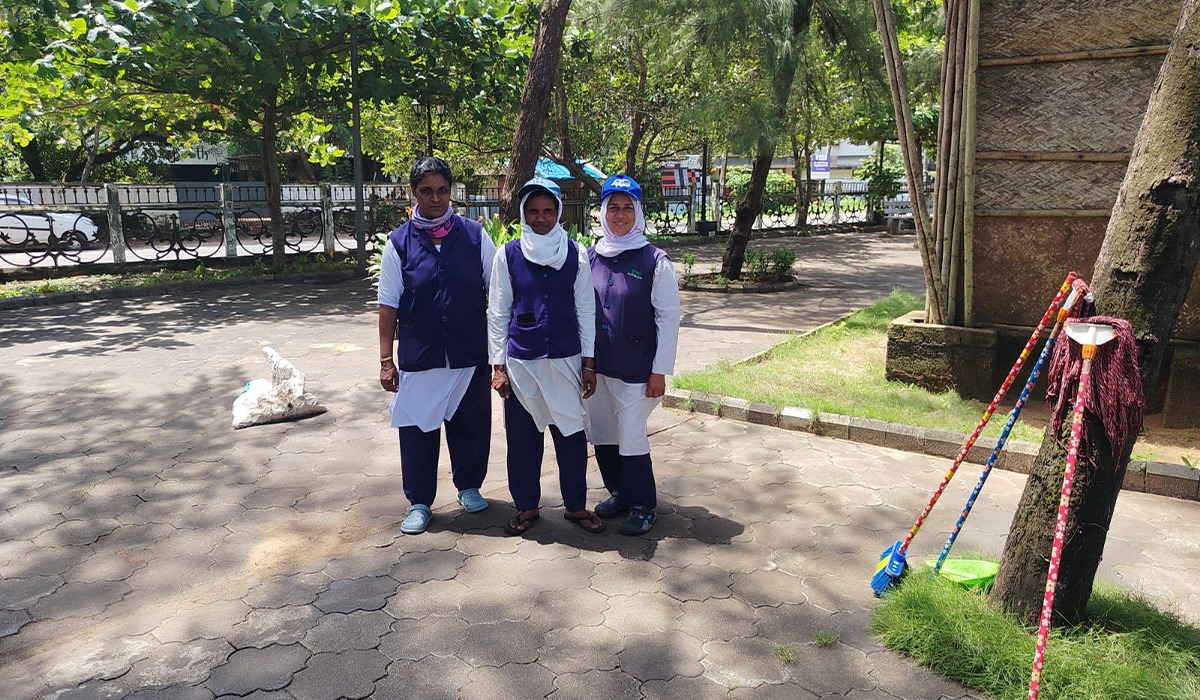
Bindu, Shubha and Vineetha. (Credit: Anto P Cheerotha)
What struck me was that the workers did not take sole credit for the cleanliness. “The local community supports this,” they said almost in unison.
A man running a coffee shop on the beach premises echoed the same sentiment.
“The beach remains clean because visitors cooperate. People here generally don’t scatter waste around,” he said.
A college student sitting nearby offered an observation that sounded surprisingly sociological.
“When a place is maintained well, people naturally hesitate to litter. The space itself teaches us how to behave.” His name did not matter. His observation did.
Public behaviour is often discussed as an issue of awareness or enforcement. But Kappad seemed to suggest something else. Clean spaces often encourage clean behaviour. The environment itself reinforces social norms.
The beach was not merely being cleaned. It was quietly shaping conduct.
As our conversation continued, the workers suggested I meet two people. “If you want to know Kappad, talk to Janu Chechi and Kelappan Chettan.”
A few minutes later, I found them. Janu Chechi has spent nearly twenty-five years working around Kappad.
“I came here after marriage,” she told me.
Pointing towards a cluster of houses nearby, she explained that Vasco da Gama’s monument stood close to her home. Then she shared a story she had heard over the years.
“They say Gama gifted a valuable object to a local Mappila man here, and it eventually reached the Zamorin (ruler of the Kingdom of Calicut).” Whether folklore or history, the story fascinated me. It revealed how global events survive not only in archives but also in local memory.
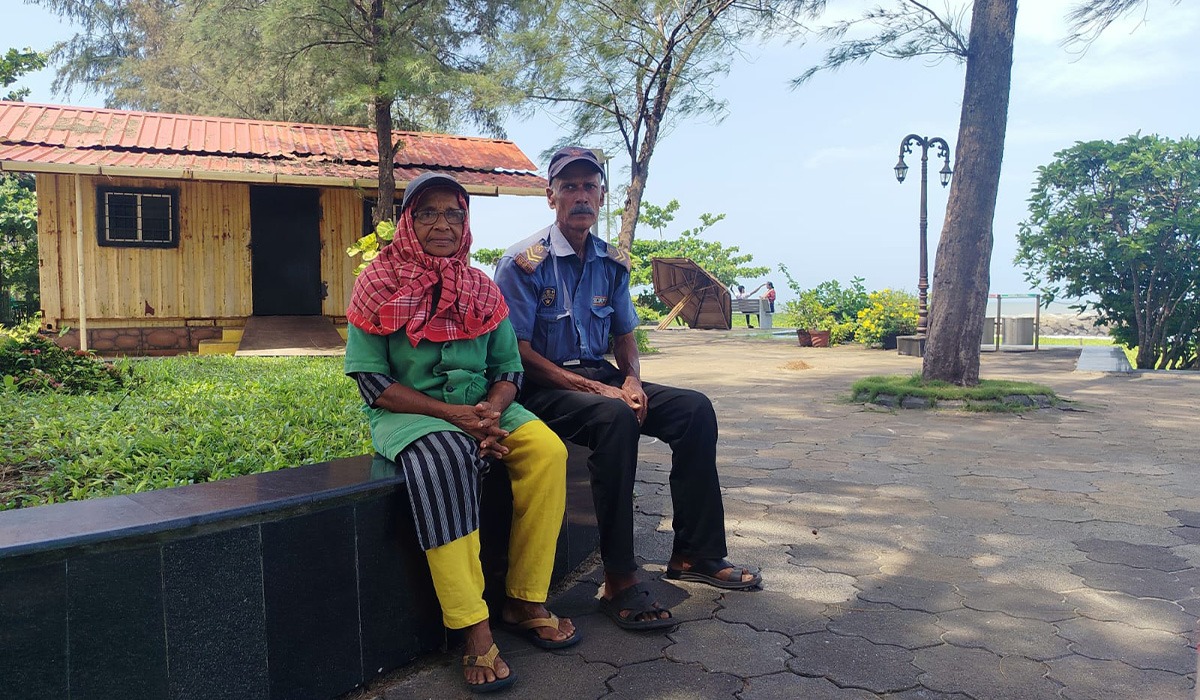
Janu Chechi and Kelappan Chettan. (Credit: Anto P Cheerotha)
Kelappan Chettan remembered something entirely different. The five-hundredth anniversary celebrations of Vasco da Gama’s arrival. “There was a rally,” he recalled. “Many people came.” Then he laughed and said, “But there were protests too.”
He remembered people blackening da Gama’s image and police personnel maintaining security around the event. His memory was a reminder that history is never neutral. For some, Vasco da Gama symbolises maritime exploration and global connection. For others, he marks the beginning of European colonial intrusion.
The monument itself sits between these competing interpretations.
After speaking with them, I walked towards the da Gama monument. Ironically, I almost missed it. What caught my eye first was not Vasco da Gama. It was a giant flex board featuring Argentina’s football team.
For a moment, I found myself smiling at the absurdity of the scene. A monument associated with Portuguese maritime history stood beside a symbol of contemporary football fandom. Five centuries of global connections seemed compressed into a single frame.
Portugal and Argentina. Maritime exploration and football obsession. Colonial history and social media culture. It felt strangely fitting.
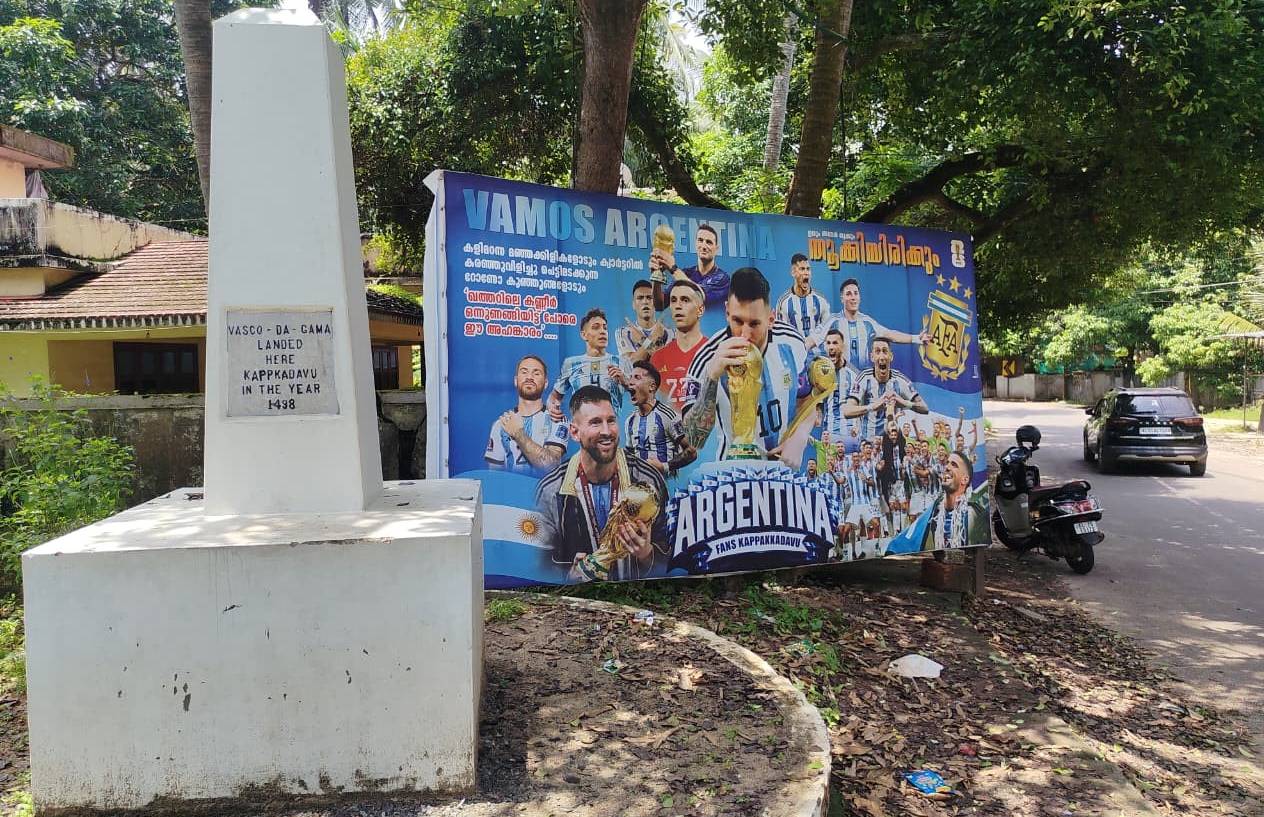
Credit: Anto P Cheerotha
Yet as I stood there, another question emerged. Was this monument itself historically secure?
Scholars such as the late historian MGS Narayanan have debated the popular claim that Vasco da Gama actually landed at present-day Kappad. Narayanan argued that historical evidence for the precise landing location remains uncertain. The debate complicates the certainty with which tourism narratives often present the site.
Suddenly, the monument appeared less like a marker of historical fact and more like a symbol of historical memory. Perhaps its importance lies not in proving exactly where Vasco Da Gama landed, but in representing the long relationship between Kerala’s coast and the wider world.
My walk eventually took me away from the monument. Near Urupottumkaavu Temple at Thoovappadi, I met Govindan Chettan, who runs a small tea shop overlooking the coast.
Like many people in Kappad, he has spent most of his life watching the sea.
His concerns were not about Vasco da Gama. They were about change. “There has not been much development on this side during the last ten years,” he said, pointing towards the shoreline. “People talk about Kappad, but this side remains neglected.”
Then he shifted the conversation towards the sea. “The sea has taken away parts of the coast. I have been seeing it happen for decades.” Coastal erosion was not an environmental statistic for him. It was a lived reality.
What he said next stayed with me longer. “When I was a child, sea turtles regularly came here to lay eggs. Thousands of eggs could be seen on this coast.”
He paused. “That was thirty or forty years ago. Now we don’t see them.”
The observation changed the story once again. Until then, I had been thinking about tourism, history and public infrastructure.
Govindan Chettan brought me face to face with ecological memory.
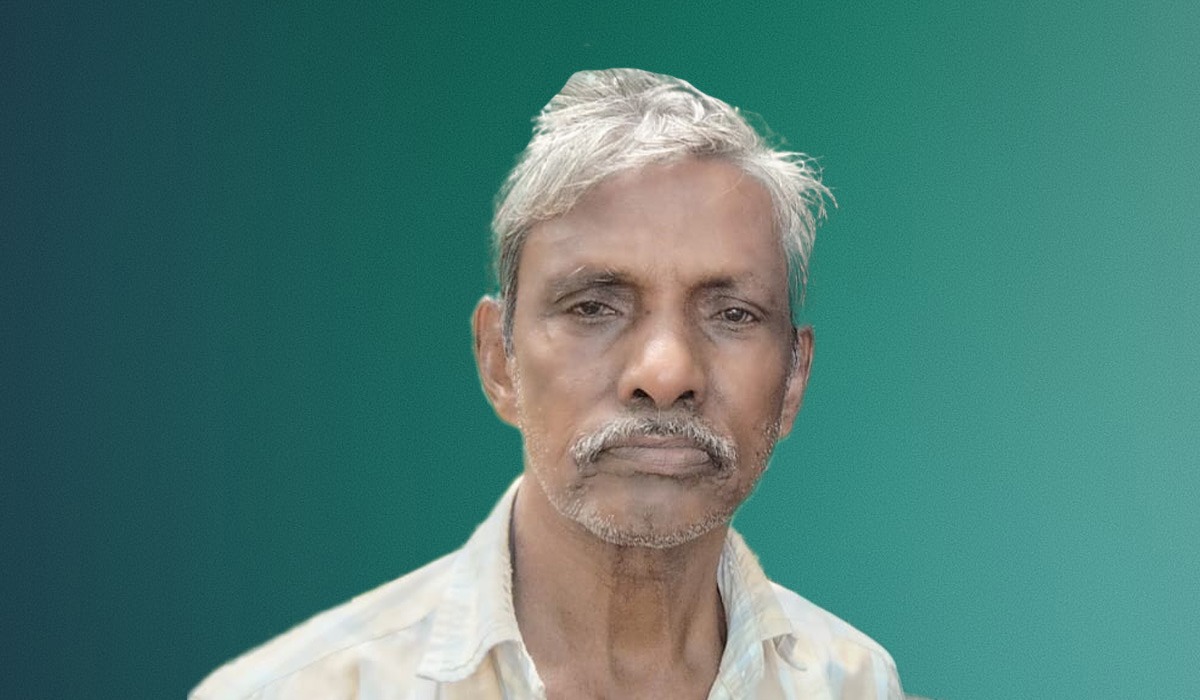
Govindan chettan. (Credit: Anto P Cheerotha)
The beach I was walking on was not only a tourist destination. It was also an ecosystem that had changed dramatically within a single lifetime. Official monuments celebrate famous arrivals. Local memories often remember what has disappeared.
As evening approached, I found myself thinking about the toilet for the differently-abled that had first caught my attention. I had arrived expecting to see a historic beach associated with Vasco da Gama. Instead, I encountered something richer.
A public toilet that challenged my assumptions about accessibility. Workers whose labour sustains an internationally recognised beach. Residents who carry stories of maritime encounters and political controversies. A monument that sits between history and myth.
An Argentina flex board standing beside a Portuguese explorer. And memories of sea turtles that once nested on these shores.
Kappad’s story, I realised, is not really about a single landing in 1498. It is about what happens when global history, local memory, public infrastructure, environmental change and everyday acts of care meet on the same stretch of coast. Sometimes, the best way to understand a place is to simply walk through it.
Also Read:
‘The day humans became angels’: Walking through Kadalundi 25 years after the rail disaster
Wood, water, and memory: Inside Beypore’s surviving dhow-building tradition
(Edited by R Rajesh Kumar.)



