
Published Jun 22, 2026 | 7:00 AM ⚊ Updated Jun 22, 2026 | 1:45 PM

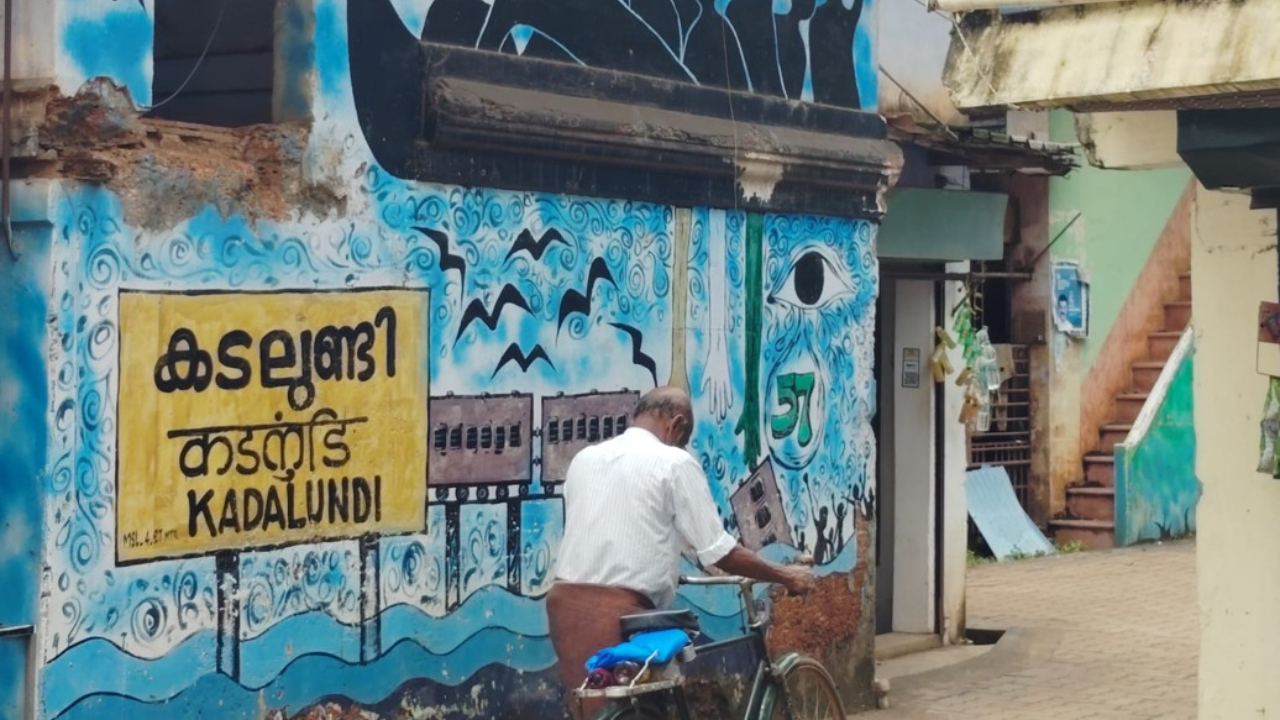
Throughout Kadalundi, memories of June 22, 2001 remain embedded in ordinary places. Credit: Anto P Cheerotha

Synopsis: On June 22, 2001, Kadalundi witnessed one of the worst rail accidents in Kerala’s history. The language of remembrance in the town 25 years on is striking and unique in many ways…
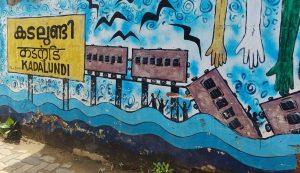
It stands quietly opposite Kadalundi railway station, situated almost 18km from Kozhikode in Kerala. Passengers hurry past it. Auto-rickshaws stop nearby. A bakery, a salon and a row of small shops frame the scene. At first glance, it appears to be just another public mural.
Then the words come into focus:
“മനുഷ്യൻ മാലാഖയായ ദിനത്തിന്റെ ഓർമ്മയ്ക്ക്.”
“In memory of the day human beings became angels.”
The painting, created through an initiative of Heritage Kadalundi Market, commemorates the Kadalundi train disaster of June 22, 2001. On that evening, the Mangalore–Chennai Express derailed while crossing the railway bridge over the Kadalundi River. Several coaches plunged into the water below, killing over 50 passengers and injuring many more.
Yet what struck me was not the depiction of the accident itself. It was the language of remembrance. Most memorials remember loss. This one remembers humanity. Twenty-five years after the disaster, I came to Kadalundi to understand why.
A few steps from the mural is a modest salon run by Babu, whose family has been part of the locality for decades. “Since 1962, my father had a shop here,” he told me.
The events of that evening remain vivid in his memory. “It happened around 5.30 pm. Many fishermen and boat people were around at that time. They rushed there (to the scene of the accident) immediately. It was all local people. Railway people came very late.”
As Babu spoke, trains continued to arrive and depart from the station.
Vendors served tea. Passengers waited on the platform. Nothing in the present-day landscape hinted at the catastrophe all those years ago.
Yet throughout Kadalundi, memories of June 22, 2001 remain embedded in ordinary places.
From the station, I walked towards the bridge that spans the estuary between Kadalundi and Vallikkunnu. The river below flowed calmly towards the Arabian Sea. Fishermen moved across the water. The monsoon sky hung low over the wetlands.
Today, the bridge appears unremarkable. But for those who witnessed the disaster, it is impossible to look at it without remembering.
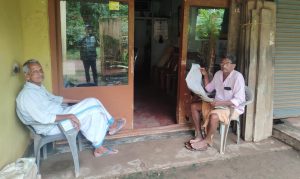
Babu and Haridasan. Credit: Anto P Cheerotha
Haridasan, a local resident who participated in the rescue operation, pointed towards the Vallikkunnu side. “The accident happened on the second bridge, towards Heros Nagar,” he said.
The details have not faded with time. “Five compartments fell into the water. One compartment was hanging from the bridge.”
As we stood overlooking the estuary, Haridasan described how local communities mobilised within minutes of the derailment.
The Vallikkunnu side became particularly important because it offered better road access to the accident site.
“There is the Pisharikkal Sree Durga Devi Temple and the mosque nearby,” he recalled. “They provided huge support.”
The familiar landmarks of everyday life suddenly became part of an emergency response network. Roads became rescue routes. Religious institutions became relief centres. Boats became ambulances.
What happened that evening survives not only in memory but also in geography.
Near the station, Unmesh, owner of Sony Bakery, remembered the sequence of events.
“It was around 5.30,” he said. “The engine and around twelve compartments had already crossed. The remaining coaches went into the water.”
Credit: Anto P Cheerotha
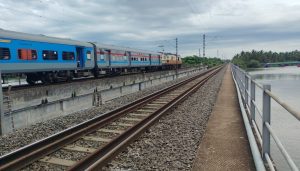
He pointed towards the bridge visible from the roadside. “Now it is a new bridge. You can still see the old bridge pillars.”
The pillars remain scattered across the estuary, partially visible above the waterline. They are among the few physical traces connecting the present landscape to the disaster.
Unmesh also remembered the scale of the local response.
“People came from Parappanangadi, Tanur and Tirur,” he said. “The fishermen and boat people didn’t just come. They made the rescue happen very fast.”
Some passengers remained trapped inside the submerged coaches. “Some people were stuck inside the train toilets.” His voice slowed as he recalled the scene.
Not everyone I met wanted their names published. One fisherman who participated in the rescue preferred to remain anonymous. Even after twenty-five years, the memories appeared difficult to revisit.
“There was mud inside the compartments,” he recalled. “It was raining heavily. It was also the season of sea erosion.”
The rescue operation unfolded amid worsening weather conditions. “It was difficult to break the iron windows.”
He paused before describing what rescuers encountered inside the damaged coaches. “There were broken legs and fingers.”
Unlike the mural’s poetic language, his memories were physical and immediate. Mud. Rain. Twisted metal. Trapped passengers. The struggle to reach people before time ran out.
Listening to these accounts, I realised that the phrase on the mural gains its meaning precisely because of the horror of the circumstances.
The “angels” it commemorates were not abstract figures. They were fishermen launching boats into turbulent waters. Shopkeepers abandoning their businesses. Local residents carrying survivors. Temple and mosque volunteers opening their premises to strangers.
They were ordinary people responding to an extraordinary crisis.
The more people I spoke with, the more I noticed that local memories rarely began with questions of railway engineering, inquiry reports or official investigations. Instead, they began with acts of rescue.
Residents remembered who arrived first. They remembered the boats. They remembered neighbours. They remembered the volunteers.
The disaster’s official history may be recorded in reports and archives. The community’s history is preserved through stories passed from one person to another.
Credit: Anto P Cheerotha
Every year, June 22 is marked through prayers and commemorative observances. The victims are remembered. Families continue to grieve. Yet the mural opposite the railway station suggests that Kadalundi has chosen to remember something else as well.
Not only the lives that were lost. But also the humanity that emerged. As evening approached, I returned to the bridge.
The old pillars stood quietly in the water beneath the newer structure. Fishing boats drifted across the estuary. The sky darkened with the possibility of rain.
A few moments later, the Thiruvananthapuram–Kozhikode Jan Shatabdi Express crossed the bridge, its coaches moving smoothly over the river before disappearing northward.
The conversations around me paused briefly. Then they resumed.
For those who live here, the bridge is more than a piece of railway infrastructure connecting Kadalundi and Vallikkunnu. It is a landscape of memory.
A place where stories of loss, courage and solidarity continue to circulate across generations. Back near the station, the mural remained where I had first encountered it.
Twenty-five years after the disaster, its message felt less like a metaphor and more like a local history lesson.
Perhaps that is why the painting does not remember June 22, 2001 merely as the day a train fell into the river. Instead, it remembers it as the day human beings became angels.
(Edited by R Rajesh Kumar)
Also Read:
Wood, water, and memory: Inside Beypore’s surviving dhow-building tradition
‘What’s my new name, what’s our new story?’ — ‘Balan’ and untold lives that hide among us



