
Published Jun 20, 2026 | 5:29 PM ⚊ Updated Jun 20, 2026 | 5:29 PM

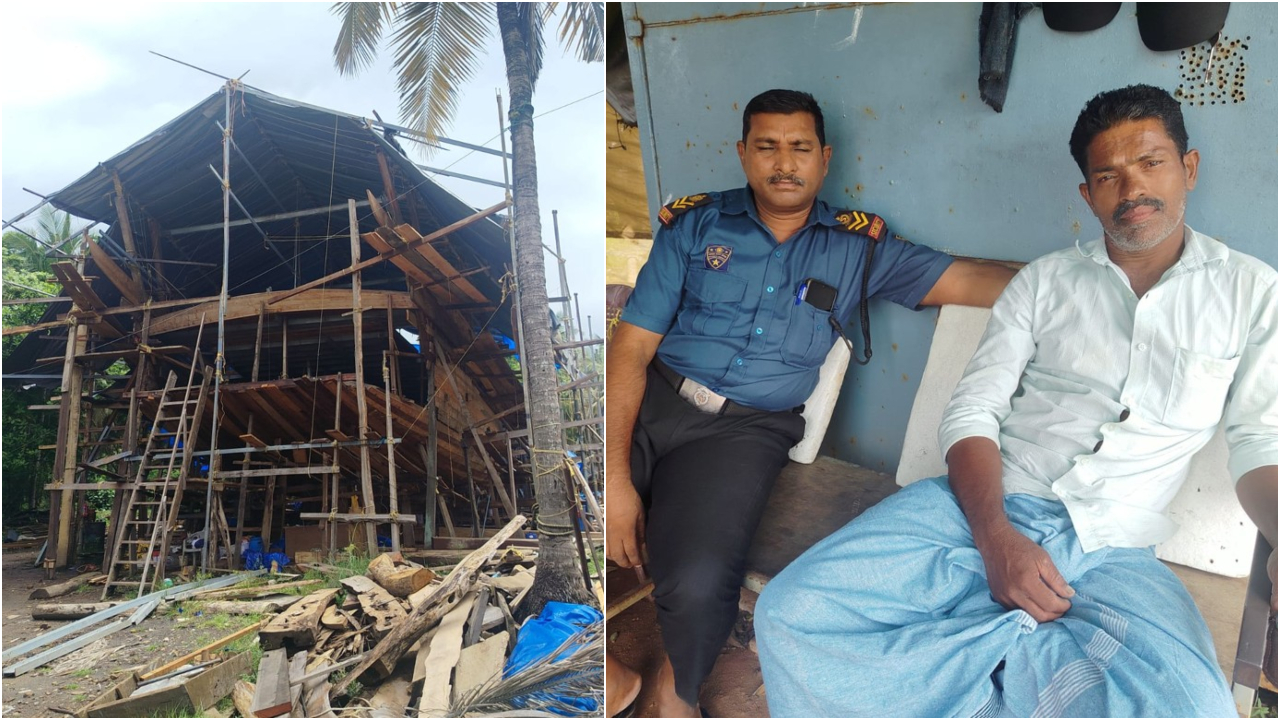
Listening to these stories, it became clear that the Uru is woven into the cultural memory of Beypore. Credit: Anto P Cheerotha

Synopsis: The real story of Beypore’s Uru is not about royal clients, luxury craftsmanship, or even boat-building itself…
The monsoon had just arrived in Kerala. Dark clouds hung low over Kozhikode as I followed a Google Maps route towards Beypore. I was simply looking for an Uru yard. What I did not expect was to find an entire world of memories hidden behind the giant wooden skeleton of a boat.
Standing in one of the last surviving uru or dhow-building yards of Beypore, I looked up at a massive Uru under construction. The vessel, meant for the Qatar royal family, towered above everyone around it. Its curved wooden body seemed to hold not only timber and craftsmanship but also centuries of maritime history.
The massive Uru taking shape at Alsafina Enterprises is no ordinary vessel. According to the yard manager, the dhow is being built for the Qatar royal family and has already undergone nearly ten months of painstaking labour. Another four to five months of work remain before the project is completed. Valued at around ₹4 crore, the vessel will eventually be inspected and received by representatives of the royal family.
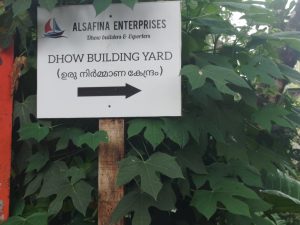
Credit: Anto P Cheerotha
Yet standing before the unfinished vessel, I realised that the real story of Beypore’s Uru is not about royal clients, luxury craftsmanship, or even boat-building itself. It is about memory.
As I walked around the massive structure, another visitor at the yard struck up a conversation.
A history student from Paravur in Ernakulam, who had travelled to Beypore to learn more about the Uru tradition, pointed towards the timber that lay scattered around the site. “An Uru cannot be built without a specific type of wood—Nilambur teak,” he said.
He then explained the geographical advantage that made Beypore one of the most important dhow-building centres on the Malabar Coast. The Chaliyar River flows from the Nilambur forests in the Western Ghats directly towards Beypore. For generations, massive teak logs were floated downstream to the shipyards, creating a natural supply chain that connected the forests of Nilambur to the maritime world of the Arabian Sea. Long before modern transport networks emerged, nature itself linked the forest and the shipyard.
As I spoke with local residents, stories began to emerge that cannot be found in tourism brochures, websites, or history books. An elderly resident smiled as he recalled his childhood.
“There used to be many more yards here,” he said. “Arab visitors would come frequently and take completed Urus home. We children spent much of our time with the craftsmen. Sometimes we helped them collect wood or brought tea. The Arab visitors often gave us small tips and pocket money.”
His memory was not about boats. It was about relationships. Another resident remembered the Uru yards as a giant playground. “We climbed onto the boats and jumped from them. We entered the unfinished vessels and played inside. The Arab clients would often get angry with us, but we kept coming back. It was part of our childhood.”
Listening to these stories, it became clear that the Uru is woven into the cultural memory of Beypore. For many residents, the yards were not industrial spaces. They were places where childhood unfolded, friendships were formed, and encounters with distant worlds happened unexpectedly.
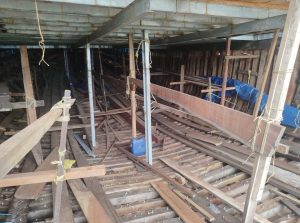
Credit: Anto P Cheerotha
Others spoke with pride about the craftsmanship itself. One resident explained how the main structure is built using teak wood, while secondary components may use jackfruit or mango wood.
“Every Uru is built with the highest finish,” he said, reflecting the pride that local communities continue to hold in this centuries-old tradition.
Yet alongside nostalgia came concern. One resident expressed disappointment about the present condition of the locality, arguing that the economic benefits of the heritage industry are no longer adequately reaching ordinary people. For him, the Uru represents not only a glorious past but also questions about livelihood, development, and the future of the community.
Perhaps the most fascinating stories concerned the final journey of an Uru.
“When the work is completed, moving the vessel to the river is itself a spectacle,” one resident explained.
The task is performed by khalasis, the traditional labour specialists of Malabar. The movement is painstakingly slow, often taking three or four days as the enormous vessel advances inch by inch towards the water. During the process, special work songs echo through the yard. The launch is not merely a technical operation; it is a performance of collective labour, rhythm, and inherited skill.
The manager at the yard, where the dhow for the Qatar royal family was being assembled, confirmed the complexity of the process. Engines and licences will be arranged before the launch. Once the vessel finally reaches the water, another remarkable chapter will begin. A crew of Gujaratis will navigate the completed Uru across the Arabian Sea to Qatar. The voyage itself takes nearly twenty-eight days, connecting Beypore once again to the maritime routes that have linked Malabar with the Arab world for centuries.
As I left Beypore, I kept reflecting on a resident’s words.
“You can get all the technical information from the internet,” he had told me. “But you cannot get these memories from the internet.”
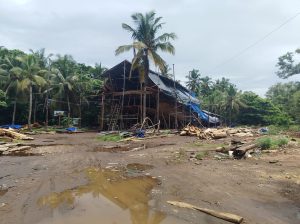
Credit: Anto P Cheerotha
Perhaps that is the true heritage of Beypore. Beyond the teak wood, beyond the royal clients, beyond the price tags and global destinations, the Uru survives as a repository of stories. It carries memories of children climbing unfinished hulls, craftsmen shaping wood by hand, Arab merchants and visitors crossing oceans, and khalasis singing as they guide a vessel slowly towards the river.
Today, an unfinished Uru waits patiently in a monsoon-soaked yard in Beypore. Months from now, it will sail towards Qatar. But long before it reaches a royal harbour on the other side of the Arabian Sea, it has already carried something far more valuable—the memories of a community whose history has always been tied to the sea.
(Dr Anto P Cheerotha is an independent media researcher and media educator whose work focuses on media, culture, environment and digital narratives.)



