

Published Jun 21, 2026 | 12:42 PM ⚊ Updated Jun 21, 2026 | 6:29 PM

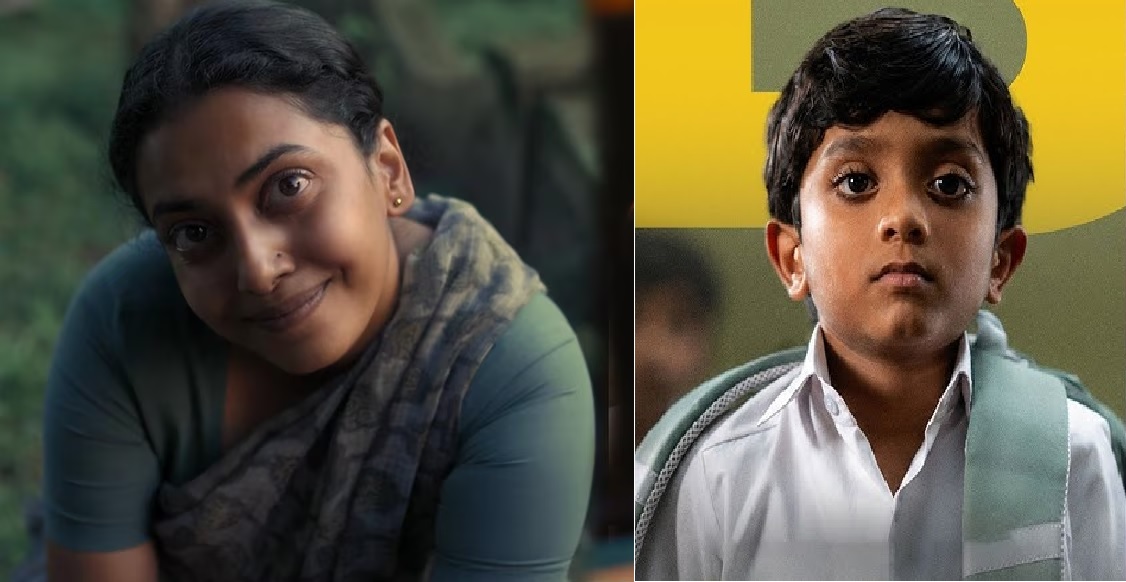
'Balan' lead actors Farzana Palathingal (L) and Adisheshan K.R

Synopsis: ‘Balan: The Boy’, directed by Chidambaram S. Poduval, follows a mother and son who constantly reinvent their identities to escape a haunting past. With striking realism, nuanced performances, and Sushin Shyam’s evocative score, the film explores survival, betrayal, and resilience. It captures Kerala’s landscapes honestly while revealing the silent stories of those society often overlooks.
The sun had already disappeared. The rain had stopped just a while ago leaving the roads of Kochi wet, reflecting the scattered glow of streetlights. Water droplets still rested on leaves and walls.
Walking through one of those small pocket roads in Kochi’s Kakkanad, beneath dim streetlights, there was a strange feeling of uneasiness. It was not because the place was isolated – the city was still breathing around it. But the road carried a silence that felt different. A silence that made every footstep noticeable. A silence that made the shadows around feel heavier.
The road finally ended in front of a home.
A home where many women remain awake through the night. A home where many women keep watch without allowing their eyelids to close. A home that has listened to countless cries, witnessed countless fears and sheltered countless insane minds.
It was Snehitha.
The Snehitha Gender Help Desk is a 24/7 support centre run by the Kudumbashree Mission, providing immediate safety, shelter and psycho-social support for women and children in distress.

Drawings on Wall
The officer in charge there immediately remembered, ”Most cases come at night. Many domestic violence incidents happen during those hours. We also receive women brought by the police who wander through the city while struggling with their mental well-being.”
Perhaps more than a courtroom, a police station or even an orphanage, the walls of Snehitha have witnessed the lives of countless mothers and children.
When I entered the rooms, it was almost empty. Only a few women were there, lying quietly on beds, trying to find sleep. Connecting with women in distress is never easy. Before sharing their pain, they must first trust us. They must believe that the person sitting in front of them will listen without judgement, without suspicion.
But children often tell their stories without speaking.
The walls of Snehitha carry countless drawings made by small hands- pencil marks, crayon strokes, unfinished pictures created by children who arrived there with their mothers.
At first glance, they look like ordinary childhood drawings. But they are not ordinary. Every drawing reveal something about the child who created it- what they saw, what they feared, what they missed and what they hoped for.
Also Read: Mollywood’s AMMA and its troubled family of controversies
The walls of Snehitha are filled with such silent stories.
For months, I was haunted by those drawings.
Many showed crying women, angry men, broken household objects and damaged homes. They were small records of violence witnessed by innocent eyes.
After those drawings, another one caught my attention- a drawing inside a prison cell. According to his mother’s narration, it was drawn by a boy. As she shared her traumatic past, a story whose full truth we may never completely know, her son’s drawings on the wall revealed another version of it.
This was not something I experienced inside Snehitha, but something I saw on the silver screen while watching Balan: The Boy.

(From left) Chidambaram, the title poster of Balan: The Boy and Jithu Madhavan.
Directed by Chidambaram S. Poduval, the filmmaker behind Manjummel Boys, written by Jithu Madhavan, known for Aavesham, with cinematography by Shyju Khalid and music by Sushin Shyam, Balan: The Boy is quietly creating a wave in theatres.
Not loudly. Not like a typical crowd-pleaser. But almost every cinephile who watches it leaves with something to say.
The film brings together some of the finest talents in Malayalam cinema to tell a deeply human story about a mother and her son.
The mother, played by Farzana Palathingal, and her son, portrayed by Adisheshan K.R. and Mohammed Sinan, remain unnamed throughout the film.
And that is intentional.
They exist through different identities, different names and different stories because escaping the past requires constantly becoming someone else. The film is about people who have no fixed identity but carry countless identities within themselves.
The people we see walking through streets, moving from one place to another- for many, they are just passing faces. But every one of them may carry a story deeper than an ocean.
A story that cannot simply be divided into right or wrong, good or bad, sin or virtue – just a story.
The boy in Balan repeatedly asks his mother one question. Not for a toy. Not for anything material.
”What’s my new name? And what’s our new story?”
Every time, she gives him a different answer. A different name. A different past. A different life.
Their story changes with every landscape- mountains, seashores, villages, cities. And through these journeys, the film captures Kerala’s beauty with remarkable honesty. The green landscapes and blue horizons are not beautified with unnecessary exaggeration. Kerala appears exactly as it exists.
As the mother and son move from place to place, the audience carries a constant fear- when will they finally be discovered? When will their past catch up?
Yet every time they create a new identity, there is also a strange sense of relief.
The passage of time in Balan is handled with extraordinary maturity. The film does not rely on announcing years passing. Instead, through the changing faces, surroundings and emotions of the mother and son, time quietly moves forward.
The entire journey is seen through their eyes. Sometimes we sympathise with them. Sometimes we question them. Sometimes their survival instincts appear frightening.
But never do their eyes carry surrender. That is what makes them unforgettable.

Balan: The Boy.
The casting of Balan deserves special appreciation. Ganapathy Poduval, the brother of Chidambaram once again reminds Malayalam cinema why casting is one of the most important foundations of storytelling.
The mysterious eyes of the mother and son, their silence, their expressions, their body language — everything fits so naturally that it becomes difficult to imagine anyone else in those roles. The film understands that sometimes a face itself can tell a story before a single dialogue is spoken.
Also Read: Will acquittal alter equations: Dileep’s place in Mollywood back on the table
But Balan is not only about survival.
It is also about betrayal, revenge, forgiveness and the wounds created when trust is broken. The film constantly challenges the audience’s assumptions about people.
The realism inside police stations, the realism inside the world of thieves and outsiders, feels striking because the film refuses to divide people into simple categories.
The person we expect to show compassion may carry revenge. The person we assume to be selfish or emotionless may show kindness and forgiveness.
One of the most fascinating characters in the film is the grandmother played by newcomer Dolly June. Malayalam cinema has often shown grandmothers through familiar images- loving, protective, innocent, and full of warmth.
But Dolly June’s character is completely different. She is unpredictable. She is sharp.
She understands manipulation. She carries both affection and mystery.
The return of one of Malayalam cinema’s finest performers, Beena Antony also deserves special mention.
She portrays a character that many women living through difficult circumstances may recognise. It is a role that required extreme emotional balance. Even a slight exaggeration in performance could have damaged the character, but Beena Antony handles it with remarkable control and the maturity that comes from years of experience.

Dolly June with Shyju Khalid and Chidambaram
Jean Paul Lal and Tovino Thomas also deserve appreciation. Both appear in limited spaces, but neither feels like an unnecessary addition. Their characters remain connected to the emotional world of the film.
Especially, Tovino Thomas.
His stardom never interrupts the story. Instead of protecting his established image, he completely surrenders himself to the character. That willingness to transform without worrying about his star identity is one of the film’s strengths.
It may be one of his most mature performances.
Sushin Shyam’s music becomes the perfect companion to this journey. It never tries to overpower the emotions on screen. Instead, it quietly stays beside the characters, adding depth to their loneliness, fear, hope and memories.
Ultimately, Balan is a story about people we often fail to notice. People who live among us. People who disappear into crowds. People who change their names, hide their past and create new stories because survival demands it.
They are always watching. Always calculating. Always protecting themselves.
They may develop a certain intelligence to escape danger. They may carry wounds that nobody else can see. But they continue moving forward.
They never surrender. Never ever!
(Edited by Amit Vasudev)



