

Published Sep 08, 2026 | 7:05 AM ⚊ Updated Sep 08, 2026 | 7:05 AM

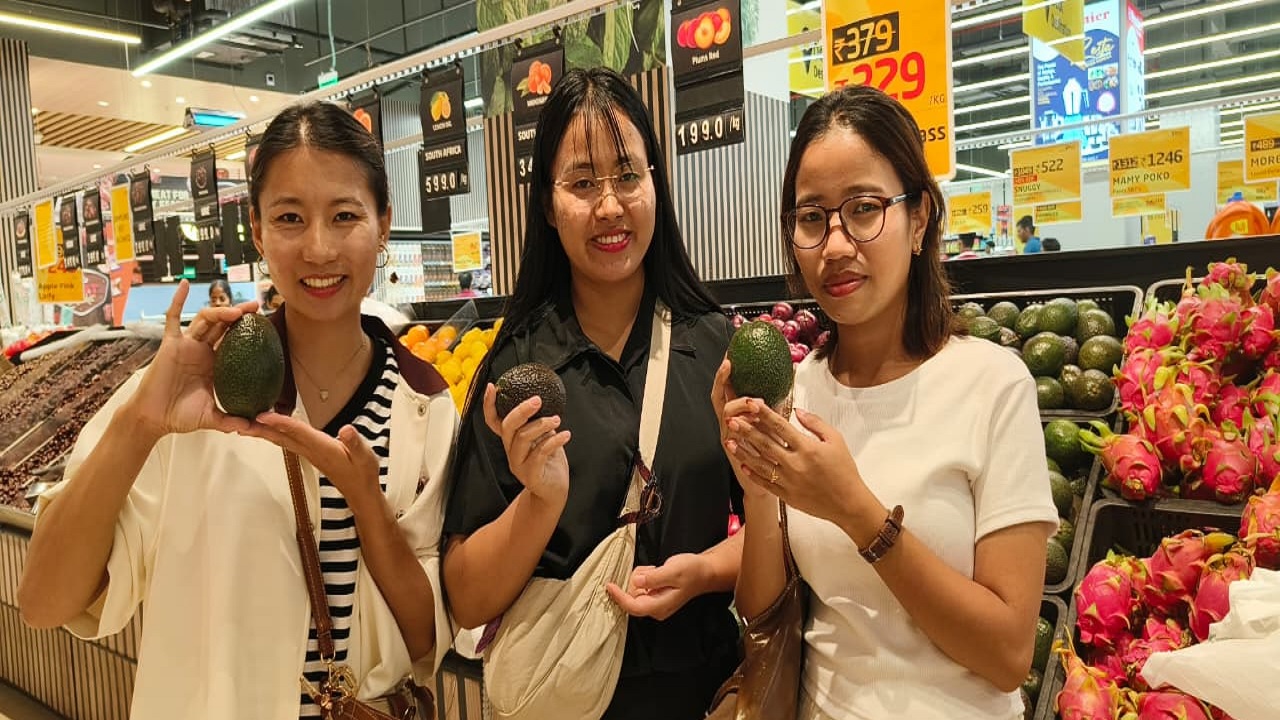
Manipur students with their favourite Indian avocados at Lulu Mall, Kottayam

Synopsis: Wayanad is witnessing a growing avocado boom. From an almost 80-year-old tree planted during the British era to backyard cultivation and modern avocado festivals, the fruit has gradually found acceptance among farmers and consumers. With rising demand, changing farming practices and renewed attention after PM Narendra Modi highlighted Indian avocado growers, Wayanad’s farmers are well-prepared to reap the rewards.
Prime Minister Narendra Modi recently drew attention to the rising popularity of Indian avocados through his Instagram video and Mann Ki Baat radio address. He praised farmers who are turning to avocado cultivation, highlighting the fruit’s nutritional value and the growing opportunities it offers.
Modi mentioned farmers such as Karpa Varadaraj from Kadapa, Andhra Pradesh, who learned avocado farming through YouTube and produced nearly four tonnes, and Chandrasekaran from Kodaikanal, Tamil Nadu, as examples of India’s expanding avocado farming community.
But Keralam’s hills have been ahead of this trend for decades.
In Wayanad, Ambalavayal is already known as an avocado hub, where the fruit grows in the backyards of many homes. For many Indians, avocado remains an unfamiliar and expensive fruit, often associated with imports and limited local demand.
But in Ambalavayal, it is part of everyday life and, for many families, an important source of income.
What makes the village’s story remarkable is that avocado was once almost worthless here. Until the 1990s, many locals did not know what to do with the fruit.
It was locally called pattippazham (dog fruit), and ripe avocados were often simply thrown into waste bins.
Today, the same fruit has helped connect the village to markets far beyond Wayanad. What was once discarded is now cultivated, traded and valued, with many households earning a steady income from avocado farming.
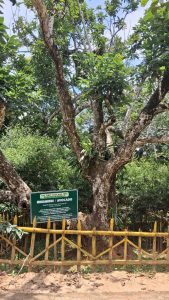
The avocado tree in RARS campus
Step into the Ambalavayal Regional Agricultural Research Station (RARS) campus and you will spot a VIP of sorts standing quietly under security. It is an almost 80-year-old avocado tree, planted in 1947 by British officials as part of a rehabilitation project for soldiers returning from the Second World War.
When the land later became part of the agricultural research centre, the tree was preserved. Today, it stands as a living reminder of how the avocado found its way into Ambalavayal.
But you do not have to visit the research station to find an avocado tree in Ambalavayal. Walk into almost any household in the village — rich or poor — and you will find at least one growing in the backyard.
According to Najeeb Naduthodi, faculty member at the Regional Agricultural Research Station, the fruit spread naturally across Ambalavayal and its surrounding areas after the British introduced it.
“Until the 1990s, local people rarely ate avocados. Some were even wary of the fruit. When the avocados ripened and fell from the trees, they were often simply thrown away. But the dogs would eat the fallen fruit, and some locals noticed that the dogs grew quite large. This led to all kinds of stories, with some even claiming that the fruit had made the dogs faint. That’s how avocados came to be called ‘pattippazham‘ (dog fruit) and were dismissed as something meant only for dogs,” Najeeb told South First.
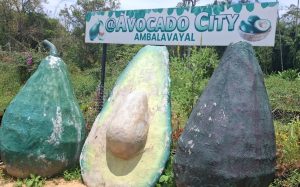
An avocado sculpture built by RARS after Ambalavayal was declared an ‘Avocado City’ by the state government in 2025.
That perception began to change in the 1990s, as agricultural awareness spread and people became more familiar with the nutritional value of avocados.
Slowly, the fruit moved from backyard trees to dining tables. Its rich, buttery texture also earned it another local name — ‘vennappazham‘ or butter fruit.
The change was not just cultural; it became economic too.
Najeeb says a household with just two or three avocado trees can harvest 200–300 kg of fruit, making it an important supplementary source of income for many families.
Today, buyers visit homes, book trees in advance and return when the fruit is ready for harvesting. In Kochi markets, Indian avocados can fetch around ₹200–₹250 per kg, although prices fluctuate depending on availability and demand.
Even World Avocado Day, observed on July 31, has found a place in Ambalavayal. Farmers mark the occasion by purchasing and introducing new avocado varieties, creating awareness among local growers and exploring new markets.
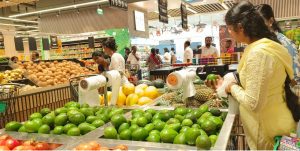
People purchasing Indian avocados at Lulu Mall in Kottayam.
When South First spoke to MR Sunilkumar, chairman of the Wayanad Hills Farmer Producer Company, he said the focus is now on helping farmers understand the crop better and improve the way it is cultivated and marketed.
“We are primarily concentrating on providing proper training to farmer groups across Wayanad. The region’s climate is well suited for avocado cultivation, while the maintenance cost is relatively low. Local varieties also have good resistance and produce a decent yield,” he said.
According to Sunilkumar, farmers have also become more careful about harvesting and post-harvest handling. Earlier, many would pluck avocados before they had reached the right stage of maturity, which affected their quality by the time they reached the market.
“Farmers are now more aware of when to harvest, how to store the fruit and which markets offer better returns,” he said.
The growing interest in avocados is not limited to small and medium-scale farmers.
Major high-range plantation companies are also entering the sector. Harrison’s Malayalam Limited, for instance, has begun large-scale commercial avocado cultivation and has recently imported Maluma avocado plants for its plantations.
However, Sunilkumar cautioned that local growers could face challenges from the dominance of major international avocado varieties and supply chains.
The Hass variety, originally associated with California, has become increasingly common in Indian markets. Its oil content is generally around 15% to 22%, and its established global distribution network gives it an advantage, with traders often preferring a variety that already has strong market recognition.
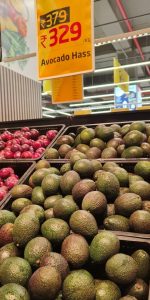
Hass Avocados
Wayanad’s own varieties, meanwhile, are no less significant.
Sunilkumar said the local avocado varieties typically contain around 16% to 20% oil. Farmers in the region are also cultivating improved varieties such as Arka Supreme and Arka Coorg Ravi.
The scale of Wayanad’s avocado trade is already substantial. “During the harvest season, around 25 to 30 tonnes of avocados are transported every day from Wayanad to major markets, including Bengaluru, Chennai and Kochi,” Sunilkumar said.
India’s annual demand for avocados is said to be around 15,000 tonnes, while domestic production stands at only about 8,000–9,000 tonnes. Experts believe the potential extends well beyond selling fresh fruit. With investments across the entire value chain, from cultivation and nurseries to processing, cold storage, packaging, exports and agri-tourism, Wayanad could build an exotic-fruit economy worth around ₹350 crore in the coming years is what they claim.
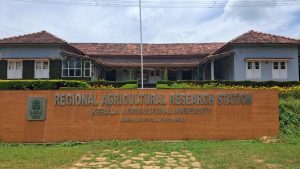
RARS, Ambalavayal
Dr Sruthy Sajeevan, a dietician from Kottayam, told South First that avocados are a nutrient-rich fruit containing heart-healthy monounsaturated fats, dietary fibre and several essential vitamins.
She said these healthy fats can help lower low-density lipoprotein (LDL), or ‘bad’ cholesterol, when avocados are consumed in place of foods high in saturated fats, such as butter and cheese.
However, she pointed out that avocados are relatively calorie-dense and recommended keeping portions moderate, with about one-third to half of a medium-sized avocado considered a typical serving.
Dr Sruthy also observed that younger consumers are becoming increasingly conscious of their health and are showing greater interest in incorporating avocados into their diets.
Three engineering students from Manipur, who are currently studying in Kottayam, told South First that avocados have become a convenient food choice for them as they regularly work out at the gym.
“We go to the gym regularly, and avocados are an easy and preferred food for us. However, the price differs between Indian avocados and the Hass variety. Avocado shakes are also commonly available in Kottayam,” they said.
Avocados making it among fitness enthusiasts too? Well, some would say that’s only in the fitness of things.
Also Read:
Beyond the classroom: Thrissur college’s Zoology students weave a Keralam silk identity
From plantation life to priesthood: Two Munnar women ordained as CSI priests
A craft Tagore brought to Bengal helps Bishop Franco case survivor rebuild her life
(Edited by R Rajesh Kumar.)



