

Published Sep 03, 2026 | 4:30 PM ⚊ Updated Sep 03, 2026 | 4:49 PM

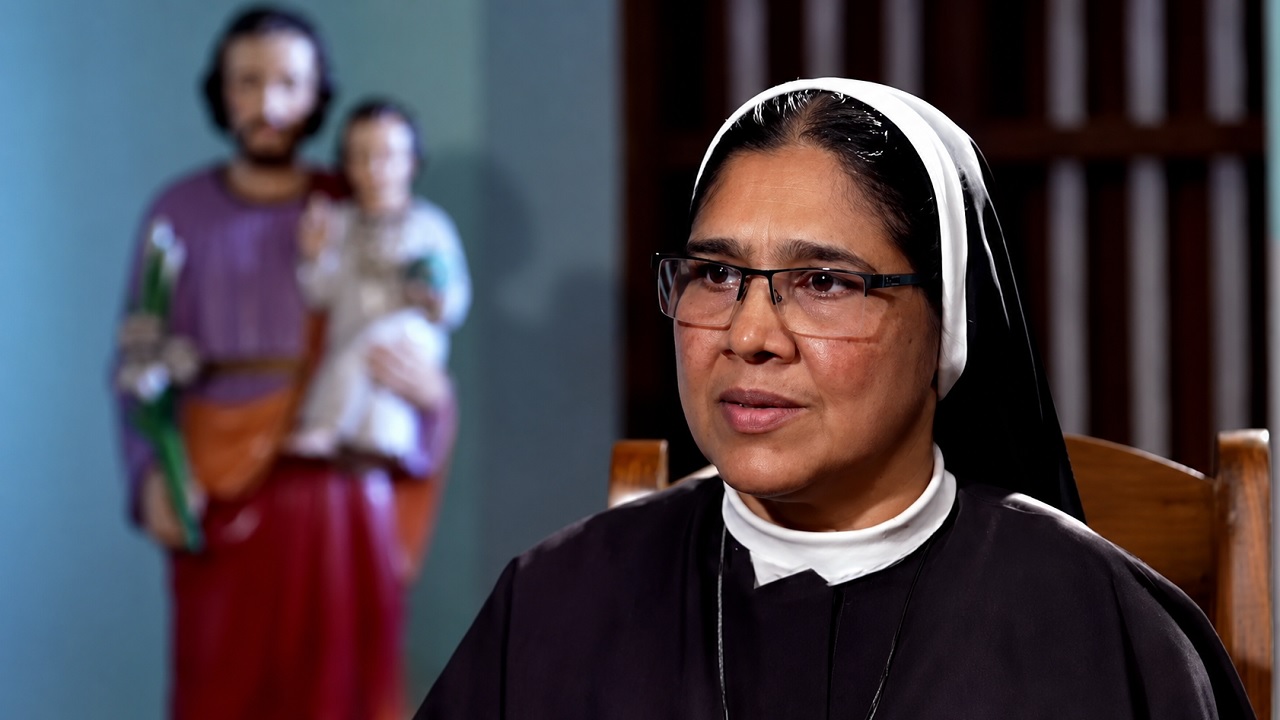
Sister Ranit Pallassery

Synopsis: Bishop Franco Mulakkal rape case survivor Sister Ranit Pallassery and her fellow nuns are rebuilding their lives through Stand By Me, turning their stitching into a means of livelihood. Following successful exhibition-cum-sale events in Bengaluru and Thiruvananthapuram, they are now gearing up for their next exhibition at Aspin Courtyard in Kozhikode on 5 September.
The gates of St. Francis Mission Home in Kuravilangad, Kottayam, are still open. But step inside, and the silence tells a different story.
There are no loud chants of prayer rising from the convent anymore. No older adults waiting for a helping hand. No chatter of students in the hostel corridors. No ducks wandering through the yard, no hens pecking at the ground, no little kitchen garden growing quietly in a corner.
The church authorities have almost entirely abandoned the convent.
Only three nuns remain in the convent, under police protection.
Among them is Sister Ranit Pallassery, a survivor of the Bishop Franco Mulakkal rape case — a woman who has already endured an unimaginable storm. With her are Sister Alfy and Sister Ansita.
There were once six of them here, standing together against Bishop Franco. Now, only three remain.
Sister Anupama Kelamangalathuveliyil, the face of the nuns’ protest in Keralam and Sister Ranit’s voice of strength, along with Sisters Josephine and Neena Rose, eventually left the congregation and the convent, unable to bear the relentless legal battle and emotional strain.
Today, few know where they are. They have almost vanished from public memory- quietly rebuilding their lives and living in peace.
Yet, in the stillness of this almost-empty convent, these three nuns have chosen not to surrender. They are trying to stitch together what remains of their lives- quite literally with needles, threads and printing machines.
Also Read: Denied basic amenities by Catholic convent, nun Lucy rebels again
In 2023, Sister Ranit and the nuns who stood by her were cut off from financial assistance from the Church. Their names were also removed from the Jalandhar Diocese list after they spoke publicly against Bishop Franco, they said.
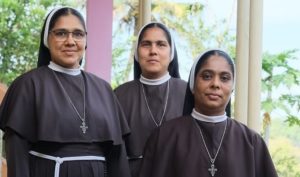
Sister Ranit Pallassery, Sister Alfy and Sister Ansita
The convent, once a place where the nuns lived together, gradually split into two groups: those supporting Sister Ranit and those backing Franco. The latter group, the sisters said, isolated them completely.
They stopped sharing food or money, and even basic interactions ended.
With no financial support, the six nuns tried different ways to survive. They started a hostel for girl students and later a home for senior citizens, but both had to shut down because of a lack of resources. Attempts to grow vegetables and rear ducks and hens on the convent premises also did not last.
Eventually, they turned to tailoring.
Sister Ranit told South First that they had reached a point where they had no money and found it difficult to get even internships. With help from well-wishers, they bought a sewing machine and began making clothes, bags and household items.
She taught the other two nuns what she knew, and their small effort slowly grew.
Today, they have five sewing machines, along with embroidery and interlocking machines and employ two people. What began as a way to survive has now become a small livelihood built on their own skills.
Also Read: Nuns who stood up against a bishop – and paid the price
Sister Ranit and fellow nuns began stitching with whatever they knew — simple embroidery on cotton sarees, table mats and other small products. At first, those who stood by them bought their work, partly to support the nuns as they struggled to survive.
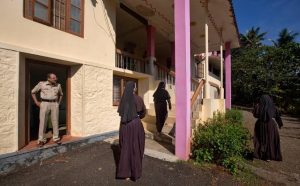
St. Francis Mission Home in Kuravilangad
But even that drew opposition.
”Church authorities labelled our basic survival stitching as a business,’ Sister Ranit said. They even tried to prevent people from buying the products.
For the nuns, however, stitching was not a business venture. It was a means of survival.
Among those who stepped in to help were Father Augustin Vattoly and Thrissur-based social worker Jayasree Pillai. They helped the nuns move beyond basic stitching and acquire professional skills.
”I made the effort to train Sister Ranit and the other nuns in batik printing. We even brought a Bengali artist to Kerala to teach them. Within days, they learned the technique and began doing it very professionally,” Jayasree told South First.
Batik is an ancient wax-resist dyeing technique in which molten wax is applied to fabric to block the dye and create intricate patterns.
The craft has an interesting connection to Bengal. Rabindranath Tagore was deeply fascinated by Indonesian batik textiles. He brought batik cloth and traditional tools to Santiniketan. At the same time, his daughter-in-law, Pratima Tagore, helped introduce the technique into the curriculum at Kala Bhavana, the fine arts faculty of Visva-Bharati University.
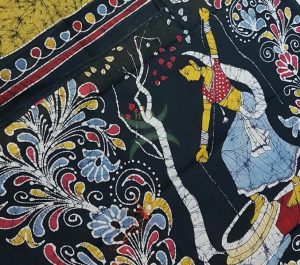
A Batik printed saree.
The Bengali artist who travelled to Kerala to teach the nuns could hardly have imagined that a craft associated with Tagore’s Bengal would one day help a rape-survivor nun rebuild her life.
But it did.
Batik, hand/machine embroidery and other stitching techniques gradually became more than skills for Sister Ranit and her fellow nuns.
They became a way to earn, rebuild confidence and reclaim a sense of independence after years of turmoil.
Eventually, they brought their work together under a name that seemed to capture exactly what they had needed through their darkest years — Stand by Me. For the nuns, it was more than a brand. It reminded them of the people who stood by them when they had almost nothing left.
Also Read: Bishop Franco Mulakkal meets Pope, first time after being acquitted in rape case
Obedience is foundational to monastic life. It is one of the three evangelical counsels vowed by nuns, alongside poverty and chastity. For Sister Ranit and her fellow nuns, obedience once came with a price. They were punished several times for what was seen as disobedience.
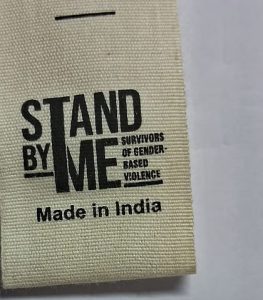
Stand by Me
Today, however, they have taken a new step — one that is entirely their own.
They have walked out of the dark corners of the convent at Kuravilangad without asking anyone’s permission and into the world beyond its gates.
For the Church, even this decision to step outside the boundaries laid down for them could be seen as another act of disobedience. But for these women, it is a step towards reclaiming a life and livelihood of their own.
They travelled to Bengaluru, Thiruvananthapuram and other parts of Kerala, carrying with them not just their products, but the courage to begin again. Along the way, they learnt something they had never been expected to learn before — how to stand on their own, how to reach customers and most importantly, how to sell the work of their own hands.
They no longer want sympathy. They want people to see the quality of their work and value it for what it is.
The success of Stand By Me’s exhibition-cum-sale events in Bengaluru and Thiruvananthapuram has given them confidence. Now, they are preparing for their next exhibition at Aspin Courtyard in Kozhikode on 5 September, as part of the Women Entrepreneur Network (WEN) ‘Carnival Paradiso’.

Stand by Me products.
But building an independent livelihood does not end with setting up a stall.
Father Vattoly told South First that Stand By Me’s online pages still need professional expertise to help turn their digital presence into stronger online sales. The group is already working to improve its online presence, build a more professional platform and make it easier for customers to discover and purchase their products.
People can visit their stall, choose something they love and take it home. It may be a small purchase, but for these women, it means something much bigger. Every product carries hours of work, a skill painstakingly learnt and a determination to survive without waiting for anyone’s mercy.
Perhaps that is the most powerful change of all.
Once, they were told to obey. Today, they are learning to stand. And what they are selling is not sympathy- it is their skill, their labour and their hard-won independence.
(Edited by Majnu Babu).



