

Published Jun 21, 2026 | 2:11 PM ⚊ Updated Jun 21, 2026 | 2:11 PM

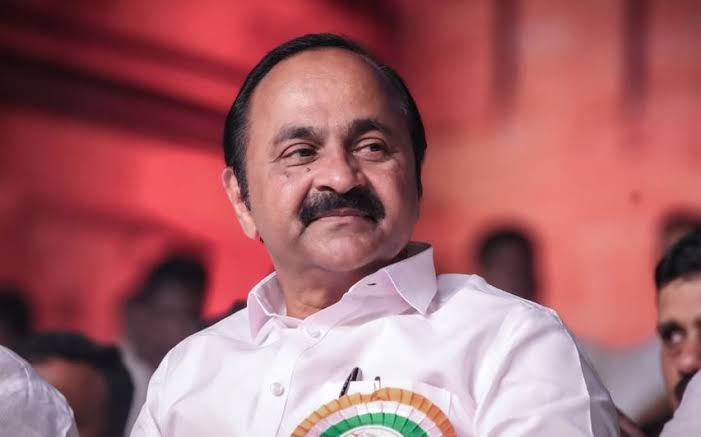
Within party circles, the assertion is that when Satheesan emerged as a contender for the CM’s chair, he was considered a ‘smiling Pinarayi".

Synopsis: A month after promising stronger support for senior citizens, the UDF government has revised Kerala’s Elderly Budget, cutting allocations under key welfare and healthcare programmes amid mounting financial pressures. At the same time, it has reaffirmed its long-term vision of building a Silver Economy through a dedicated Elderly Welfare Department and new initiatives to promote active ageing and elderly entrepreneurship.
On 18 May, following his first Cabinet meeting as Chief Minister, V.D. Satheesan declared that the manner in which a society treats its elderly citizens is a measure of its civilisation. His remarks came close on the heels of the decision to establish a Department for Elderly Welfare.
However, a month later, as the UDF government unveiled its revised budget estimates, Kerala’s newly introduced Elderly Budget — a flagship initiative rolled out by the previous LDF government — has seen its first course correction.
While the revised budget retains the broader vision of building a ‘silver economy’ and expanding opportunities for senior citizens, the overall allocation under the Elderly Budget has been trimmed from ₹46,236.52 crore to ₹46,110.33 crore, reflecting the state’s ongoing struggle to balance welfare commitments with tightening fiscal realities.
While the government maintains that the adjustment was necessitated by shrinking central assistance and the need for fiscal realignment, the downward revision has come under fire.
Also Read: A retrograde tide: Kerala’s 2026 budget and the betrayal of the sea
The UDF government’s revised Budget for 2026-27 has brought significant changes to allocations earmarked for senior citizens, reducing spending under several State Plan components while marginally increasing overall non-plan expenditure for the elderly.
When the State Budget for 2026-27 was presented, in January, the LDF government highlighted that the elderly budget accounted for 3.8 per cent of the State Plan outlay. It also pointed out that 21.72 per cent of the total non-plan expenditure was earmarked exclusively for senior citizens. The total elderly budget stood at ₹46,236.52 crore, representing 19.07 per cent of the total State Budget.
The allocation assumed significance as the Office of the Registrar General of India has projected Kerala’s elderly population at 18.7 per cent in 2026. With 19.07 per cent of the State Budget earmarked for senior citizens, the government’s spending commitment exceeded the elderly population share in the state.
However, the revised Budget presented four months later altered several components of the elderly budget.
The most notable changes were seen in State Plan allocations.
Under Part A Schemes, the allocation was reduced from ₹128.94 crore to ₹108.19 crore.
Part B Schemes witnessed a sharper decline, falling from ₹835.83 crore to ₹684.97 crore.
As a result, the total allocation under Parts A and B combined dropped from ₹964.77 crore to ₹793.16 crore.
Similarly, the Local Body Plan allocation was revised downward from ₹376.95 crore to ₹304.37 crore.
Consequently, the Total State Plan allocation for elderly welfare declined from ₹1,341.72 crore in the original Budget to ₹1,097.53 crore in the revised estimates.
In contrast, non-plan expenditure for the elderly registered a modest increase.
The original Budget had earmarked ₹44,894.80 crore under the non-plan category, comprising ₹31,454 crore for Service Pension, ₹11,591.33 crore for Social Security Pension, ₹17.18 crore as OCB Grant, ₹1,821.67 crore for Welfare Fund Board Pensions, ₹6.57 crore for Old Age Homes and ₹4.05 crore for the Kerala State Elderly Commission.
In the revised Budget, total non-plan expenditure increased to ₹45,012.80 crore.
While allocations for Service Pension (₹31,454 crore), Social Security Pension (₹11,591.33 crore), OCB Grant (₹17.18 crore), Welfare Fund Board Pension (₹1,821.67 crore), Old Age Homes (₹6.57 crore) and the Kerala State Elderly Commission (₹4.05 crore) remained unchanged, the revised estimates included additional provisions for new or expanded initiatives.
These included ₹10 crore for the Elderly Welfare Department, ₹90 crore for the Priyadarshini Scheme providing free travel for women and transgender persons in KSRTC buses, and ₹18 crore for the implementation of Mobile Test Labs.
The revised estimates therefore reflect a shift in spending priorities.
While allocations under dedicated State Plan schemes for senior citizens have been curtailed by more than ₹244 crore, the government has offset part of the reduction through increased non-plan expenditure and the inclusion of welfare-oriented initiatives.
Also Read: Why getting a disability certificate is still a herculean task for Kerala’s neurodivergent persons
Several welfare and healthcare schemes aimed at senior citizens have witnessed significant reductions in funding in the revised budget estimates.
The cuts, as per the official version, come as part of a broader exercise in expenditure rationalisation undertaken by the government in response to an anticipated resource crunch.
Among the schemes affected is the Pneumococcal Vaccination Programme for the Elderly, whose allocation has been reduced from ₹50 crore to ₹40 crore. The Sayamprabha scheme, which provides support and welfare services for the elderly, has seen its outlay cut from ₹14 crore to ₹11.20 crore.
Similarly, the allocation for Vayomithram, a flagship programme catering to the healthcare and social security needs of senior citizens, has been reduced from ₹27.50 crore to ₹22 crore. Funding for Pain, Palliative and Elderly Health Care Centres has also been scaled down, from ₹3.50 crore to ₹3 crore.
The reductions are part of the Statement of Alterations presented by the government along with the revised budget estimates.
The government has attributed the changes to a sharp decline in expected central transfers.
According to the statement, the discontinuation of the Revenue Deficit Grant by the 16th Finance Commission and an anticipated shortfall in Kerala’s share of Central taxes have substantially lowered the actual Central assistance expected during 2026-27 compared to the estimates made while presenting the original State Budget.
“To bridge the gap in resources anticipated, reallocation and rationalization of plan and non-plan expenditure, and modification in the estimates of certain items of revenue receipts in anticipation of increase due to better and efficient tax mobilization have been carried out as part of Revised Budget Estimates for 2026-27,” it has been stated.
It further clarified that, as a consequence, estimates included in the Budget documents submitted as part of the Original Budget for 2026-27 stand modified.
Also Read: Where are UDF’s Indira Guarantees in Kerala Budget? Experts are not worried
Meanwhile, despite the plan cuts, the revised budget plans to build a comprehensive “Silver Economy” framework aimed at transforming its growing elderly population into an active social and economic force.
The revised State Budget has highlighted that Kerala is the first state in India to establish a dedicated Department of Elderly Welfare.
Building on this foundation, the government plans to develop a Silver Economy that will combine institutional support, financial assistance, entrepreneurship opportunities and the productive utilisation of the vast knowledge and experience of senior citizens.
As part of the initiative, the government will formulate and implement a comprehensive Silver Economic Policy covering eldercare services, retirement infrastructure, innovations in geriatric healthcare and elderly entrepreneurship. The policy is intended not only to address the challenges posed by an ageing population but also to unlock new avenues for economic growth and social participation.
Recognising the need for public involvement, the budget says that the government will conduct an extensive statewide survey among senior citizens to gather their views on the priorities and implementation of the programme. Based on the findings, a long-term roadmap will be prepared to ensure that elderly people in Kerala remain physically, socially and economically active while contributing meaningfully to society.
The Budget has earmarked ₹10 crore for the operational activities of the Department of Elderly Welfare.
To promote healthy and active ageing, the government also plans to establish dedicated elderly parks, day-care centres (Pakalveedu) and fitness centres across the state. These facilities are expected to provide spaces for recreation, social interaction and physical well-being, helping senior citizens lead more engaged and independent lives.



