
Published Jun 21, 2026 | 9:00 AM ⚊ Updated Jun 21, 2026 | 9:00 AM

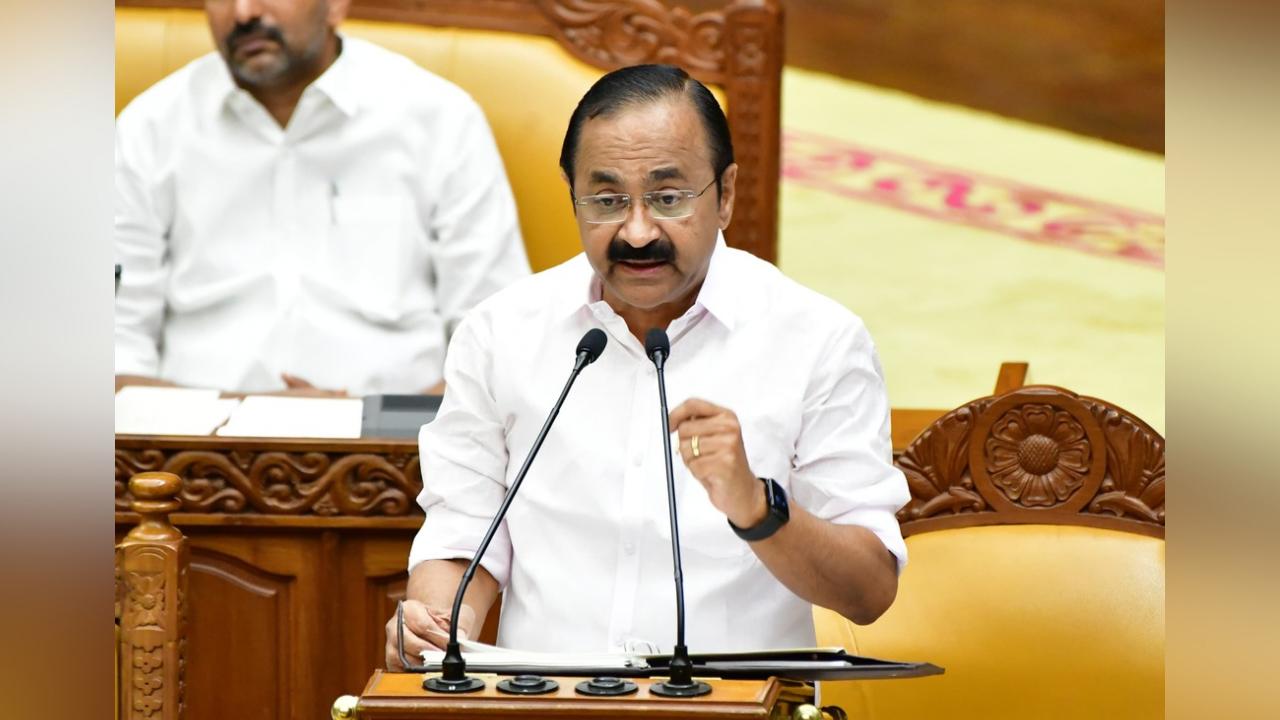
Kerala Chief Minister VD Satheesan presenting the Budget.

Synopsis: The budget’s Fisheries Sub-Plan offers a bowl of kanji to a community whose kitchen is being systematically demolished by port-led industrialisation.
Chief Minister VD Satheesan’s maiden budget has been sold as a visionary blueprint for a “New Kerala” (Puthuyuga Kerala). However, when historicised against the radical trajectory of Kerala’s fish economy, the budget reveals a profound ideological regression.
While the administration attempts to package its new Fisheries Sub-Plan as a progressive human development initiative, the simultaneous introduction of the ₹400-crore Mission Samudra mega-infrastructure corridor exposes a structural paradox. The budget effectively shifts the state’s role from a historic protector of the sovereign rights of small-scale fishworkers to an enabler of corporate coastal enclosure. It is the literal policy equivalent of “throwing a lifebuoy while sinking the boat”.
To understand why Budget 2026 is retrograde, it must be measured against the benchmarks set by the UDF administrations of the 1980s and 1990s. Those policies were not top-down bureaucratic charities; they were hard-won concessions forced by the intense collective mobilisation led by the Kerala Swatantra Matsyathozhilali Federation (KSMTF) and joined by all the other existing and newly-created fishermen unions across Kerala’s political spectrum.
In the 1982-87 period, the K Karunakaran administration came under intense pressure from fishworkers, forcing Karunakaran to take over the Fisheries Portfolio in 1984. Following intense struggles and negotiations with fishers, he made a radical break from capital-intensive, mechanised trawler subsidies that were destroying marine ecology. Instead, the budgets of that time pivoted entirely toward small-scale, artisanal fishworkers and commenced the institutionalisation of the welfare state.
This era birthed the Kerala State Fishermen’s Welfare Board (KSFWB) and restructured existing fishery cooperatives under the new Matsyafed (the State Fisheries Cooperative Federation). Crucially, by mandating compulsory welfare contributions from powerful marine exporters, the state ensured the welfare board was a well-funded, self-sustaining wealth-redistribution engine. (This contribution ceased when exporters secured a Constitutional Bench ruling against the government on the grounds that there was no employer-employee relationship between exporters and fishers.)
These welfare and organisational measures directly pulled the fishing community out of its status as an “outlier” to the celebrated Kerala Development Model, triggering an intergenerational leap in housing, health, and higher education. Thereafter, in 1994, Karunakaran commissioned India’s first State Fisheries Policy, which boldly proposed radical aquarian reforms—decreeing that access to the sea belonged exclusively to those who actually fish, structurally banning the rise of proxy corporate sea-lords.
Against this historic backdrop of structural empowerment, the 2026 Revised Budget represents a severe dilution of purpose.
The much-touted Fisheries Sub-Plan does not deepen aquarian rights; instead, it reduces the state’s obligation to consumerist tokenism and cosmetic relief. Schemes like “she-scooters” for women vendors, domestic fuel subsidies, and small-scale overseas education grants are treated as isolated acts of state charity. They fail to address the core structural vulnerability of the community: the rapid loss of their primary means of production—the sea itself.
If the Government is serious about a radical list of social protection and safety measures for fishworkers, they need only to look at the report of the Working Group on Social Protection for Fisherworkers, prepared for the Kerala State Planning Board in 2022. This report proposes subsidies to transition to electric motors and a return to sail and solar power rather than the enhancement of unsustainable fuel subsidies. It proposes adoption of parametric insurance schemes, rather than increasing doles for weather-related unemployment. The use of drones and AI-assisted safety and rescue operations is another suggestion.
Yet none of these forward-looking proposals finds a place in the 2026 budget. Instead, the government doubles down on unsustainable fuel subsidies and cosmetic relief, ignoring the technological and ecological transitions that could genuinely secure the future of fishing communities.
The fatal contradiction of the 2026 budget lies in the launch of Mission Samudra alongside the expansion of land-acquisition laws to facilitate Public-Private Partnerships (PPP). Mission Samudra aims to unify Kerala’s 600-km coastline and extensive port network into a Singapore-style “Port City” model. We already have one port for every 30 kilometres of coastline.
Implementing a Singapore-style maritime model is ill-suited to Kerala because the state lacks the unique, naturally sheltered, and strategically located deep-water conditions of Singapore’s geographic crossroads. Along our coastline, only Kochi and Vizhinjam even remotely share those characteristics—and we have already invested heavily in making them global maritime-industrial hubs for civilian trade and naval defence.
By legally zoning our state’s 12-nautical-mile territorial waters into heavy-traffic shipping, logistics, and cargo corridors, the state is effectively enclosing the marine commons. This resurrects the “sea-lordism” banned in 1994, handing over ancestral fishing grounds to corporate maritime interests.
Relentless harbour construction encourages further industrialisation of fishing, more intensive extraction, and greater conflict between trawlers and artisanal fishers. Harbour proliferation has historically been accompanied by increased bottom trawling, habitat destruction, and depletion of fish stocks—the very problems the Sub-Plan seeks to address.
A genuine Fisheries Sub-Plan would begin with a moratorium on new harbour construction. What we need now is for port activities to be evaluated and reimagined so that new investments—whether in coastal shipping or maritime tourism—do not further compromise marine biodiversity, littoral sand dynamics, or the ecological integrity of our once-sandy coast.
The fish economy of Kerala is not merely an employment sector; it is the primary source of affordable animal protein for the state’s fish-loving population. By disrupting traditional landings and destroying near-shore marine habitats for industrial port-cities, the budget risks a long-term collapse of localised fish food security.
What makes this regressive turn especially tragic is the missed opportunity it represents.
Kerala’s nearshore waters are among the most biodiverse on the planet—a living laboratory for frontier research in blue biotechnology. Marine organisms—cyanobacteria, seaweeds, sponges—that coastal communities have known and named for generations are now being studied globally for anti-cancer, anti-inflammatory, and nutritional compounds. Clean, biodiverse coastal waters could support state-supported start-ups and community-led marine labs with fair benefit-sharing, generating livelihoods for young coastal men and women as researchers, technicians, and entrepreneurs.
Coastal youth-led initiatives documenting nearshore species with fisherfolk knowledge demonstrate what is possible when communities are treated as knowledge partners rather than obstacles. Instead, the budget pours resources into granite walls and port infrastructure that destroy the very ecosystems that could sustain a bio-economy, locking coastal youth into dependency rather than innovation.
Also Read: In Kerala, a sea archive maps three threatened reefs – and revives the story of the ‘Boat Reef’
The 2026 revised budget marks a tragic philosophical inversion for the UDF. A political coalition that once codified “the right of the fisher to the sea” has now presented a framework that facilitates the corporate takeover of that very sea. The Fisheries Sub-Plan acts as ideological camouflage. It offers a bowl of kanji to a community whose kitchen is being systematically demolished by port-led industrialisation.
If Kerala is to preserve both its unique development model and its vibrant coastal economy, it must reject this model of tokenistic compensation. The state must return to the radical, rights-based aquarian frameworks that historically recognised fishworkers not as passive recipients of welfare, but as the sovereign custodians of the sea.
The new government has shown awareness of the crisis facing fisherfolk. What it has not shown is the courage to abandon the infrastructure projects that will deepen that crisis.
Kerala’s coastal youth deserve an economy rooted in the living biodiversity of their waters, not in the granite and concrete of a misplaced industrial dream. The choice is stark: continue down the path of corporate coastal enclosure and tokenistic welfare, or return to the radical, rights-based vision that once made Kerala a beacon for fishing communities across the Global South. The new government can still choose that path—but time, and the sea, are running out.
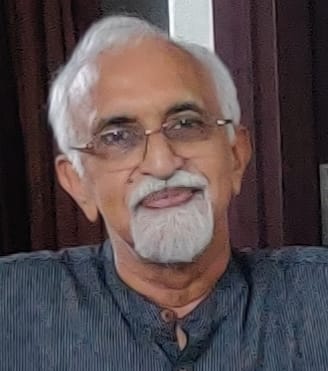
John Kurien is a reflective development practitioner with over five decades of close involvement with small-scale fishing communities in Kerala and other countries in Asia. He was a Professor at the Centre for Development Studies, Thiruvananthapuram and the Azim Premji University in Bangalore.
Also Read | The licence to kill: How corruption at Kerala’s RTOs is fuelling a road safety catastrophe
(Edited by R Rajesh Kumar.)



