

Published Jun 20, 2026 | 9:00 AM ⚊ Updated Jun 20, 2026 | 9:00 AM

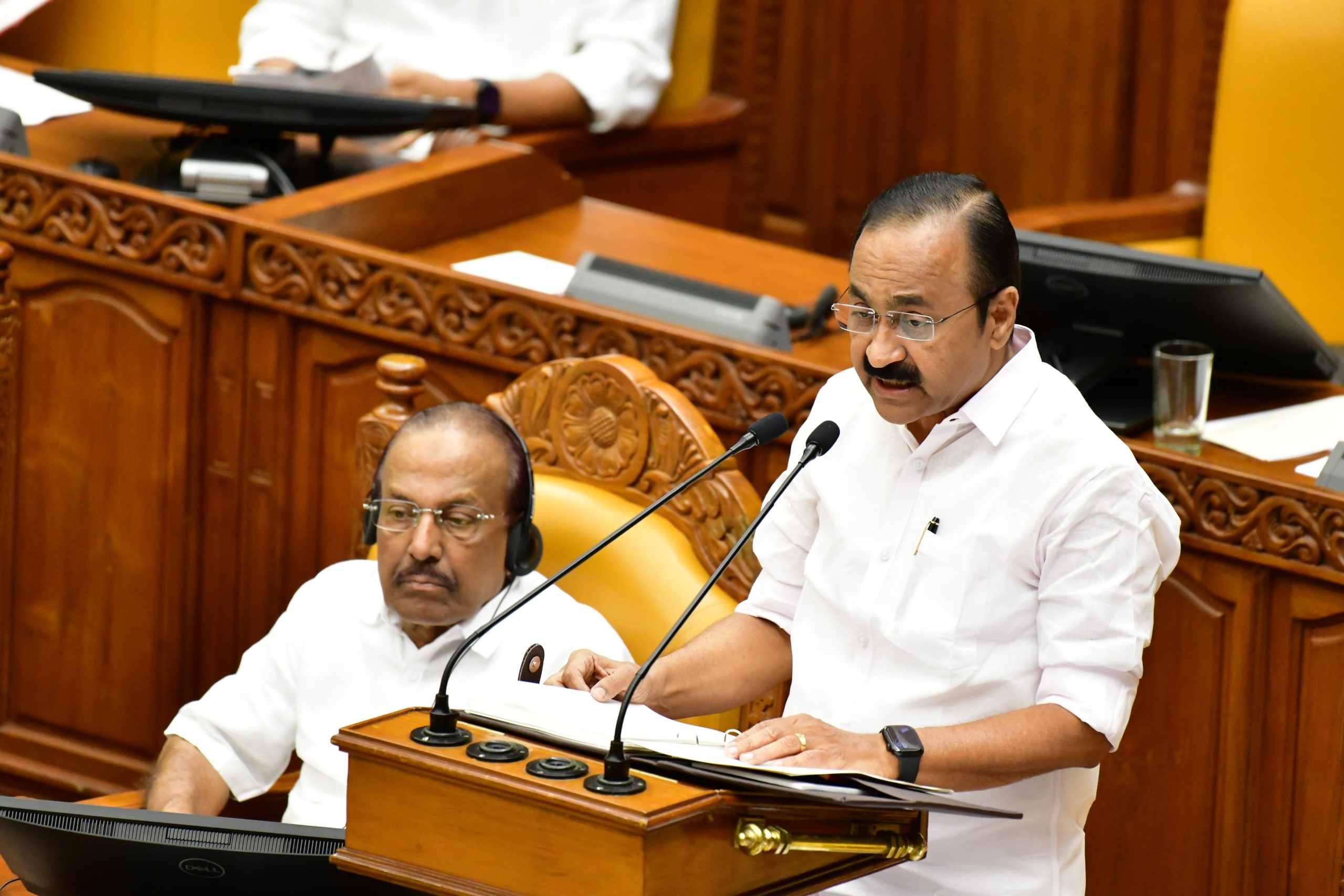
The bigger challenge lies in how the UDF government plans to finance its remaining welfare commitments.

Synopsis: Political Kerala was all ears when Chief Minister VD Satheesan rose to present the state Budget in the state Assembly on Friday, 19 June. Curiosity was high since the UDF had risen to power on its promises, besides other factors. However, Satheesan’s first Budget skipped many of the guarantees but presented what experts felt was a prudent and responsible financial statement that prioritised fiscal discipline. They also called for minor alterations, besides developing new policies and funding mechanisms to deliver on the promises.
Expectations were high as the UDF government in Kerala prepared to present its first Budget, albeit a revised one.
Considering the promises made during the Assembly election campaign, many anticipated bold announcements and a clear roadmap for the government’s flagship welfare commitments.
Chief Minister VD Satheesan, who also holds the finance portfolio, however, had other ideas.
The Budget 2026-27, tabled in the Kerala Legislative Assembly on Friday, 19 June, presented a shift towards fiscal realism. Economists and policy experts termed it a prudent and responsible financial statement that prioritised fiscal discipline over headline-grabbing announcements.
However, it did not mean that the Budget lacked significant policy directions.
A key question that popped up was on how the government addressed its much-publicised Indira Guarantees, which formed the cornerstone of its election campaign.
An examination of the Budget revealed the extent to which those promises have been accommodated, deferred, or omitted. It also offered insights into the government’s priorities and fiscal strategy.
Also Read: Budget charts a future-ready Kerala
The Indira Guarantees emerged as one of the UDF’s most popular election promises.
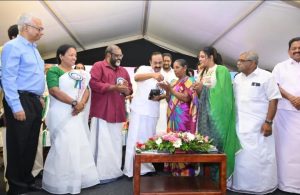
Chief Minister VD Satheesan handing over the first zero-value ticket while inaugurating the Priyadarshini scheme on 15 June.
Soon after assuming office, the government moved to implement two of the guarantees: the Priyadarshini Travel Scheme, providing free travel for women and transgender persons in KSRTC ordinary buses and the creation of a dedicated Senior Citizens Welfare Department to coordinate eldercare and welfare services.
However, other major promises were still on hold. They included health insurance coverage of up to ₹25 lakh per family under the Oommen Chandy Arogya Insurance Scheme, a monthly stipend of ₹1,000 for female college students and an increase in social security pensions to ₹3,000. The promise of interest-free loans of up to ₹5 lakh for young entrepreneurs has yet to be rolled out.
Satheesan has allocated ₹10 crore for the proposed Oommen Chandy health insurance scheme. While the announcement signalled the government’s intent to roll out the guarantee, questions remained over whether the allocation was sufficient for a scheme promising coverage of up to ₹25 lakh per household.
The bigger challenge would be on financing its remaining welfare commitments from within Kerala’s strained fiscal position.
Also Read: CM Satheesan salutes Salim Kumar in maiden Budget
Oommen Chandy Free Health Insurance Scheme has officially taken its first step towards implementation.
Former Chief Minister Oommen Chandy.
Announcing the initiative, Satheesan said the scheme intended to protect families from financial shocks caused by unexpected medical emergencies.
“Unforeseen medical expenses often place an enormous burden on families. To reduce this hardship, the Oommen Chandy Free Health Insurance Scheme, offering coverage of ₹25 lakh per family, will be introduced as part of the Indira Guarantee programme. An initial allocation of ₹10 crore has been set aside for the scheme,” Satheesan said.
The proposal was first mentioned in the policy address that Governor Rajendra Vishwanath Arlekar delivered after the UDF government had assumed office.
Named after former chief minister Oommen Chandy, the scheme has been presented as a continuation of his legacy in public welfare. Chandy’s Karunya Benevolent Fund had gained widespread recognition for providing financial assistance to patients suffering from serious ailments.
While many welcomed the announcement, experts raised concerns about the financial viability of the programme.
Also Read: Stories of savings, scepticism and changing journeys
Kochi-based financial analyst Manu Varghese said the government’s initial allocation appeared inadequate when compared to the scale of the promise.
“According to the last census data, Kerala had over 77 lakh households in 2011. The number is now estimated to have risen to more than 90 lakh families. Even if only a small percentage of households require high-value medical treatment, the cost of providing universal insurance coverage would be substantial,” he told South First.
Varghese calculated that if an annual premium of ₹3,000 was required per family under a group insurance model, the government would have to shell out more than ₹2,700 crore annually.
“The allocation of ₹10 crore is a preliminary provision and does not indicate how the scheme will ultimately be financed,” he added.
Insurance expert Mubeena M, too, questioned the need for a blanket coverage of ₹25 lakh for every household.
“In a family of four or five members, it is often only one or two individuals who require major medical treatment. Instead of offering such a high coverage amount to all families, the government could initially provide insurance coverage of up to ₹10 lakh and extend higher assistance exclusively for patients suffering from critical illnesses or those requiring organ transplants,” she told South First.
Mubeena also pointed out the existing Union government’s Ayushman Vay Vandana Scheme, providing free cashless health coverage of up to ₹5 lakh for all citizens above 70, without paying any premium or income restrictions.
Also Read: ‘Tolerance Ministry’ meets crime mapping, free LPG in poll pitch
Economist Mary George told South First that insurance schemes were meant for those in need, not necessarily the entire population. She said funds could be released in phases.
George felt a need for greater clarity on issues such as premiums and implementation mechanisms.
”Since the UDF government has a five-year term, it cannot be expected to fulfil all election promises within a few weeks or months. Priyadarshini Travel Scheme was rolled out first because it was the most urgent guarantee,” she said.
The economist dismissed the LDF’s criticism, noting that while the previous government had promised to raise welfare pensions to ₹2,500, it increased them to ₹2,000 only in its fifth year, just before local body elections.
George added that promises such as the ₹1,000 monthly stipend for female college students, hiking social security pensions to ₹3,000, and initiating support measures for entrepreneurs could be implemented only after assessing their financial viability.
Also Read: Rahul Gandhi leans on a song, Sabarimala and rubber
Speaking to South First, Dr D Dhanuraj, Founder-Chairman of the Centre for Public Policy Research (CPPR), Kochi, opined that the Budget was realistic and reflected Kerala’s fiscal constraints.
He noted that despite the chief minister repeatedly acknowledging the state’s financial crisis, the government could not entirely back away from its election promises.
The Priyadarshini scheme, the most visible guarantee, has already been implemented, while student and entrepreneur-based announcements indicated efforts to build future political support.
However, he cautioned that welfare initiatives were not sustainable without revenue generation. He urged the government to develop new policies and funding mechanisms to deliver its promises.
Political analyst Mini Mohan opposed viewing the Budget as the UDF government’s definitive roadmap because it was prepared in a short period.
She said the document reflected uncertainties in sectors such as labour and business.
”Political parties in India often announce welfare schemes before identifying funding sources, and the UDF was aware that its Indira Guarantees would involve financial costs. The Congress has experimented with similar guaranteed schemes in other states as well, but in several northern states, these promises faced political challenges,” she told South First.
Mohan stressed that Kerala could not continue indefinitely as a welfare-driven state without boosting production and revenue generation, expressing hope that the government would create new sources of productive revenue within the next two years.
She added that policy formulation was still underway and greater clarity on the full implementation of the Indira Guarantees would emerge only after the completion of the process.
(Edited by Majnu Babu).



