

Published May 14, 2026 | 12:50 PM ⚊ Updated May 14, 2026 | 12:50 PM

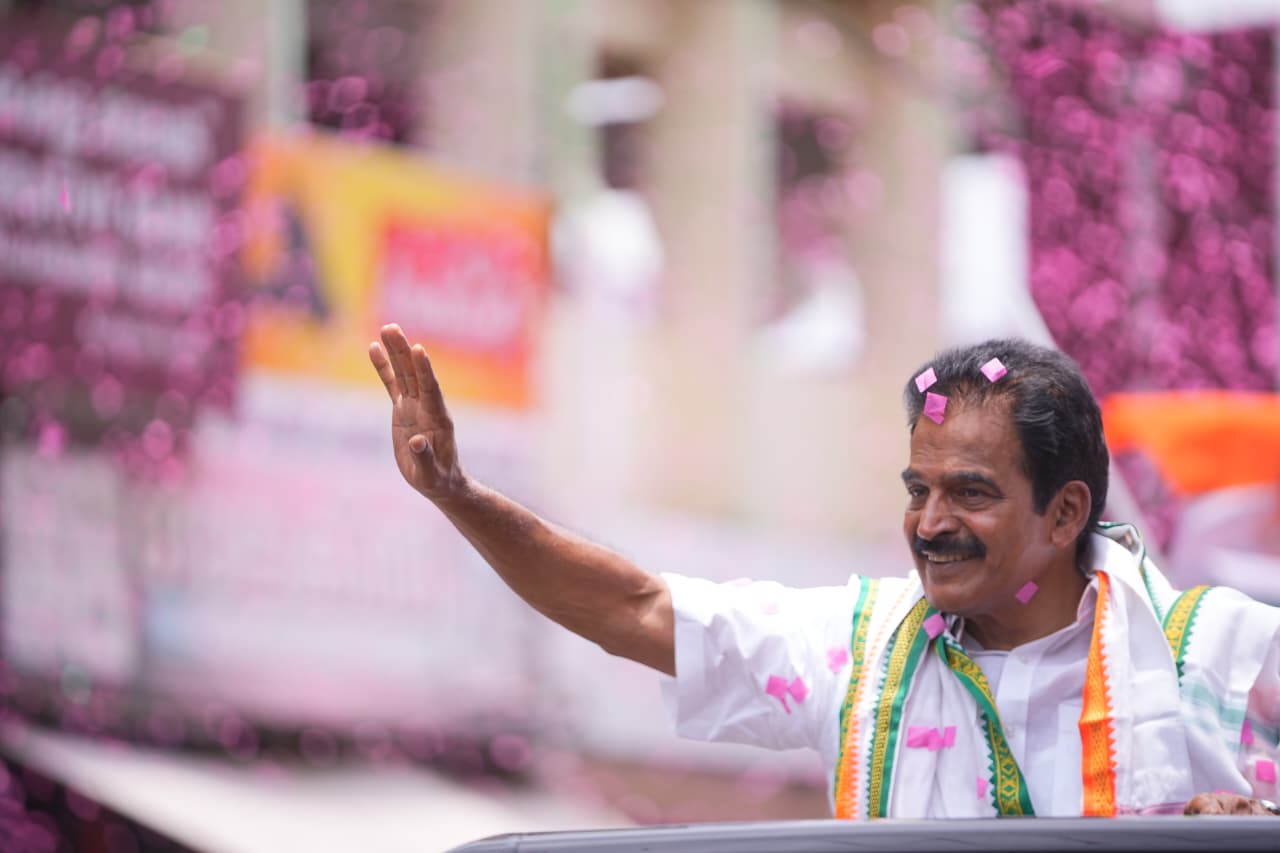
KC Venugopal.

Synopsis: After days of delay that exposed the Congress leadership tussle following the UDF’s sweeping victory, the party finally chose VD Satheesan to lead Kerala. His elevation has helped the UDF avoid two sensitive byelections at once – one to retain Alappuzha in the Lok Sabha after Venugopal’s resignation as MP, and another to secure his own entry into the Assembly within six months as the chief minister.
Ending several days of intense suspense and being the butt of many jokes, the AICC finally, on Thursday, 14 May, announced VD Satheesan as Kerala’s next chief minister.
The delay in making a choice had increasingly put the party on the defensive, especially after the results declared on 4 May gave the Congress 63 seats and the United Democratic Front a commanding tally of 102 in the 140-member Assembly.
Within Congress circles, the final decision appears to have come down to political arithmetic as much as the trust the people have put on it while voting out the LDF government.
A substantial section of Congress MLAs-elect backed Venugopal’s name during internal consultations. Support from some Congress MPs also proved crucial. Besides Venugopal, the Congress has 12 MPs in the Lok Sabha and one in the Rajya Sabha.
However, Satheesan had the support of the Congress workers as well as the people, which helped to the top post, pipping aspirants KC Venugopal and Ramesh Chennithala.
The leadership in Delhi ultimately appears to have concluded that he was the safest figure capable of balancing competing factions while maintaining direct coordination with the national leadership.
That calculation mattered because Congress politics in the state had already entered sensitive territory after the election. The state leadership had earlier convinced the high command that sitting MPs should not contest the Assembly election.
The high command agreed. Venugopal, an AICC general secretary, was part of the high command. His agreement, however, vapourised once the UDF registered a resounding win in the 9 April polls.
The high command seemed to have toyed with the idea of “parachuting” Venugopal into Kerala as its chief minister, a move that made factionalism within the Congress spill out to the streets.
But Venugopal’s “parachuting” is bound to trigger uncomfortable questions within the party. A significant number of ordinary party workers, who accepted the earlier line—that MPs must not contest—questioned the high command’s move, and vowed to defeat Venugopal in the election if he becomes the chief minister.
Satheesan and Chennithala, the other two contenders for the chief minister post, who successfully contested the elections, represent influential power centres within the state unit.
Their acceptance—or strategic accommodation—became essential before the high command could close the issue.
However, by the 10th day after the results, it became clear that the contest was between Satheesan and Venugopal.
On 14 May, Deepa Dasmunsi, the AICC general secretary in charge of Kerala, closed the issue. It also meant that there won’t be KC — as Venugopal is popularly know — after OC (Oommen Chandy) as the chief minister.
Also Read: KIIFB question before UDF: Scrap, reform, or depend on LDF’s pride?
Thirty years ago, in May 1996, a young KC Venugopal entered Kerala’s legislative arena for the first time by winning from Alappuzha.
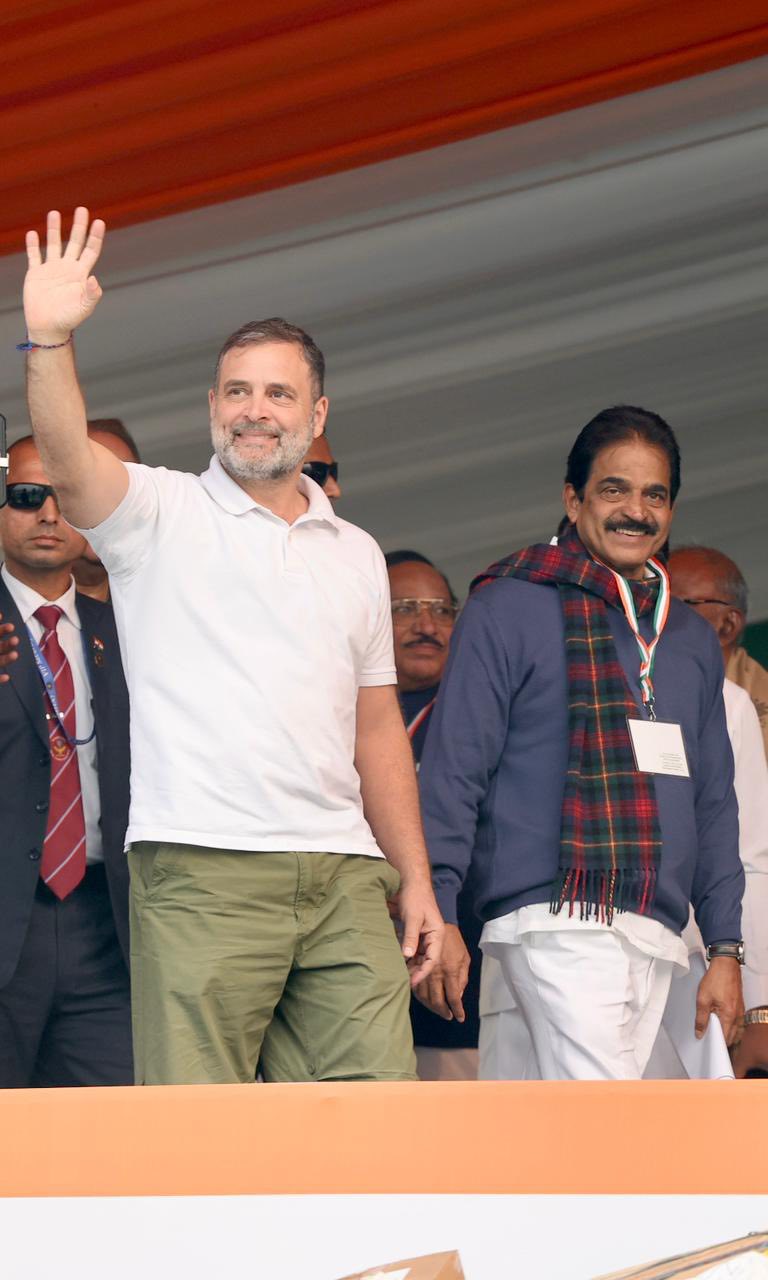
K C Venugopal with Rahul Gandhi
For decades, the Congress had leaders who enjoyed proximity to the party’s higher echelons, especially the Gandhi family.
K Karunakaran had that equation. So did AK Antony. Yet party insiders often say Venugopal crossed a different threshold altogether.
He is widely seen as the Congress high command’s trusted troubleshooter – a man of access, discretion and political management.
Inside the Congress, he earned a reputation as the quiet hand that kept things together when the party was coming apart.
In the difficult years after the Congress collapse in the 2014 Lok Sabha election, Venugopal emerged as one of the few leaders who stood consistently beside Rahul Gandhi through the party’s most difficult phase.
Congress veterans often say his elevation as AICC General Secretary in charge of organisation in 2019 was not accidental.
Even after repeated electoral setbacks in states where he oversaw strategy and campaigns, the leadership in Delhi continued to back him without hesitation.
For nearly seven years, Venugopal continued to occupy the position, despite it traditionally being reserved for heavyweight leaders from the Hindi belt.
In many ways, Congress circles began viewing the equation between Rahul Gandhi and Venugopal in the same light as the old political understanding between Ahmed Patel and Sonia Gandhi.
Born in Payyanur in Kannur district in 1963 to Kunjukrishnan Nair and Janaki Amma, KC Venugopal took a keen interest in student politics alongside academics and sports.
A postgraduate in mathematics from Calicut University, Venugopal captained the Kannur district junior volleyball team and represented his college in several tournaments.
Those who worked with him during his Youth Congress years often recall a politician who liked to stay prepared.
His political journey began through the Kerala Students Union. Starting out as the KSU unit president at Payyanur College, he moved steadily through the organisation as district secretary, state office-bearer and later state president.
The climb continued with the presidency of the Indian Youth Congress in Kerala and a larger organisational role within the KPCC.
He was elected to the Kerala Legislative Assembly from Alappuzha in 1996, 2001 and 2006. During the Oommen Chandy government, he served as Minister for Tourism and Devaswom.
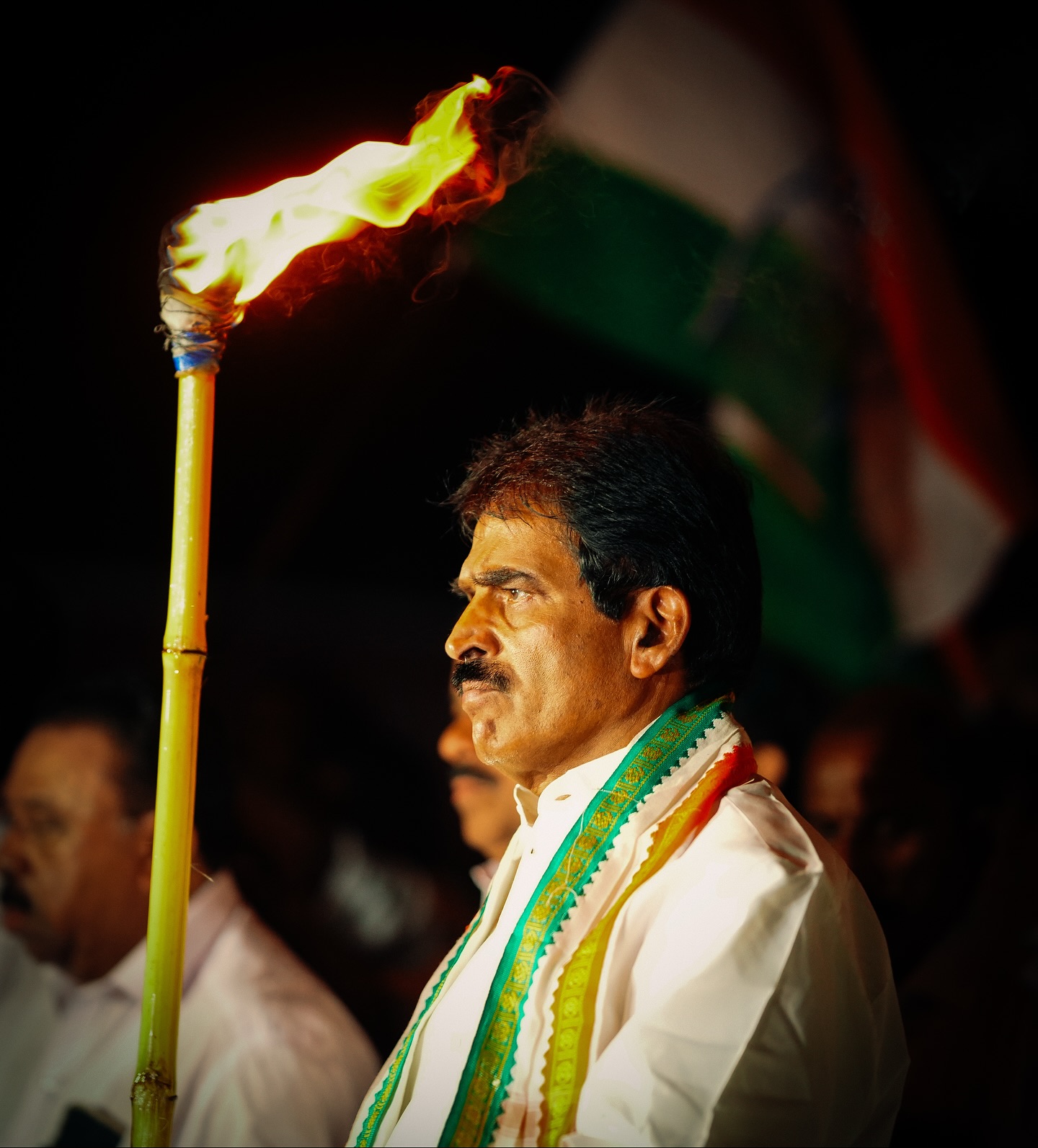
K C Venugopal
The shift to national politics came in 2009 when he won the Alappuzha Lok Sabha constituency and entered the 15th Lok Sabha.
In the second Manmohan Singh cabinet, he served as Union Minister of State for Power and later as Union Minister of State for Civil Aviation. He retained the Alappuzha seat in 2014 and returned to Parliament as a member of the 16th Lok Sabha.
By then, Venugopal had also emerged as an important organisational strategist within the Congress. On 29 April 2017, the AICC appointed him General Secretary. He later became AICC General Secretary (organisation) in 2019.
In June 2020, he entered the Rajya Sabha from Rajasthan and served there until 2024, resigning to contest the Lok Sabha election once again. He returned to the Lok Sabha in 2024 as a member of the 18th Lok Sabha.
Over the years, he has served on several major parliamentary panels, including the Committee on Government Assurances, Standing Committee on Transport, Tourism and Culture, Railway Convention Committee and the Committee on Defence.
He continues to serve as chairperson of the Lok Sabha Public Accounts Committee, one of Parliament’s most significant oversight bodies.
Also Read: ‘That PIL should have been thrown in the dustbin,’ SC on Sabarimala case; hearing to continue
Venugopal’s proximity to the high command did not work as the AICC announced Satheesan as the chief minister. Besides having a mass support, Satheesan had the backing of UDF allies, who of late, did not mince words while criticising the Congress party for the delay in naming the chief minister.
The allies were not keen on byelections — to the Assembly as well as the Lok Sabha — which would have been necessitated if Venugopal had become the chief minister, especially with UDF workers coming out in public, saying they would ensure the party’s defeat if Satheesan was not made the chief minister.



