

Published May 10, 2026 | 9:26 AM ⚊ Updated May 10, 2026 | 9:26 AM

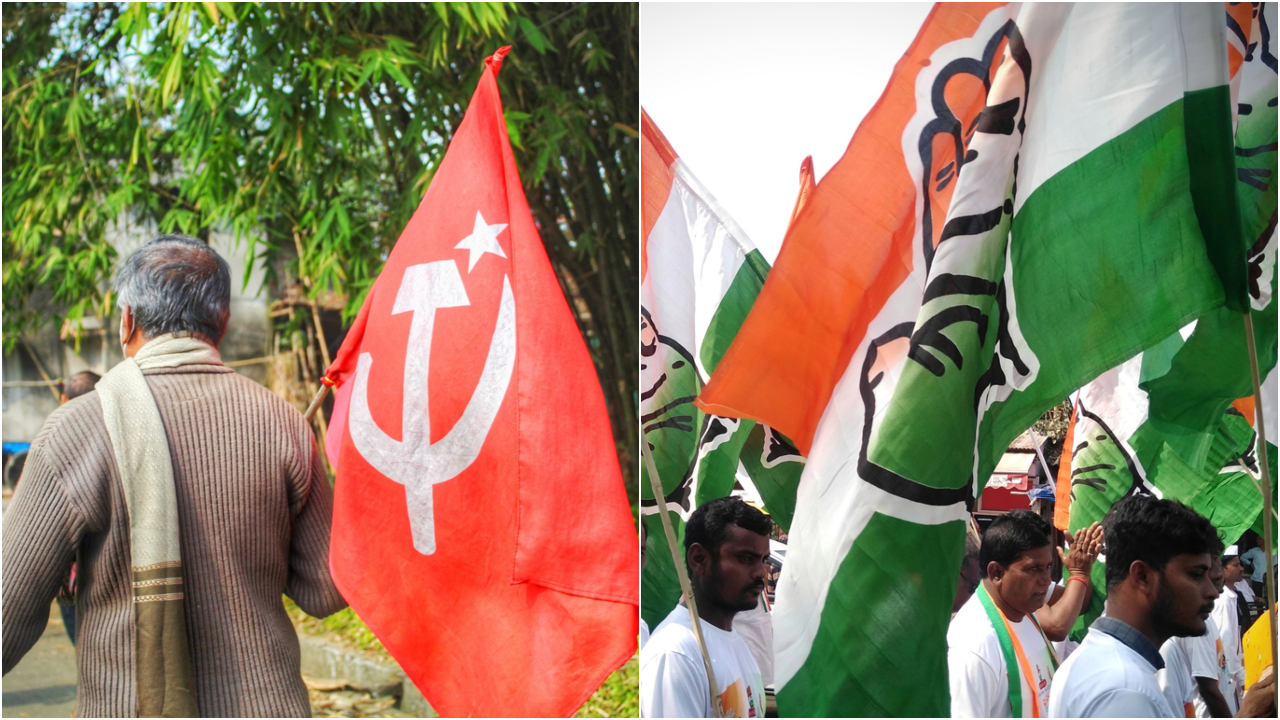
For the incoming government, the challenge may not merely be political. It could well become the defining fiscal battle of its tenure. Credit: iStock

Synopsis: After a decade as the LDF government’s showpiece development vehicle, KIIFB now faces an uncertain future under the returning UDF, which views the institution as a debt-heavy off-budget borrowing system that blurred fiscal accountability while financing large-scale infrastructure projects across Kerala. The political fight over KIIFB has now shifted from Opposition criticism to a governing dilemma — whether to restructure, tightly audit, or even dismantle an institution that became both a symbol of Kerala’s development push and a flashpoint in the state’s mounting debt debate.
What’s in store for the Kerala Infrastructure Investment Fund Board (KIIFB) under a Congress-led UDF government after a decade in Opposition?
The question has begun to shadow Kerala’s political transition even before the new administration formally takes charge.
For the past 10 years, KIIFB stood at the centre of LDF’s development narrative — praised by the CPI(M) as a financial innovation that helped build roads, bridges, schools and hospitals despite tight borrowing limits imposed by the Centre.
Running parallel to this is the criticism by the Congress that it is a costly debt-driven mechanism operating beyond conventional fiscal discipline.
From 2016 onwards the Congress watched its dramatic expansion from the Opposition benches, repeatedly accusing the LDF of building an “off-budget borrowing empire” that pushed Kerala deeper into debt while bypassing normal financial scrutiny. The CPI(M), meanwhile, projected KIIFB as proof that large-scale public infrastructure could still be pursued in a fiscally constrained state.
Now, as the UDF returns to power after a decade, the fate of the institution that became both the flagship and flashpoint of the LDF’s governance model has moved into sharp focus.
Also Read: After CM lobbying, PR battle for ministerial berths begins in Kerala
For years after its formation in 1999 under the E.K. Nayanar-led LDF government, through the Kerala Infrastructure Investment Fund Act, 1999, the KIIFB existed more on paper than in public imagination.
The UDF governments led by A.K. Antony and later Oommen Chandy handled the institution during a largely uneventful phase, with limited visibility and modest activity.
That changed sharply after the Pinarayi Vijayan government assumed office in 2016.
Backed by amendments to the Kerala Infrastructure Investment Fund Act, KIIFB was recast into the state’s principal infrastructure financing mechanism. The LDF government widened its borrowing powers, opened the door for fundraising tools such as Masala Bonds, and earmarked revenue streams including portions of motor vehicle tax and petroleum cess for repayment commitments.
The institution, originally created to finance infrastructure projects in sectors ranging from transport and energy to sanitation, IT and telecommunications, soon emerged as one of the state’s most discussed financial experiments.
Under Section 8 of the KIIF Act, the Board is empowered to raise funds through various financial instruments and institutional arrangements with prior government approval. Over the past decade, that provision has translated into large-scale borrowing for roads, bridges, schools, hospitals and other public infrastructure projects across Kerala.
In December 2025, the LDF government stated, KIIFB had approved projects worth ₹90,927 crore. Of this, works valued at ₹21,881 crore had already been completed, while projects worth ₹42,765 crore were progressing at various stages across the state.
During KIIFB’s silver jubilee celebrations in November 2025, Chief Minister Pinarayi Vijayan described the institution as central to the vision of a “Nava Keralam”, arguing that it broke years of infrastructure stagnation while preserving Kerala’s social development model.
He dismissed concerns surrounding KIIFB’s financial architecture, maintaining that the institution functioned transparently under the supervision of leading financial experts and that borrowings were tied to responsible repayment mechanisms.
KIIFB Chief Executive Officer K.M. Abraham also defended the model then, stating that the Board’s liabilities were backed by secure revenue streams and monitored through an AI- and machine learning-based asset liability management system.
However, the Congress-led UDF, however, spent much of the 2016-2026 period portraying KIIFB as a costly off-budget borrowing vehicle that pushed Kerala deeper into debt.
Opposition members repeatedly questioned the sustainability of raising funds from the open market at what they termed “extortionate” interest rates. They argued that KIIFB depended heavily on the state’s consolidated funds, particularly motor vehicle tax and fuel cess allocations, merely to service its obligations.
In one adjournment motion in the 15th Kerala Legislative Assembly, Congress legislator Roji M. John remarked that KIIFB had promised “a land of milk and honey” but instead left the state “financially strained.”
The Opposition also flagged concerns over oversight, alleging that despite handling massive borrowings, KIIFB remained outside the scrutiny normally associated with direct government expenditure, including legislative and CAG audits.
Even as the 2025-26 State Budget speaks of transforming KIIFB into a revenue-generating entity, the political divide over the institution remains unresolved. To supporters, it represents Kerala’s boldest development experiment in decades. To critics, it is a debt-heavy gamble whose long-term consequences are yet to unfold.
Also Read: Kerala’s electoral map shattered: Seats built since 1967, 1977, 1980 fall in single verdict
The KIIFB, once projected by the Left government as the backbone of the state’s infrastructure push, is now staring at an uncertain future with the incoming UDF government indicating a sweeping review of the institution’s structure, finances and legal framework.
Discussions within the Congress-led front suggest that the options before the new government range from a major restructuring of KIIFB to even winding it up altogether.
Senior UDF leaders indicated that amendments to the Kerala Infrastructure Investment Fund (Amendment) Act, 2016 are also being examined as part of the process.
The signals had emerged even before the elections.
While releasing the UDF manifesto in April, Leader of the Opposition V D Satheesan had made it clear that KIIFB would be reviewed if the alliance came to power.
Within the UDF, there is a growing view that the 2016 restructuring of KIIFB created what they describe as an “extra-budgetary borrowing mechanism” that bypassed conventional fiscal discipline.
Congress leaders argue that although KIIFB raises funds from the market in its own name, the state government ultimately carries the burden because the loans come with government guarantees.
“For us, there is no doubt that this is an extra-budgetary system that goes against constitutional principles. Since there is a government guarantee on the money being raised, the liability eventually falls on the state. What kind of restructuring is required will have to be studied in detail. One thing is certain — KIIFB’s functioning and financial transactions will be made transparent. The issue of off-budget borrowings will also have to be addressed,” said a senior Congress leader to South First.
The leader added that the final decision would depend on discussions among UDF allies as the matter involves a larger policy shift.
Meanwhile, economist and former chairperson of the Public Expenditure Review Committee, Dr Mary George, believes the upcoming government should go much further.
According to her, KIIFB has pushed Kerala into a deep debt spiral while functioning with inadequate scrutiny. She called for a comprehensive audit into the institution’s operations, finances and spending patterns.
“The LDF government describes KIIFB as a transformative engine for development. My assessment is entirely different. It has dragged the state into a debt trap,” she told South First.
Mary George alleged that substantial public funds were being deployed without adequate accountability and claimed expenditure patterns often reflected political priorities rather than financial prudence. She pointed to a sharp rise in advertising expenditure during election years as an example.
Her criticism draws heavily from the Comptroller and Auditor General’s Report on State Finances for 2023-24, tabled in the Assembly earlier in 2025.
The report observed that the state government had not disclosed off-budget borrowings undertaken through KIIFB amounting to ₹20,041.52 crore and through Kerala Social Security Pension Limited (KSSPL) amounting to ₹12,900.62 crore in the state budget. Together, this understated government liabilities by ₹32,942.14 crore.
The CAG further noted that Kerala had resorted to off-budget borrowings of ₹10,632.46 crore through KIIFB during the period under review.
As of March 31, 2024, the combined outstanding liabilities of KIIFB and KSSPL stood at ₹32,942.14 crore. Taking these liabilities into account, the state’s overall liabilities touched ₹4,48,163.29 crore, pushing the liability-to-GSDP ratio to 37.84 per cent — significantly above the 33.70 per cent ceiling envisaged under the Kerala Fiscal Responsibility Act for 2023-24.
The report also highlighted that under Section 9(1) of the Kerala Infrastructure Investment Fund (Amendment) Act, 2016, the state government has undertaken responsibility for repayment of both principal and interest on KIIFB borrowings. The government has already earmarked petroleum cess collections and 50 per cent of motor vehicle tax revenue for servicing KIIFB loans.
While the state government has consistently maintained that KIIFB borrowings are liabilities of the board and not of the government, the CAG rejected that argument.
According to the audit report, KIIFB has no independent revenue stream substantial enough to service its debt obligations on its own. The burden ultimately falls on the state exchequer through annual budgetary transfers, effectively making the borrowings liabilities of the government itself.
Mary George argues that the implications are serious enough to warrant shutting down the institution altogether.
“In the last decade, KIIFB has significantly expanded Kerala’s debt burden. The next Chief Minister and Finance Minister will inherit a difficult financial situation. If KIIFB is wound up, the projects currently under it can be shifted back to the respective departments for completion. The state will benefit more from closing it down than from continuing with the present system,” she said.
For the incoming government, the challenge may not merely be political. It could well become the defining fiscal battle of its tenure.



